
VIENNA: MUNICIPAL REFORMS IN THE LAST DECADES OF THE EMPIRE

In 1849 governmental autonomy was granted to all municipalities in the Habsburg Empire. Although thereafter Vienna enjoyed self-government, repeatedly the emperor intervened in its affairs. From 1850 onward, Vienna underwent rapid growth, expanding in 1890 to incorporate suburbs across the Danube and along the Vienna Woods. A municipal constitution of 1850 established a city council to be elected by tax-paying citizens divided into three classes. In 1885 the minimum taxation for suffrage was lowered to 5 gulden, excluding the poor until universal suffrage came in 1907. After 1890 the unwieldy city council of 138 members was directed by 25 of its members, the Stadtrat, who together with the mayor ran the city. As mayor of Vienna from 1897 to 1910 Karl Lueger (1844-1910) so dominated public life that next to Franz Josef he was the city’s best known citizen. Although Lueger had entered the city council as a Liberal in 1875, over the next decade he broke with liberalism and denounced international capitalism as a ”Jewish monopoly”. After being briefly an ally of Schönerer, he became a friend of Vogelsang whose doctrines he incorporated into the Christian Social Party, founded in 1893.…
THE GREAT DEPRESSION 1929 vs. THE FINANCIAL CRISIS 2008

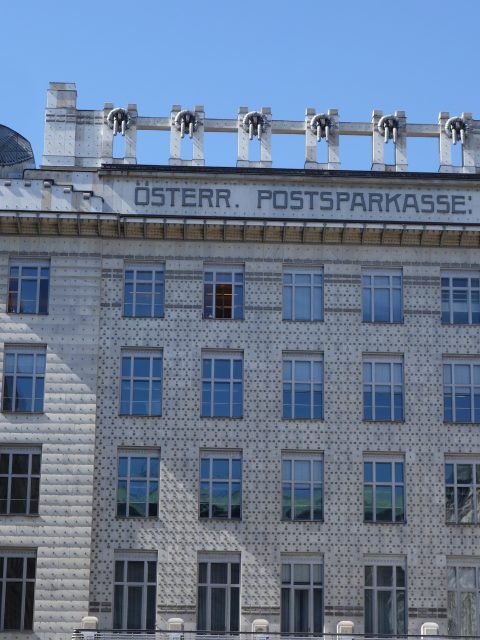
Österreichische Postsparkasse, architect Otto Wagner, finished 1906


In both cases the crisis originated in the USA. But for the Great Depression starting in 1929 in the US, there would probably have been no rise of Hitler, no Roosevelt and the Soviet System would not have been regarded as a serious economic rival and alternative to capitalism. The US which had so far been a safe haven in a world of break downs and revolutions was the epicentre of the largest global economic earthquake until then.


Operations of a capitalist economy are never smooth, fluctuations are an integral part of it. A trade cycle of boom and slump was already characteristic of the 19th century capitalist economies. In the 1920s the Russian economist Kondratiev, who later became a victim of Stalin, discerned a pattern of economic development since the end of the 18th century through a series of “long waves” of 50-60 years. He concluded that the wave of world economy was due for its downturn. The last severe downturn had been in the 1870s. Minor trade cycles had been accepted by economists, but the world economy was expected to go on growing and advancing except for sudden short-lived slumps. Only the socialists (Marx) believed that cycles could put the capitalist system at risk. The history of the world economy since the Industrial Revolution had been characterised by accelerating technological progress, continuous economic growth and increasing “globalisation”, namely an elaborate worldwide division of labour. Even between 1929 and 1933 world economic growth did not cease completely, but slowed down. Yet the globalisation of the economy stopped advancing in the inter-war years.…