


Left: My husband Karl Wurm at the current Austrian-Czech border, where the Iron Curtain ran until 1989 at the border stream Lainsitz / Luznice. Right: The “Schwarzenberg Canal”, a sluiceway for logs built at the time of the Habsburg Monarchy, where the Iron Curtain separated the two regions, the “Mill Quarter” (Mühlviertel) and Southern Bohemia, from 1948 until 1989


Border stones between Austria (Ö) and Czechoslovakia (C) in the “Mill Quarter” today

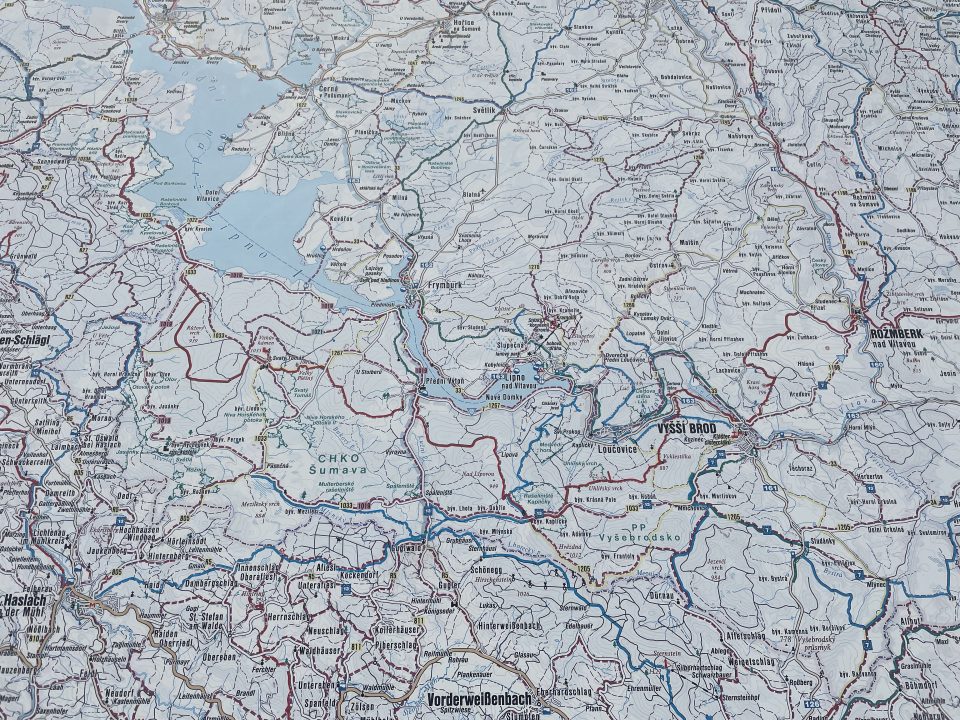
Left: Part of the Iron Curtain at the borders of Austria, Czechoslovakia, East and West Germany; right: Current map of the Bohemian Forest region: Southern Bohemia and the “Mill Quarter”
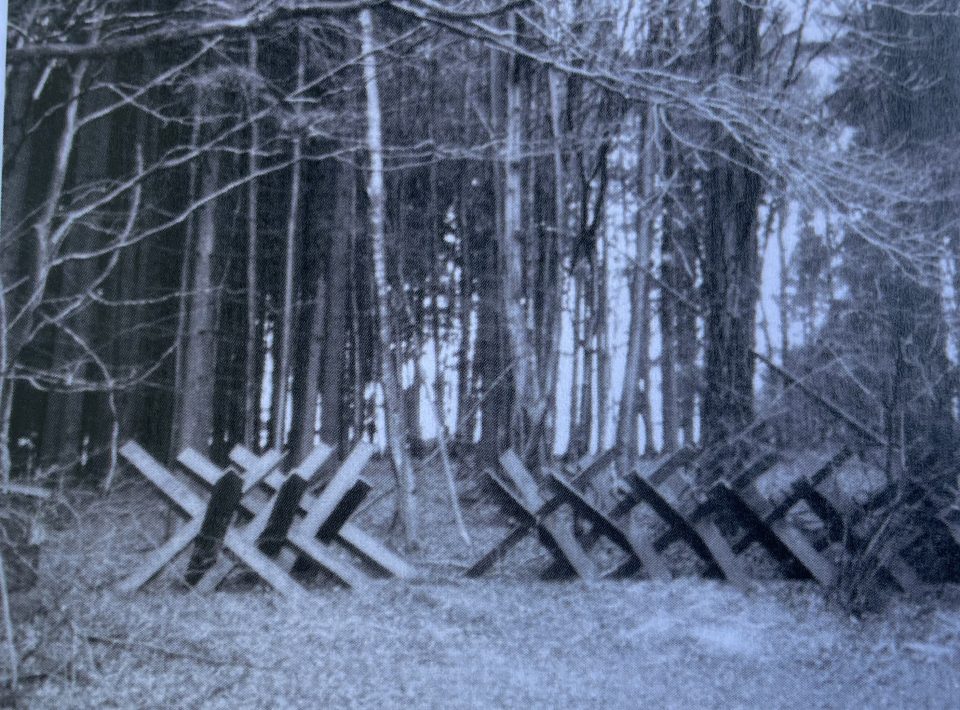

Left: Anti-tank barriers at the Iron Curtain in Southern Bohemia; right “Death Strip”, preventing people from leaving Czechoslovakia and entering the country from Austria
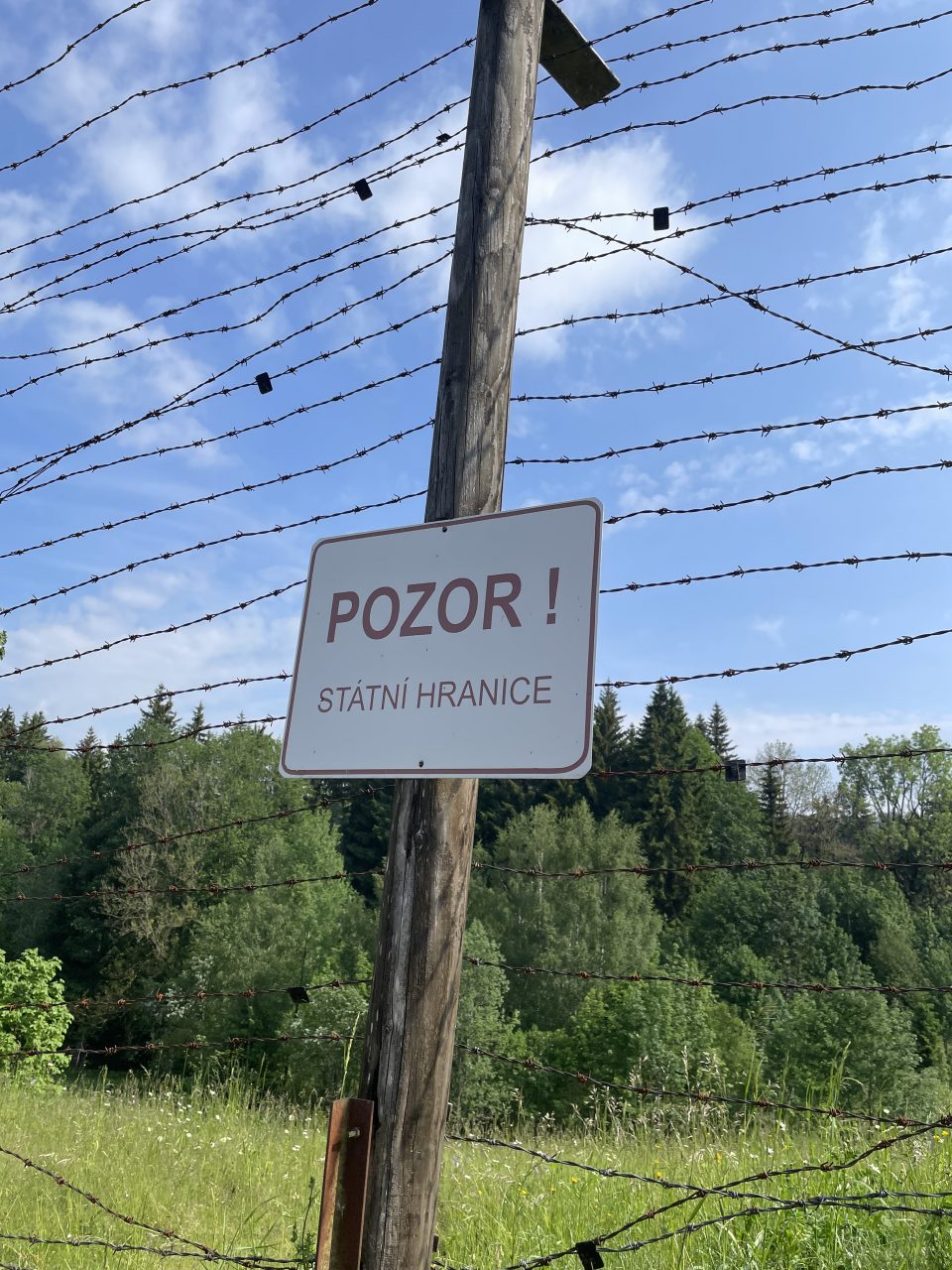

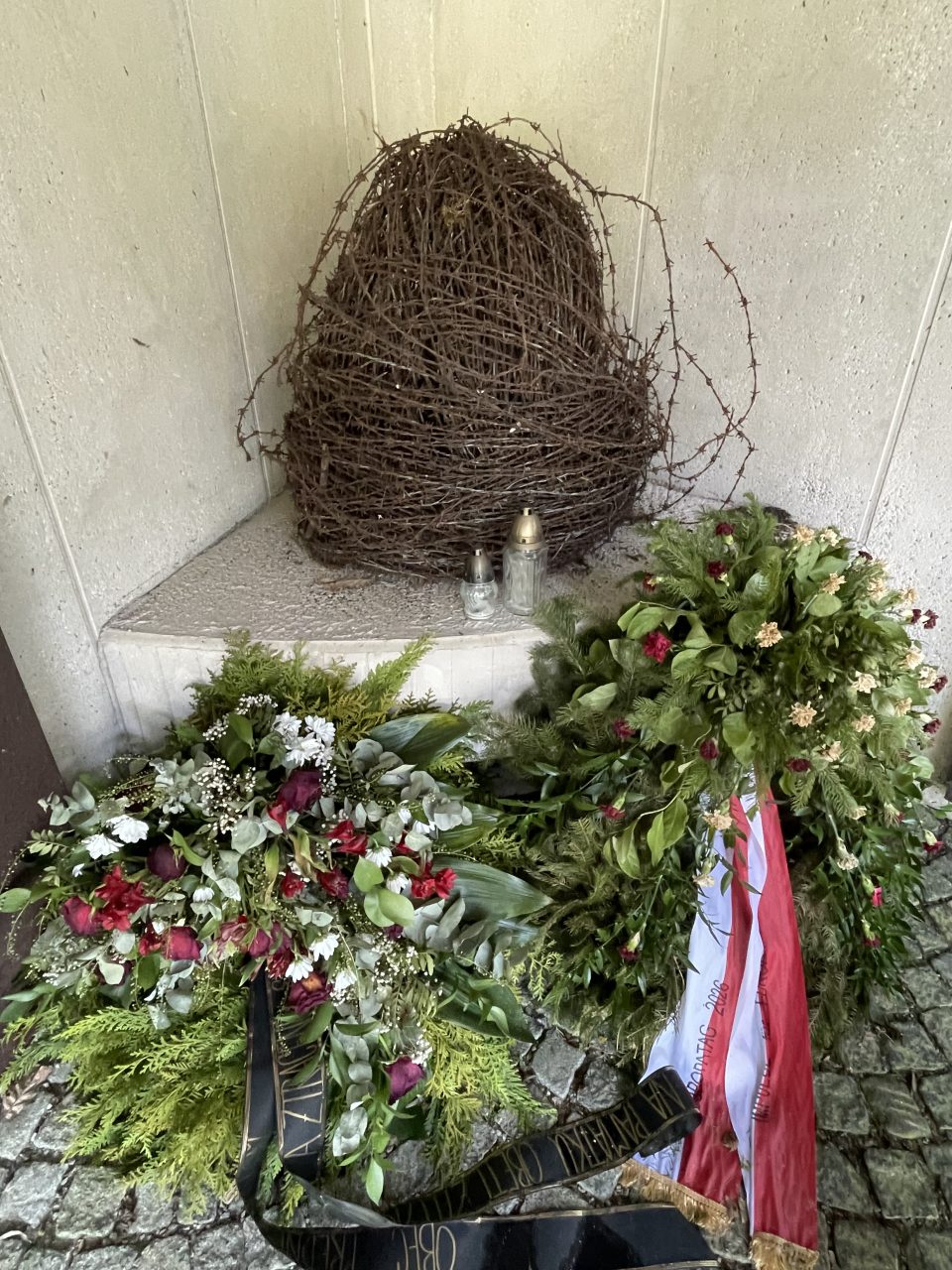
Iron Curtain memorial in the “Mill Quarter”

Iron Curtain memorial trail

My husband Karl’s mother Rosa Wurm, née Traxler, was born on 11 July 1927 (second on the left, sitting). Her family had moved from Kaplitz / Kaplice in Southern Bohemia a few kilometres south to Passberg in Austria. After World War II she trained as a cook.


Left: the family’s farm house in Passberg, “Mill Quarter”; right: Rosa as a young woman
The British Prime Minister described the situation of the Cold War in Europe in 1946 with the words “From Stettin in the Baltic to Trieste in the Adriatic an IRON CURTAIN has descended across the continent.”
The border across the “Bohemian Forest”
For the regions of the “Mill Quarter” and Southern Bohemia this meant that the landscape around the Bohemian Forest, which had been united and disputed along a thousand-year-old border, was since 1948 divided with nearly no communication possible between the two parts. In the area between the Danube and the Moldau many different peoples had found their home over centuries. The Celtic “Bojer” lent their name to “Bohemia” and “Bavaria” and later many different Germanic and Slavic tribes settled in the wooded landscape of the dense Bohemian Forest. The borders which were gradually formed and marginally moved during these centuries were not determined by natural barriers, but by territorial claims to power of various rulers, who traversed the Bohemian Forest north and south.

In the Middle Ages the Bohemian Kings and the Bavarian Dukes were the highest-ranking authorities in the region. Yet the expansive efforts of the local rulers, the “Witigonen” family, in clearing and cultivating the densely-wooded area offered them some independence from the powerful players in the medieval “Holy Roman Empire of the German Nation”. Their territorial claims incorporated possessions which were in the sphere of influence of the Bohemian kings, the Bavarian Dukes, the Austrian Dukes and the mighty diocese of Passau. The”Witigonen’s” chance of uniting the region from southern Bohemia to the Danube was thwarted in the 13th century and since the 14th century today’s border between Bohemia and Austria was consolidated step by step.
When the Kingdom of Bohemia and the Dukedom of Austria were united in 1526 under the Habsburgs and continued to exist as an imperial unity until 1918, in some way the border always remained. Tolls were levied between the provinces of Upper Austria and Bohemia and trade between these parts of the Habsburg Empire was controlled at checkpoints. In 1775 all tariff barriers inside the Habsburg Empire were removed and a common economic zone was established. Just a year earlier, in 1774, the market reeve of Oberplan (now Horni Plan in Czechia) had to settle a dispute over a cow, which was “smuggled” from Ratschin near Oberplan south to Schindlau near Ulrichsberg (now in Austria).
Nevertheless, in 1788 a precise measuring of the border between Bohemia and Austria was initiated, although it was no longer a customs boundary. Yet it was still an administrative boundary, which was relevant with respect to civil and social legal decisions. Who wanted to travel from Bohemia to Austria or vice versa had to have a special pass until 1857, be it for tradesmen or apprentices on the “Walz”, perfecting their skills and completing their apprenticeships, or just for visits of relatives and friends. Only nobility, members of the clergy and civil servants could move freely in the Habsburg Empire.

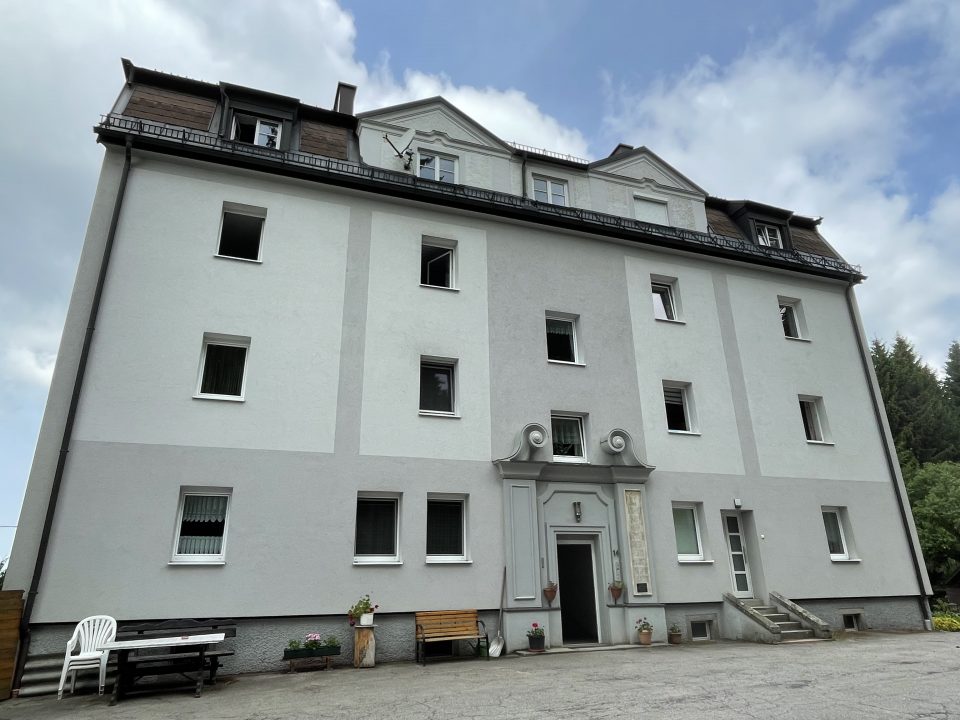
Left: Customs house between Austria and Bohemia in the Habsburg Monarchy. Right: Former Customs House in St. Oswald, “Mill Quarter”, which was erected in 1920 after the end of the Habsburg Empire and the setting up of the state of Czechoslovakia.
What is important to note is that this border was never a language barrier. As long as the administrative state did not interfere and create multiple political and national dependences, different languages did not cause problems. It is known that many members of the local nobility and citizenry were bilingual, German and Czech. Not only did most people in the Czech area speak German as well, also in towns of the “Mill Quarter”, such as Haslach and Freistadt, not just noblemen, but also citizens spoke Czech and not just German. Christoph von Zelking, who donated the famous gothic altar in the church of Kefermarkt, wrote in his last will that his sons had to know Latin, Italian and Czech apart from German, if they wanted to inherit his property.
In 1855 the first map of the Habsburg Empire was drawn up which showed the different linguistic areas and mixed language zones. Since 1869 the Habsburg census incorporated the language spoken, but it was disputed whether the mother tongue or the language spoken in daily life was to be the basis of these language statistics. At this time of rising nationalism, the political border was competing with the linguistic border. The expansion of the administrative state in the fields of education, law enforcement, the military and public security had drastically changed the importance of language. Nationalist ideology poisoned the atmosphere and when the state demanded that in mixed language areas, civil servants had to speak both languages, for example German and Czech, this caused many animosities, because more Czech speakers spoke German, too, than German-speakers Czech. This consequently led to a preference of Czech civil servants employed in the Habsburg administration of the region of Southern Bohemia.
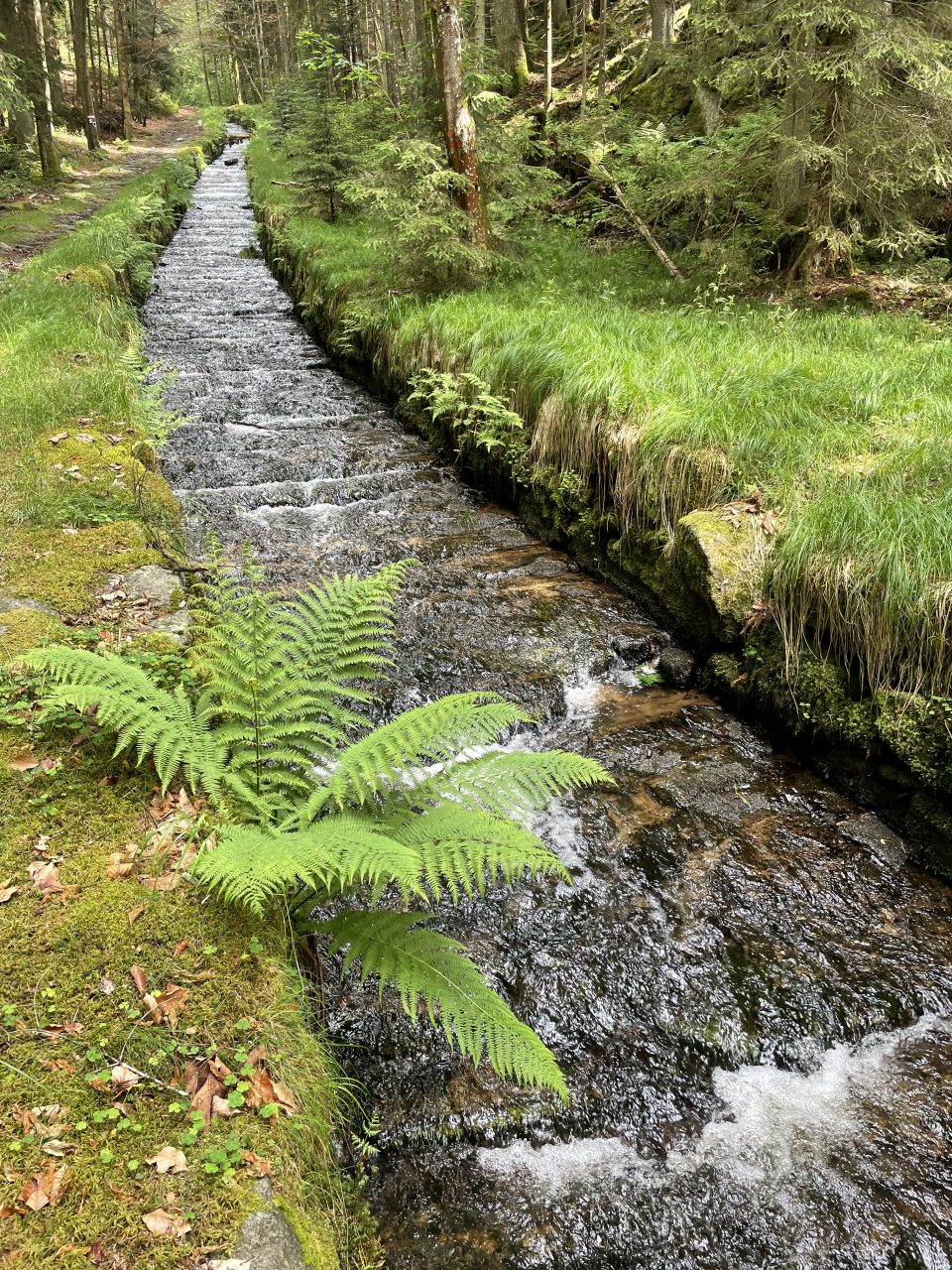
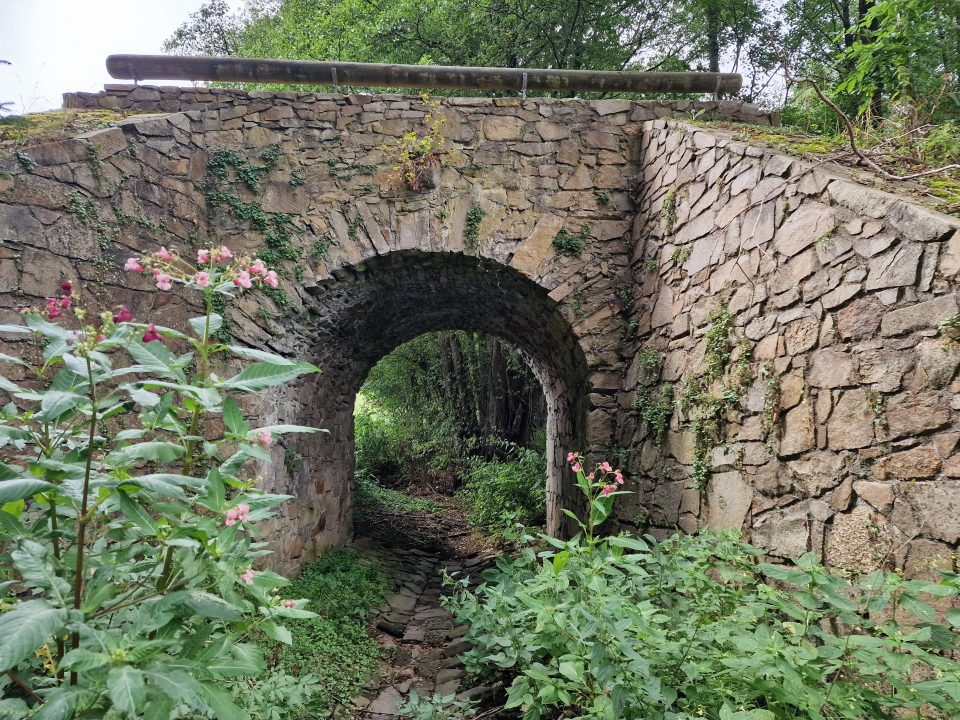
From an economic point of view, the “Mill Quarter” and Southern Bohemia had always been closely interlinked. The “Schwarzenberg Canal”, a sluiceway, shipped logs from the Moldau region to the Danube and down to Vienna. The fast-expanding capital city of the Habsburg Empire was in urgent need of lumber that could no longer be provided from the Viennese Forest or the forests in the vicinity. So, building a sluiceway for floating logs from the Bohemian Forest to the Danube was a convenient solution. The first plans for this most ambitious and technically complicated project were made in 1775. The challenge for the engineers was how to overcome the European main watershed near Rosenhügel. The canal, when it was completed brought great wealth to the noble Schwarzenberg family, as they owned large stretches of woodland in the Bohemian Forest. The engineering project was praised as the “Eighth World Wonder”.
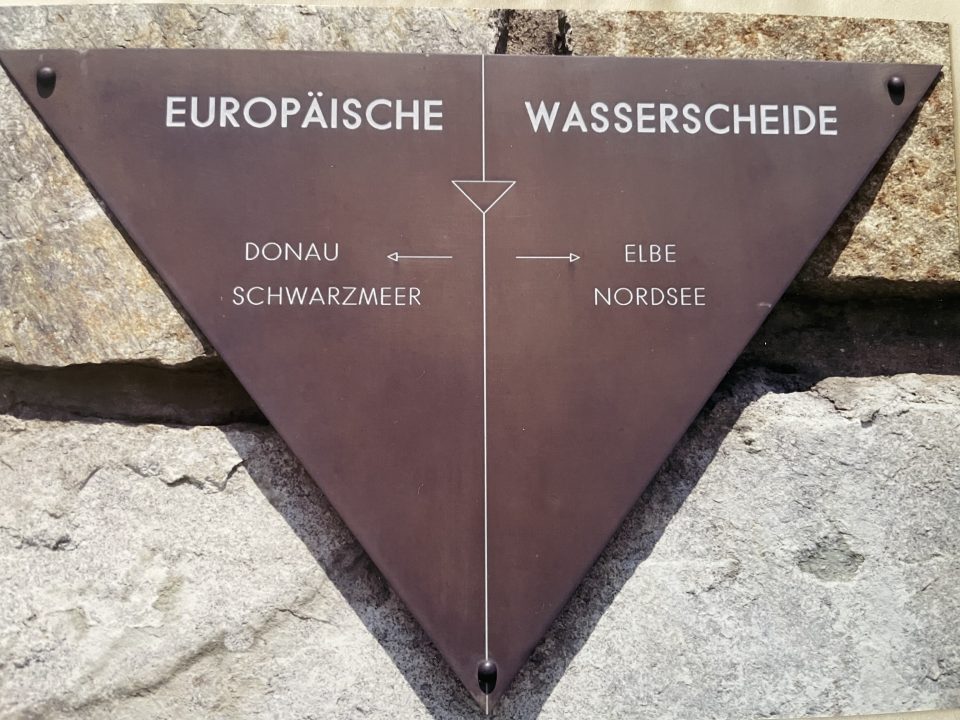
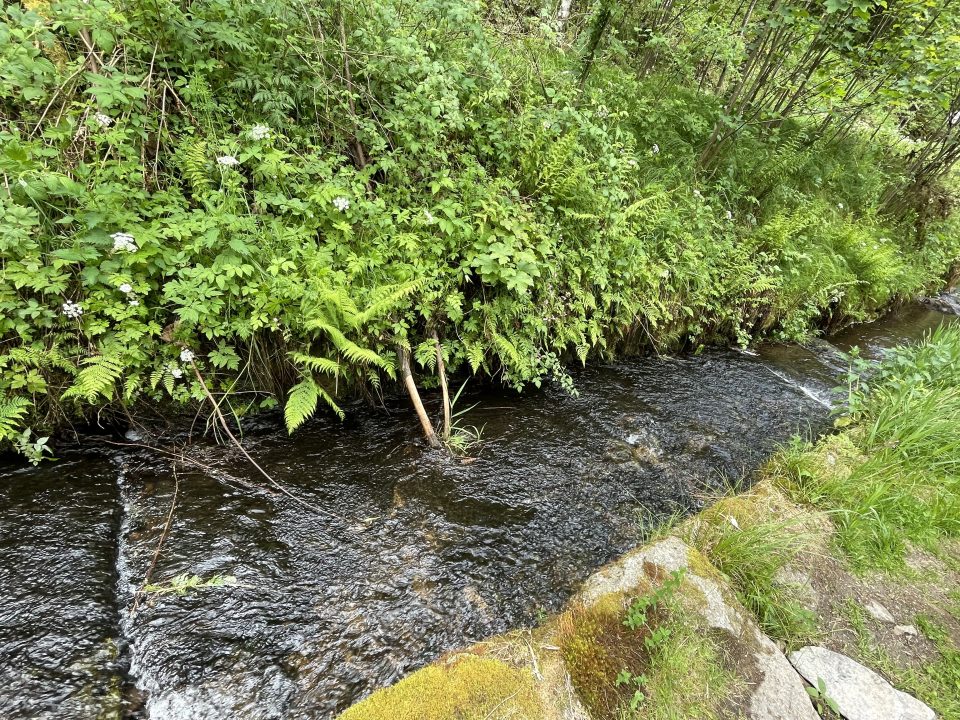
Left: Spot of the European main water shed between Danube – Black Sea and Elbe – North Sea. Right and below: The restored “Schwarzenberg Canal” sluice way.

The horse-drawn railway between Linz and Budweis / Ceske Budejovice, which transported salt from the salt mines of the “Salzkammergut” to Bohemia, was another innovative technical project crossing the Bohemian Forest, but much less successful economically. The 197 kilometre-track connected Gmunden in the “Salzkammergut”, Linz and Budweis. The first part was opened in 1832 and the line was completed in 1836. The transport of passengers and goods was much more profitable from Southern Bohemia to the south than vice versa. Due to technical problems on the narrow and hilly tracks the change from horse-drawn to steam-driven engines came much too late in 1855/56 and only from Gmunden to Linz, which track was flatter and wider. In the meantime, they had even experimented with oxen-drawn engines, because oxen were cheaper than horses. The railway entrepreneur Franz Anton Gestner, who had initiated the horse-drawn railway, was not innovative and forward-looking enough. From Linz to Budweis the passenger trains took 14 hours, two hours more than the stagecoach and from Linz to Gmunden another six and a half hours and freight transport was just as bad. As the railway line was not profitable, the horse-drawn line Linz – Budweis had to be abandoned in 1872, because it was already outdated when it was opened. In comparison, in England the first steam-driven railway opened in 1825 between Stockton and Darlington. On the contrary, the existence of a horse-drawn railway even hindered a modern infrastructure development of the Bohemian Forest.

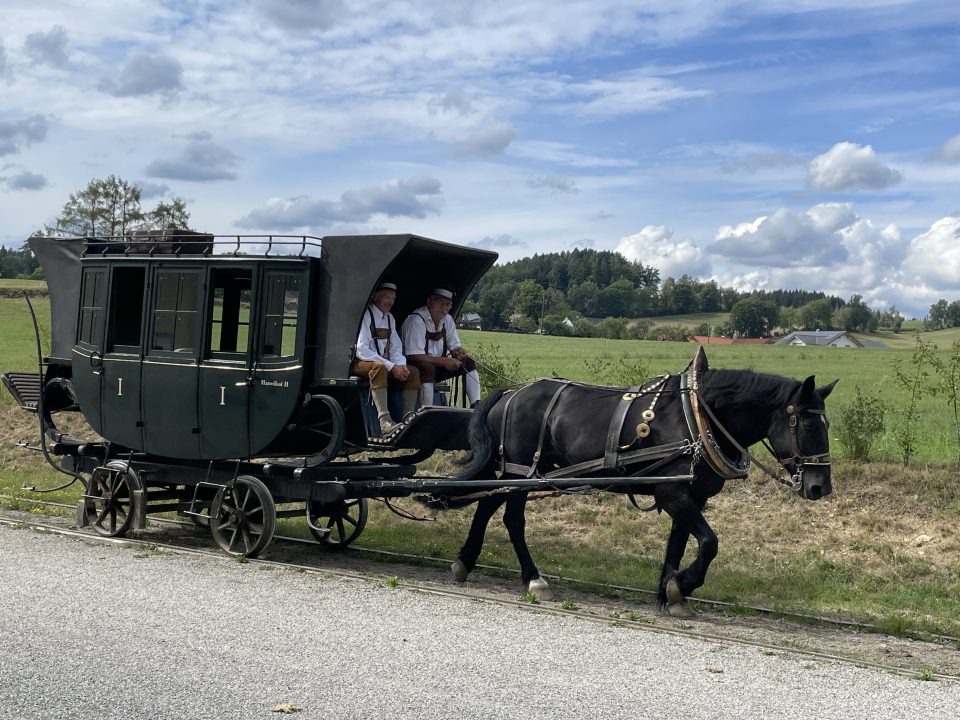
Left: Salt transport on the horse-drawn railway to Southern Bohemia; right: Museum horse-drawn railway in Kerschbaum at the border to Bohemia

Left: Tracks of the former horse-drawn railway in the “Mill Quarter”; right: Former railway station in Kerschbaum
The majority German-speaking Bohemian districts Krumau / Cesky Krumlov and Kaplitz / Kaplice, where Karl’s mother’s family came from, were economically oriented to the south towards the Danube region in the 18th and 19th century. In the 19th century an extensive migration from Bohemia to Upper Austria took place. Czech workers were involved in building the horse-drawn railway and in Linz the tobacco factory and other large constructions. They worked in coalmining in the “Hausruckviertel” and in the weapons factory in Steyr. For many Czechs Upper Austria was the first stop on their move to Vienna. They were mostly employed in Linz and Steyr as industrial workers, craftsmen, and in domestic service jobs. While in 1858 2,000 Czechs were registered in Upper Austria, in the second half of the 19th century Czechs from Bohemia made up 10 per cent of the population of Linz and 15 per cent in Steyr.


Left: Morau at the “Schwarzenberg Canal”; Right: mill near Asang at the “Schwarzenberg Canal”.
Czech workers played an important role in the early days of the workers’ movement, many of them joining anarchistic and revolutionary groups. Therefore fin-de-siècle Upper Austria, especially Linz, was characterised by prejudices against Czechs, which influenced the socialisation of Adolf Hitler there. In 1903 a German nationalist member of the local parliament demanded that mass should no longer be celebrated in Czech in Upper Austria. Although the bishop of Linz rejected this demand, the anti-Czech movement in Upper Austria grew fast and turned ever more aggressive. In the Habsburg Monarchy the Czechs often felt disadvantaged as opposed to the Germans. Yet, the radical anti-Czech nationalistic propaganda of the Germans was totally unjustified, but it was engrained especially in the rural population and the farming community in Upper Austria. Their fear of an expansion of the Czechs as far as the Danube was unfounded. A nationalist escalation on both sides ensued and eventually influenced the debate over the drawing up of the frontier between Austria and Czechoslovakia after the end of the Habsburg Monarchy in 1918. The German-speaking members of the Austrian parliament claimed that the language frontier was different from the political frontier and demanded that the German-speaking parts of Southern Bohemia became a part of Upper Austria, called “Kreis Deutsch-Südböhmen” with 330,000 ha and 182,000 inhabitants. They argued that in the census of 1910 only 3.3 per cent of the population declared themselves as Czech speakers. Yet, the population of Southern Bohemia did not openly support the initiatives of Upper Austrian politicians in 1918 and 1919, due to the fact that the economic situation in Czechoslovakia was more prosperous than in Austria at that time. The final decision was made in the Paris Peace Treaties in St. Germain in 1920, where the historical political border between Austria and Bohemia was acknowledged and the German-speaking parts of Southern Bohemia remained as a part of Czechoslovakia. Initially the new national border did not result in any profound restrictions with respect to the movement of goods and people, even if smuggling wares across the frontier was revived.
Unfortunately, new Czech language and school regulations in the German-speaking parts of Southern Bohemia alienating the German population fuelled the nationalistic controversies. Especially the so-called “Sudeten” Germans initially demanded autonomy and later many of them joined National-Socialist (NS) groups in Austria and Germany. When in March 1938 Austria became part of Adolf Hitler’s “Third Reich”, the members of Konrad Henlein’s NS “Sudeten German Party” and radical activists called for an inclusion of the German-speaking parts of Czechoslovakia in the “Third Reich”, too. With the Munich Accord in October 1938 the National Socialists started their project of destroying the state of Czechoslovakia. Within the “Third Reich” the German-speaking parts of Southern Bohemia, the districts Krumau and Kaplitz, were integrated into the province of Upper Austria and other majority German-speaking parts were incorporated in the provinces of Lower Austria and Bavaria. Despite great expectations, the German populations were soon disappointed, because they experienced no economic advantage from this integration into the German Nazi State, on the contrary; not one of the newly founded industrial enterprises was situated in the Bohemian Forest, in Southern Bohemia or the “Mill Quarter”.
The end of the Nazi rule and the end of World War II in 1945 resulted in a complete rupture of any ties that might still have existed between the two parts of the Bohemian Forest region. In the northern as well as in the southern part Soviet troops were stationed and the old border of the Habsburg Monarchy was reintroduced. In 1955 The Austrian State Treaty was signed, which reinstated Austria as an independent state and the Soviet troops withdrew from Upper Austria, but any kind of reconciliation or even cooperation with Southern Bohemia was now unimaginable. The Czechs had erected a fortified military frontier with a “Death Strip” and a military no-go zone across the Bohemian Forst. Furthermore, they had inundated a part of the territory by building a huge storage reservoir at the Moldau and had expelled all German-speakers from Czech territory and erased the villages near the border to Upper and Lower Austria. The two economic areas were completely cut off and separated until 1989. The “Mill Quarter” became one of the poorest regions in Austria, together with the “Wood Quarter” (Waldviertel) and the Burgenland, as these regions had been severed by the Iron Curtain, too.
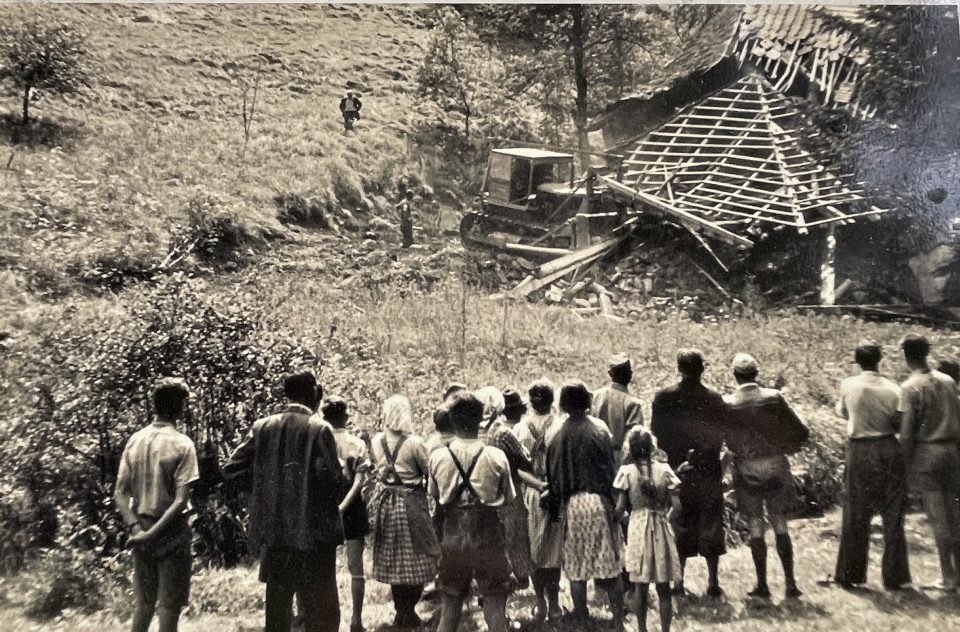
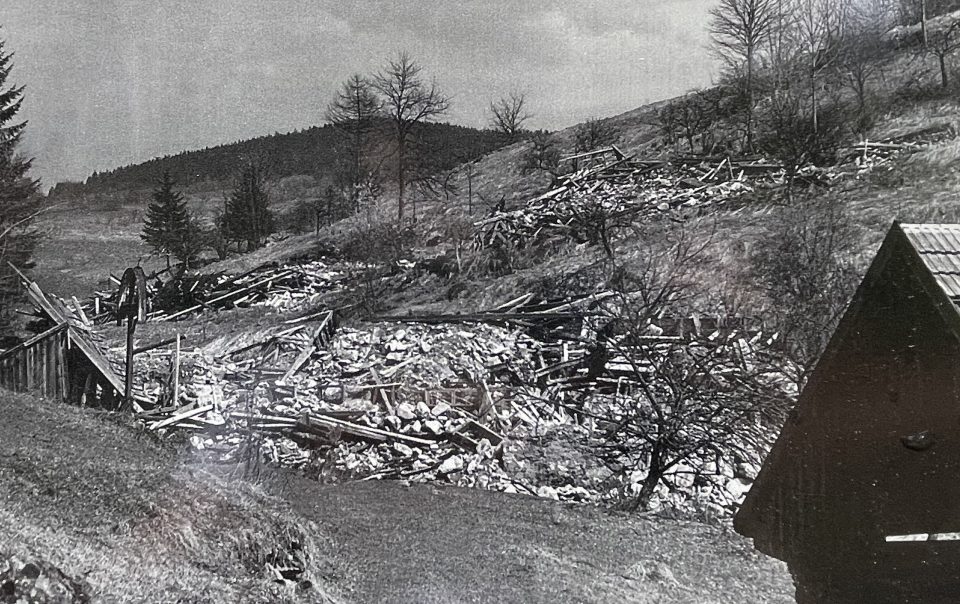
Left: Onlookers watching the destruction of the houses in Morau in Southern Bohemia in 1956; right: Rubble of the destroyed houses and hammer mill
The setting up of the Iron Curtain in Czechoslovakia
When in February 1948 the Czech Communist Party took over the complete control of the Czechoslovakian state, it was the aim of the leading party members to turn the whole country into a communist experiment and force every member of the Czech society into their system of an “ideal socialist society”, individuals as well as organisations, transforming the whole society and economy. Everyone and everything were subjected to Communist party interest and monitored day and night. The ultimate goal of this policy was to eliminate any opposition, to prevent the infiltration of ideas and spies from Western countries and to hinder the flight of Czech citizens to the West at all costs. A strictly supervised border control system was set up to prevent any exchange between Communist Czechoslovakia and Austria as well as the other Czech neighbouring countries.
Between 1945 and 1948 it was still manageable to move between the two countries on business or to visit relatives, to get medical treatment or to reunite families with special passes. It was even possible to emigrate from Czechoslovakia, too. This ended on 25 February 1948, when leaving Czechoslovakia required a special permission from the Ministry of the Interior, which needed to be evidenced in the passport. This led to increased illegal migration across the “green border” to Austria and Western Germany. The Communist regime reacted with intensified border controls and restrictions of movement of the population living at the frontier to prevent spy activity and smuggling of people. A law of 6 October 1950 introduced the criminal offence of attempted border crossing which was considered high treason. Nevertheless, the movement out of Czechoslovakia across the “green border” continued, so in 1951 the militarisation of the frontier protection systems was started. Five regiments of around 18,000 soldiers were stationed at the borders of Czechoslovakia, most men towards Western Germany, fewer soldiers towards Austria and even at the frontier to the “brother state” of Communist Eastern Germany soldiers were deployed. Every border patrol regiment had to guard a stretch of the frontier. Furthermore, the areas in the vicinity of the border were divided into a “Frontier Zone” with restricted access and sojourn and a “Prohibited Zone”, which could reach up to two kilometres from the actual border and was followed up by the “Frontier Zone”, which could reach up to 10 kilometres into Czech territory. Nobody was allowed to live in the “Prohibited Zone” and only those who had special permission from the Communist security services were allowed a sojourn in the “Frontier Zone”. The clearing of these zones started in April 1952, whereby in some cases the areas of these zones were extended. It can be estimated that in this first wave of clearings 3,000 people had to leave the “Frontier Zone” and 1,600 the “Prohibited Zone”. All these zones could only be accessed with special passes, which were issued to those who were charged with the clearings. In addition, so-called “sapper measures” were taken to secure the frontier, such as anti-tank barriers and barbed-wire entanglements. Up to three rows of barbed wire fences, watchtowers, observation booths, signal firing systems and trip-wire mines were installed, whereby large strips of forest were cleared and ploughed as “control strips” to see footprints of escapees; especially useful in winter when snow covered those “control strips”. In 1952 the electrification of the barbed-wire fences started and at the end of the year 1953 the whole border to Austria was electrified with high voltage. At the frontier death in these electrified wires was the second most common after death by shooting. Yet many more Czech border patrol soldiers died in high voltage accidents than fugitives, mostly due to negligence. The trip-wire mines caused fewer deaths, because due to environmental influences they lost efficiency over time, but again more soldiers on patrol fell victim to mines than fugitives.
In the 1950s horses were still used on patrols and for the transport of goods in the frontier zones and furthermore, many attack dogs were trained for patrol services and the hunting down of fugitives. As there were never enough combat dogs available, breeding and training stations were installed in the border regions. The 4th brigade in Znaim / Znojmo for example had more than 150 combat dogs in 1955. Overall, the number of dogs in action ranged from 1,000 to 1,500 in the 1960s. The dogs were “deadly efficient”, as one fifth of all fugitives who were caught by the border patrols were brought down by attack dogs.
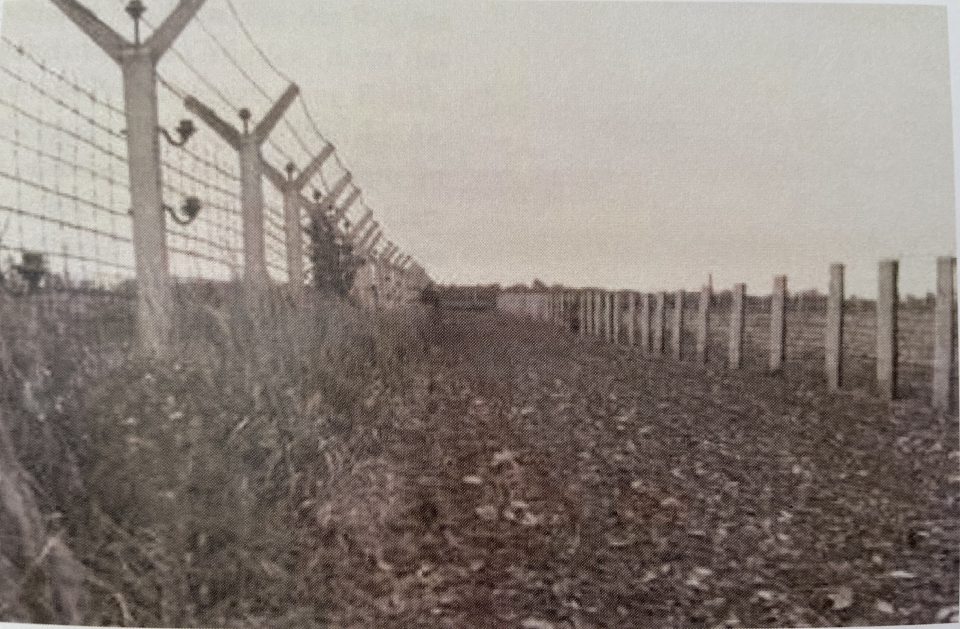
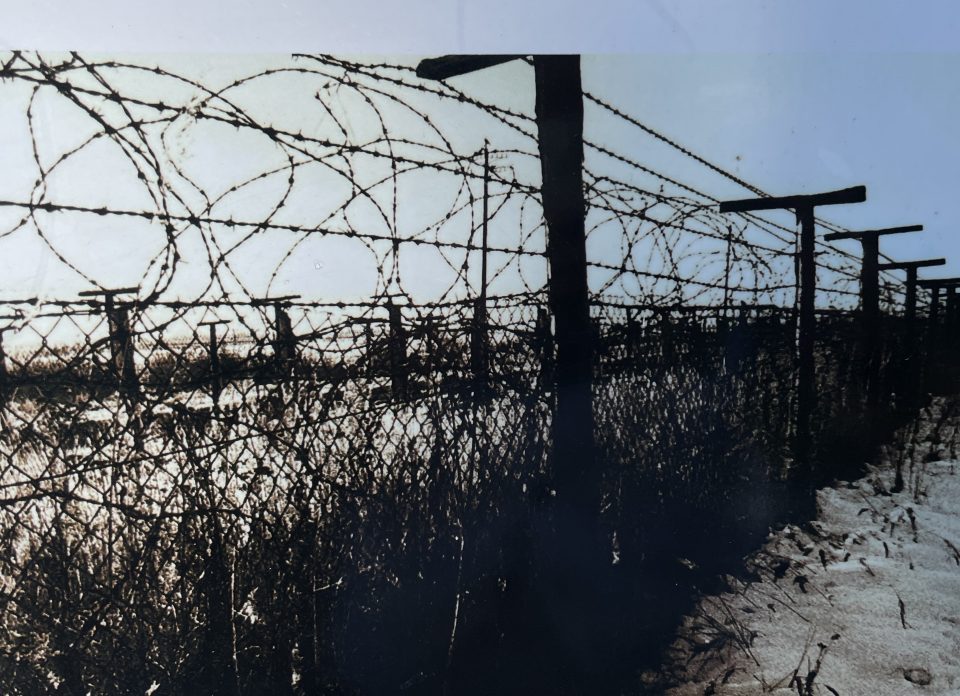
Iron Curtain at the border to Austria
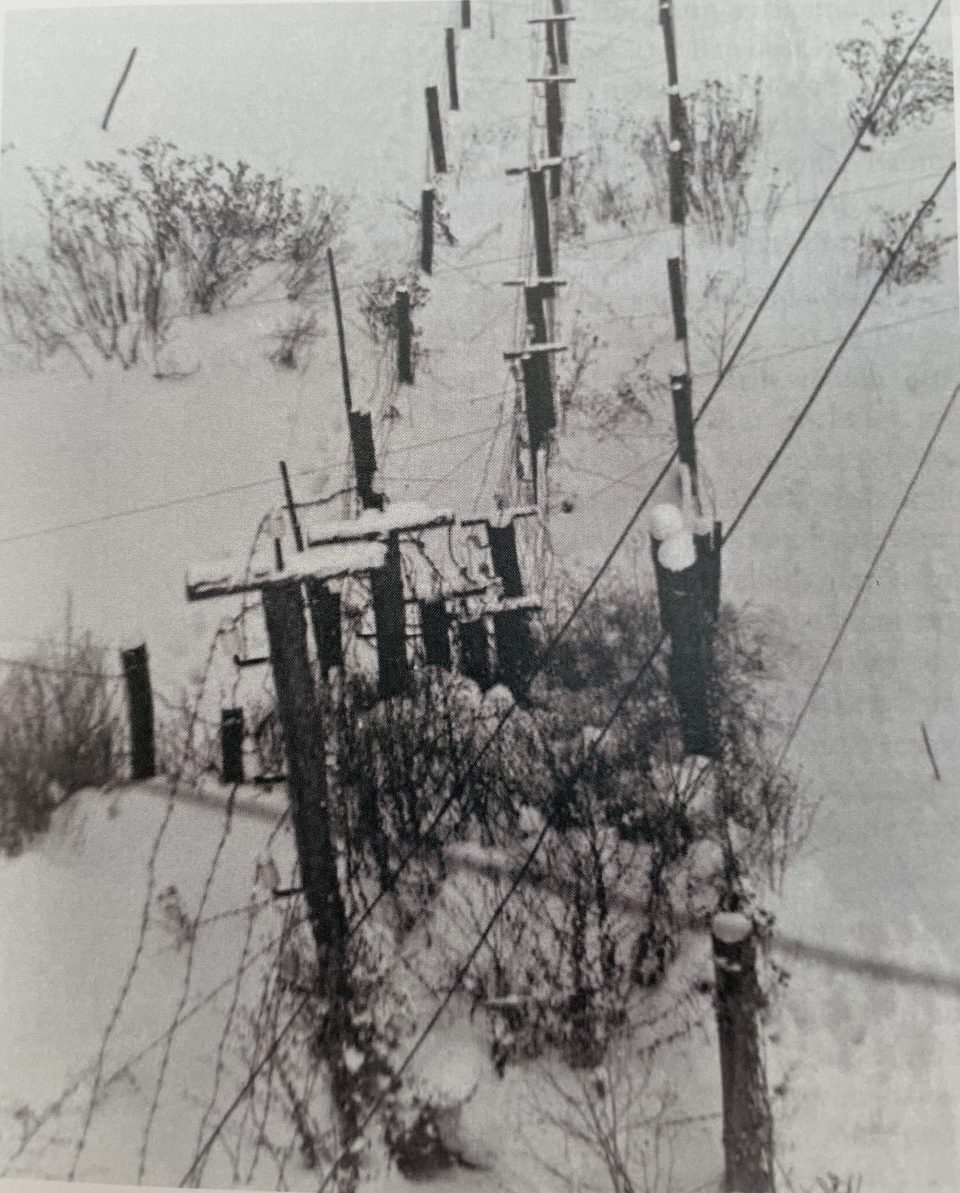
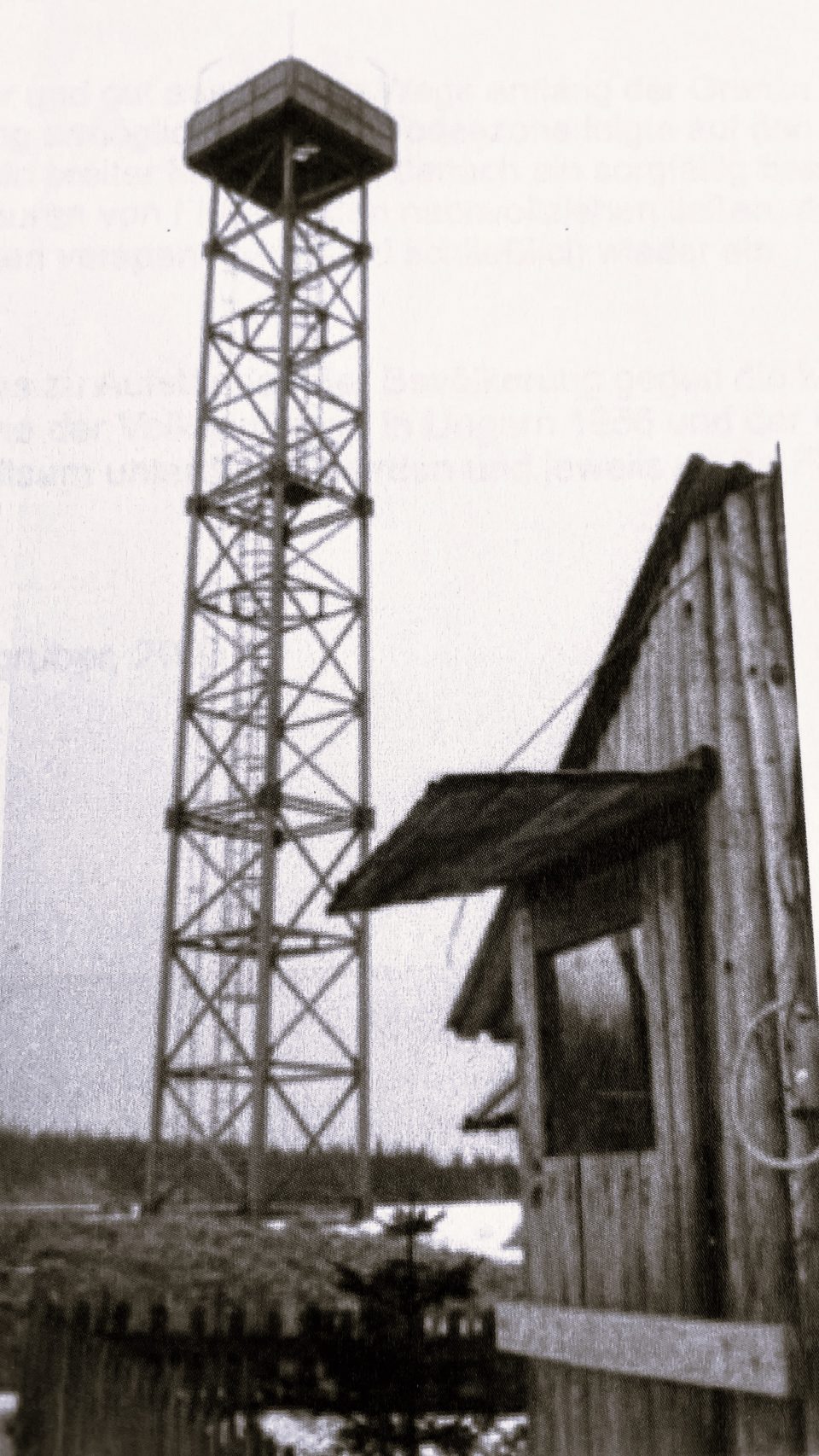
Left: Three rows of electrified barbed wire and a “control strip” in winter; right: Watchtower and observation booth
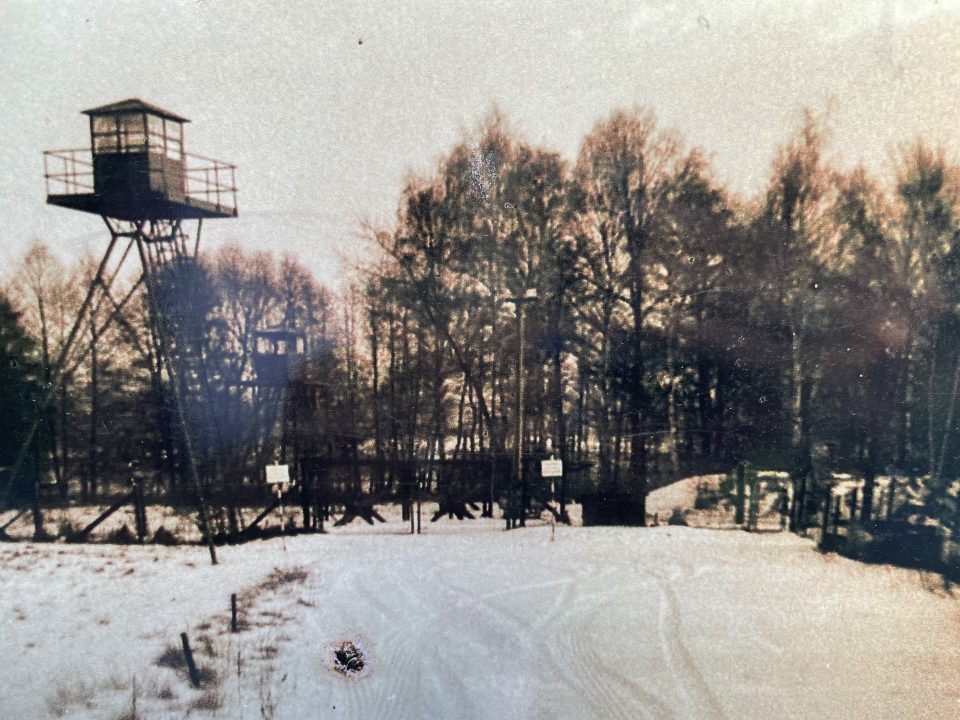
Iron Curtain “Death Strip”
The Communist regime in Czechoslovakia attempted to involve the whole population in the “protection of the borders of the Socialist State”. The Communist politicians tried to persuade all citizens to support this effort, via persuasion or by force. After the clearings of the villages near the border, the civilian population was more or less willing to comply with the wishes of the regime and saw it as their duty to make their contribution towards the “protection” of the “Socialist State” at the frontiers. In the border areas the stationed soldiers contributed a lot to the social life in the villages, helping in the nationalised agrarian businesses (kolkhozes), taking part in cultural and sports events, organising special camps for children and adolescents. A whole network of civilian agents, informers and border patrol assistants was set up to check on the population and inform the Communist authorities about any, even minor, irregularities. In 1957 more than 2,000 civilian informers and agents worked for the military border regiments and in 1965 6,500 civilian border patrol assistants were officially registered. These police state methods of surveillance, which were introduced in the 1950s, survived with slight variations until the coming down of the Iron Curtain in 1989. The costs for keeping the military border control up and running were enormous, as new and more modern technological equipment had to replace the old outdated systems. With the “Prague Spring” in 1968 many, especially young and well-educated Czechs, tried to leave the country and look for freedom and improved chances in the West. The Soviet invasion ended this uprising and the border patrol regime was under pressure to prevent any attempts at fleeing Czechoslovakia at all costs in future.
Illegal border crossings
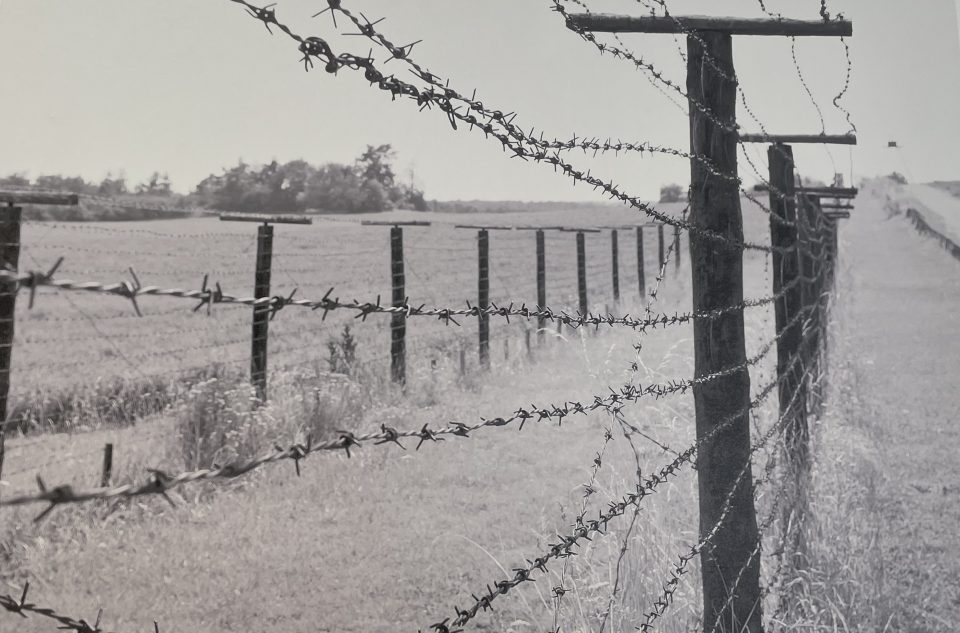
Czech fortifications at the Iron Curtain
Apart from fugitives who tried to cross the border from Czechoslovakia to Austria just once to flee the oppressive Communist regime, there were agents, smugglers and couriers who crossed the border in both directions several times and therefore acquired significant experience and knowledge of the territory and patterns of border patrols. There was no significant armed resistance against the Communist regime from abroad. That was just propaganda by the Communists, who created the myth that the border patrol regiments fought a permanent war against terrorists and sabotage. Between 1948 and 1989 at least 584 Czech border patrol soldiers were killed, but only eleven by “trespassers”, so-called “frontier violators”; 185 committed suicides, 243 died in accidents, 39 died of shot wounds and 47 were killed in high-voltage barbed wire fences or by mines or other accidents with explosives.
Until 1955 the presence of the Soviet army in the “Mill Quarter” posed an additional risk for fugitives and couriers crossing the border to Austria. If they reached Austria, be it in Upper or Lower Austria, as the Soviet occupation zone reached as far as Vienna, they could be picked up by a Soviet patrol, arrested and sent back to Czechoslovakia or in the worst case to Moscow. Crossing the border exposed those who attempted it to an enormous risk. Some tried to reach the West by swimming in places where a river formed the frontier, such as the Thaya or March or Danube.
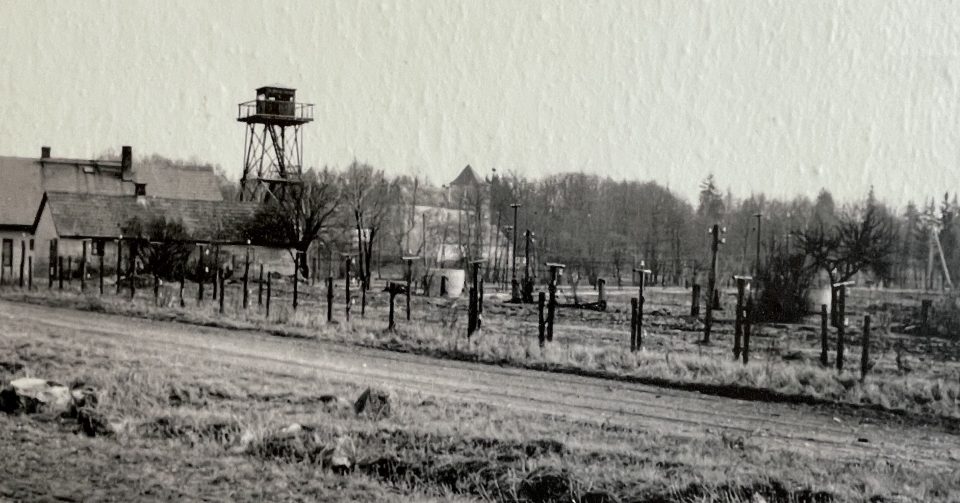
Iron Curtain near a Czech settlement
Here are some examples of Iron Curtain incidents:
In August 1950 three Czech students who were forbidden to continue their studies due to “ideological unreliability”, tried to cross the border to Austria in Nikolsburg /Mikulov. Unfortunately, their escape agent was a government spy and when the three young men reached the frontier, the forewarned soldiers shot at them from ambush and killed all three. The soldiers had been told that the fugitives carried weapons, which was not the case and the young soldiers were shocked when they just found pocket knives on the bodies of the three. These Czech border patrol soldiers were immediately transferred to the interior of the country.
In October 1953 a 20-year-old Prague woman tried to flee to Austria across the river March with the help of an escape agent. They managed to cut the first of three electrified barbed-wire fences, when the young woman got caught in the wire and a patrol spotted her. The machine gun fire of the soldiers killed her and the escape agent was arrested and sentenced to 25 years in prison. All victims of failed flight attempts were buried in unmarked graves in the respective Czech border districts.
Near Guglwald a tragic incident happened, when a fugitive who had already surmounted the Iron Curtain, was discovered by a Czech patrol accompanied by a combat dog. The fugitive threw away his bag, which the dog then attacked and the man jumped into dense bushes of nettles nearby. When the soldiers reached the spot, they found the dog with the bag, but no fugitive. They searched the whole area, but did not go into the nettles. As they were not allowed to return to their barracks without having brought up the fleeing man, they sat down on higher ground and observed the bushes. After several hours the refugee thought the soldiers had gone and started to move slowly out of the nettles. Immediately the soldiers started to shoot at the nettles until nothing moved any more.
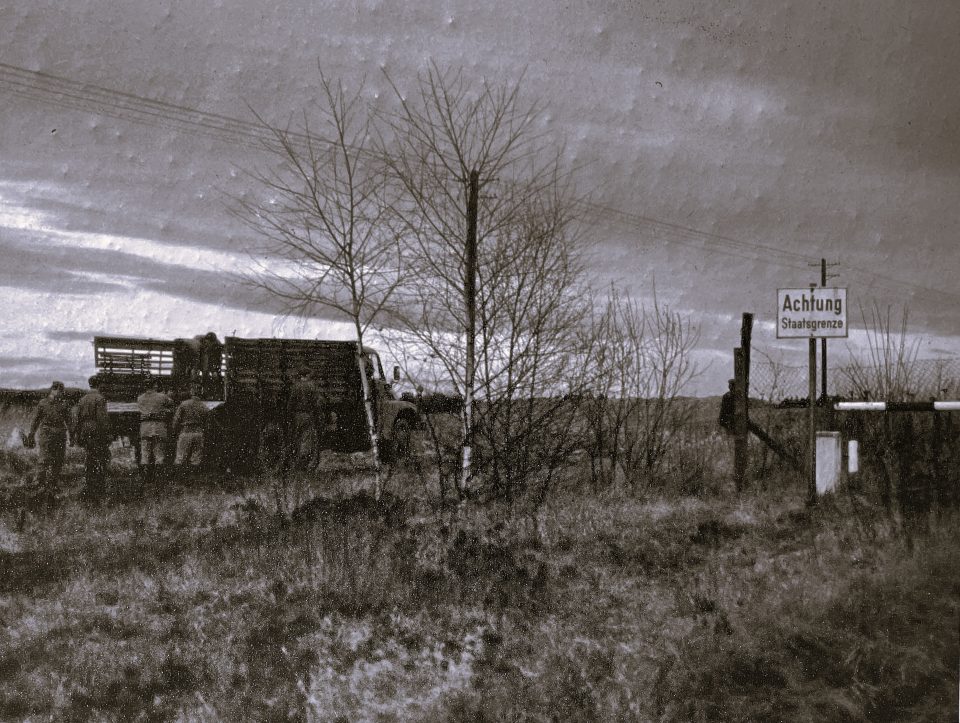
Austrian side of the Austrian-Czech frontier
In 1957 a Czech family tried to cross the border from Ceske Velenice to Gmünd, a couple with two daughters, three sons and one granddaughter. They were all shot at by Czech border patrol soldiers and wounded, but managed to arrive injured on the Austrian side. Only the 12-year-old son was stunned by the shots and stopped paralysed at the Iron Curtain. He was arrested by the Czech authorities and kept in custody. Finally, after many interventions of Austrian authorities, the International Red Cross and widespread international protest, the boy was allowed to emigrate to Austria and to be reunited with his family.
In October 1984 a 33-year-old man from Budweis / Budejovice was crossing the frontier to Austria and had already reached Austrian territory, when the Czech border patrol soldiers fired 30 shots at him and killed the fugitive in Austria. His body was found on 5 November on Austrian soil and serious diplomatic tensions between Austria and Czechoslovakia ensued.
As late as August 1986 a young man was killed at the Iron Curtain near Kittsee in Austria. His name was Hartmut Tautz, raised in Magdeburg in East Germany. He was a namesake of my father, Werner Tautz, who was from Görlitz, Silesia, at the Polish -East German border, which explains the same family name, but Hartmut Tautz was no relative of ours, as far as we know. My father’s mother and his step family were expelled from German-speaking Silesia after 1945 and had found refuge in Bavaria. My father had left Silesia already during World War II at the age of 13 and was taken in by a Lower Austrian foster family:
Hartmut Tautz was 18 years old, from a family of artists, and wanted to study music in Communist East Germany, which he was not allowed to because of his “bourgeoise” family background. On the contrary, he was about to be drafted to the East German army. He managed to travel to Bratislava in Czechoslovakia and left the student hostel there in order to cross over to Austria from the district of Kopcany, where he could already see the lights of the Austrian town of Kittsee. After he had cut the barbed wire and passed through the fence, the alarm went off and the two young Czechoslovakian border patrol soldiers on duty chased the attack dogs after the young man. When they reached the severely wounded fugitive who was lying in his blood in a field of maize, bitten to death by the combat dogs, they did not assist the dying man. Much too late he was brought to a military hospital in Bratislava, where he died.
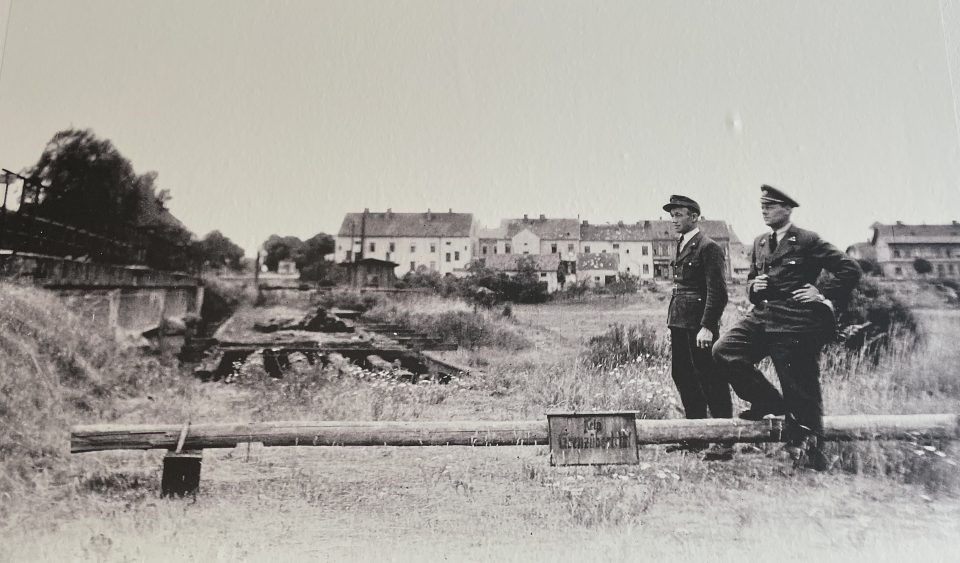
Austrian customs officers at the Czechoslovakian border in the 1950s
Clearings and ethnic cleansing
During the Cold War the public memory of Czechoslovakia and the “Sudeten” Germans was dominated by accusatory and exculpatory accounts of the expulsion of Czechoslovakia’s three million German-speakers. Czech narratives tended to stress the overwhelming support of the “Sudeten” Germans for Adolf Hitler, the Nazis and the NS “Sudeten German Party”, led by Konrad Henlein. They listed the many examples of German brutality against Czechs and Slovaks under the NS Protectorate of Bohemia and Moravia between 1939 and 1945. Consequently, the Czech position was: “the Germans got what they deserved after the end of the war”. The “Sudeten” German narratives, on the contrary, could be summarised as follows: The foundation of the Czechoslovakian state in 1918 was a mistake, as it did not respect the wishes and demands of the German-speaking population and they blamed the Czechoslovakian President Edvard Benes for not being able to save the Czechoslovakian state in the face of Hitler’s aggression. As a consequence, he had paved the way for the expulsions of 1945 and offered an excuse to the Czechoslovakian state for revenge and the elimination of an unwanted minority. These polarised narratives were being questioned seriously after the fall of the Iron Curtain and both Czech, Austrian and German historians have since combined empirical data to illuminate the process rather than make a moral or legal case for or against those expulsions. None of these historians seek to justify or legitimate either German or Czech repression, ethnic cleansing or the radical nationalistic policies of both sides. But especially elderly Czechs and “Sudeten” Germans still carry this historical baggage.
In May and June of 1945 around 150,000 German-speaking “Sudeten” Germans were dragged out of their homes in Southern Bohemia and Southern Moravia and had to leave all their possessions behind. Partisan groups and Czechoslovakian soldiers chased them across the border to Upper and Lower Austria or interned them in camps. In June 1945 15,000 German-speakers were deported from Iglau / Jihlava and 25,000 from Brünn / Brno. After these first “wild expulsions”, more orderly local border traffic picked up again in 1946 and border crossing passes were issued by Czech and Austrian authorities. But constantly conflicts erupted, as no bilateral border control agreement had been signed yet. The Czechs complained that Austria issued such passes to evicted German-speakers who tried to look for some of their possessions in their abandoned houses or Upper Austrian farmers wanted to till their land and harvest their produce on the Czechoslovakian side of the border or Lower Austrian wine growers wanted to harvest their grapes from their vineyards across the border, for example. On the other hand, Czechs who had moved into the houses of evicted German-speakers near the frontier wanted to attend mass on the Austrian side because there were no longer any functioning churches on the Czech side of the border. Austrian as well as Czech young people loved going to dances on both sides of the border and traders and craftsmen still did business both ways. In some cases, it was still possible until 1951 for Upper Austrian farmers to work their land on Czech territory, but it could be dangerous. In 1946 200 farmers from the Austrian village of Schrattenberg wanted to harvest their grapes in Feldsbeg / Valtice and were shot at by the Czech border patrol. Some of them were arrested, but soon freed after Prague had ordered their release.
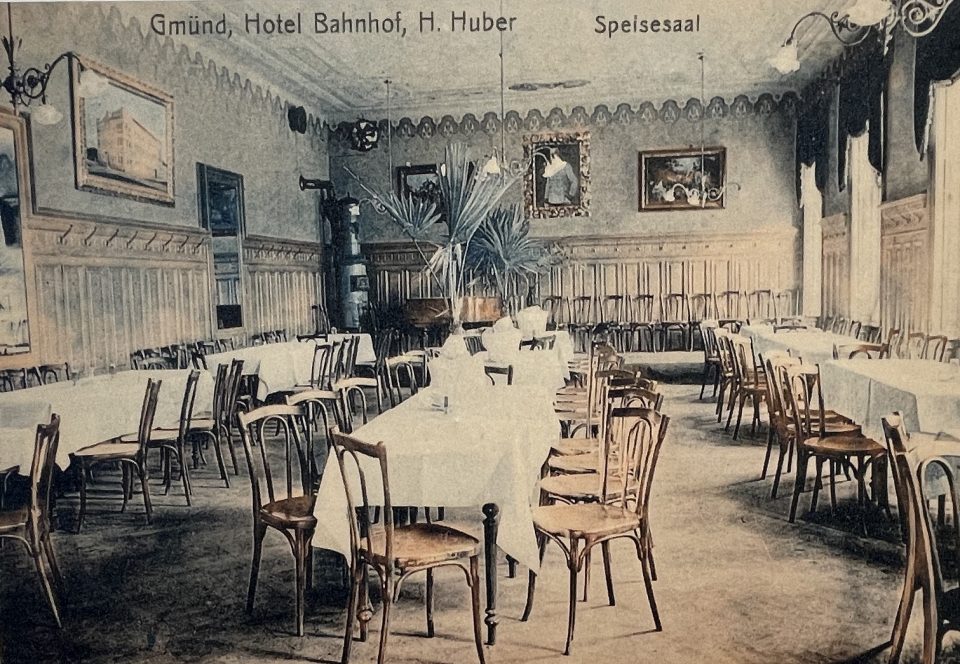
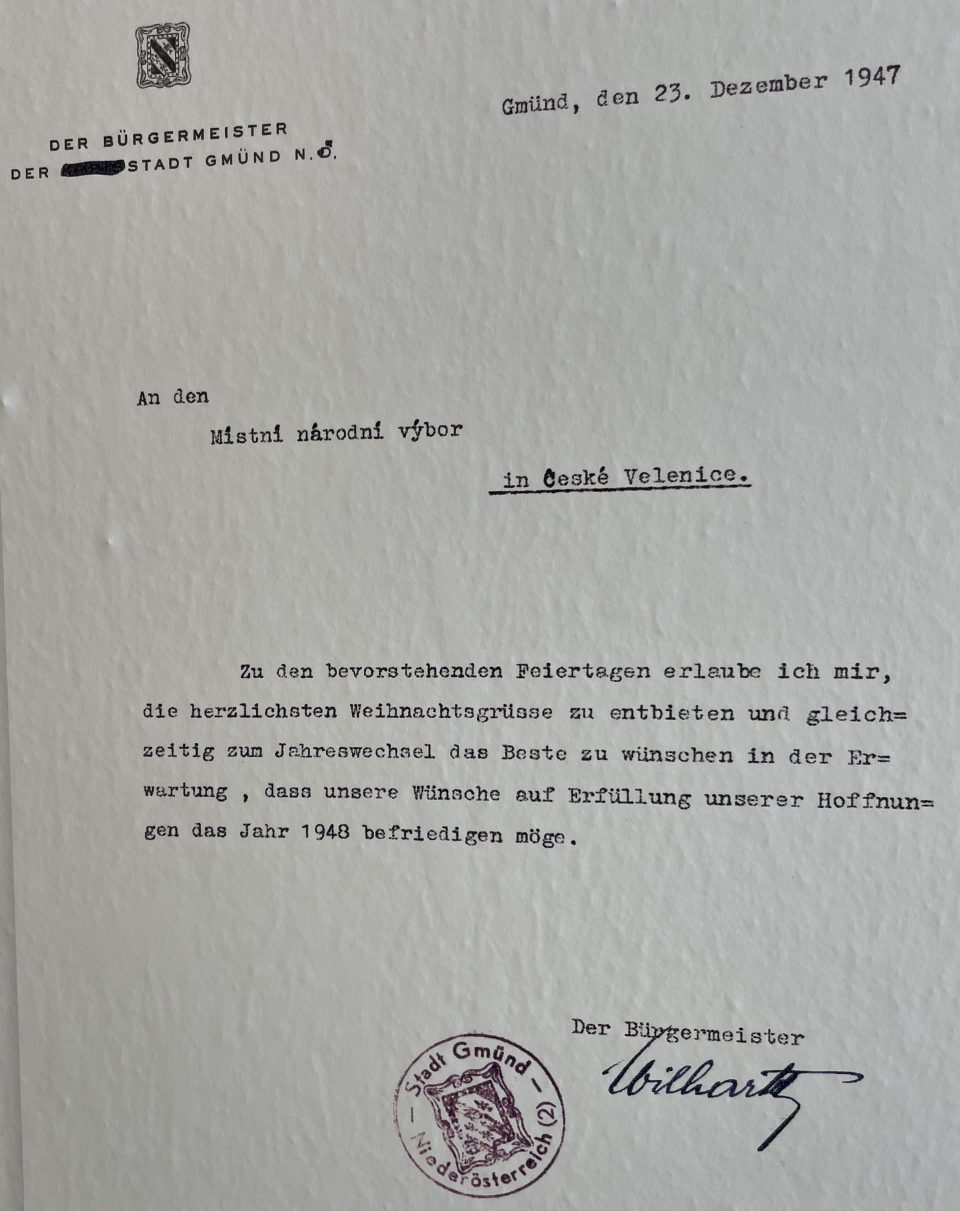
Left: A location of popular dances for young Austrians and Bohemians at the border, which was destroyed by bombs in 1945. Right: A letter with Christmas wishes of the mayor of Gmünd in Austria to his colleague across the border in Ceske Velenice as late as December 1947, when personal political relations were still possible.
A differentiation has to be made between the “wild expulsions” starting in May 1945 of German-speakers from Czechoslovakia and the organised expulsions according to the Potsdam Agreement starting in August 1945, called “odsun” in Czech. The “wild expulsions” were carried out according to similar patterns in Southern Moravia and Southern Bohemia. Within a few hours the German-speaking inhabitants of towns and villages were assembled in central places with just the possessions they could carry and were then chased by groups of Czech partisans, soldiers and members of the Soviet Red Army either into collection camps or across the border to Austria. During this process they were brutally abused and several elderly persons, women and children died of illness and exhaustion on the way or in the camps. By many perpetrators these actions were seen as a revenge for the atrocities the German Nazis had committed against Czechs and Slovaks. This can be illustrated by posters which some of the expelled were forced to carry when crossing the border to Austria, saying “We thank our Führer”, an ironic allusion to Nazi propaganda. Some of the expellees who had relatives in the frontier region in Austria could get refuge there. But after the destructions and deprivations of World War II Austria was much too poor to care for so many refugees and the Austrian government had to ask again and again for aid from the Allied Forces. From an economic point of view, it was clear that the majority of the expellees had to find refuge in Western Germany and not in Austria. For most of the “Sudeten” Germans Austria was just a transit country on their way to Western Germany. Train transports to Germany were organised and many of those affected considered this deportation from Austria as the “second expulsion”. Among those who were expelled were of course several NS party members and war criminals. If they were identified by the Czech authorities, they were arrested and interned in special camps, but some hid in the crowds of refugees or had already fled to the territories liberated by the Western Allies earlier.
All in all, 500,000 Czechoslovakian German-speakers were expelled from Czechoslovakia immediately after the end of World War II and an additional 200,000 in the following year. These expulsions involved physical abuse, maltreatment and murders. Numbers which have been collected recently state that around 6,700 Germans committed suicide, approximately 6,000 were executed or murdered and between 1945 and 1948 around 10,000 people died in Czechoslovakian prisons or labour camps and on marches to the 1,215 collection camps or inside the camps, where conditions were abysmal, especially for children. It can be estimated that the death toll of German-speakers could be up to 30,000 victims.
The concept of transferring all German-speakers from the territory east of the German post-World War II border was first declared by the British government on 8 July 1942 and soon all Allied powers and exile governments agreed to the plan. The decision on transferring all Germans from Czechoslovakia was based on the Potsdam Agreement article XIII of 2 August 1945. The Czechoslovakian government accepted the British concept and decided to resettle all inhabitants who were German citizens after the Munich Accord of 29 September 1938 or after 15 March 1939, who all lost the Czechoslovakian citizenship on the basis of the presidential decree of 2 October 1945. On the same principle, Germans living in Austria were transferred to Germany, too. Officially the transfer of the German population was supposed to be carried out in an “orderly and humane” way, which unfortunately was not the case. Czechoslovakia further had to deal with the problem of collaboration with the Nazis. 10,000 suspects were interrogated and 740 war criminals and collaborators were executed.
At least until the takeover of the Communists in Czechoslovakia in 1948 many expellees hoped they could soon return to their homes, but all those hopes were dashed with the erection of the Iron Curtain. After the Communist takeover in Prague in February 1948 the relationship between Austria and Czechoslovakia worsened dramatically. Privately motivated border crossings were de facto prohibited until 1953 with the argument that Czechoslovakia had to protect its territory from agents and spies who tried to infiltrate the Communist state from the direction of the Austrian territory.
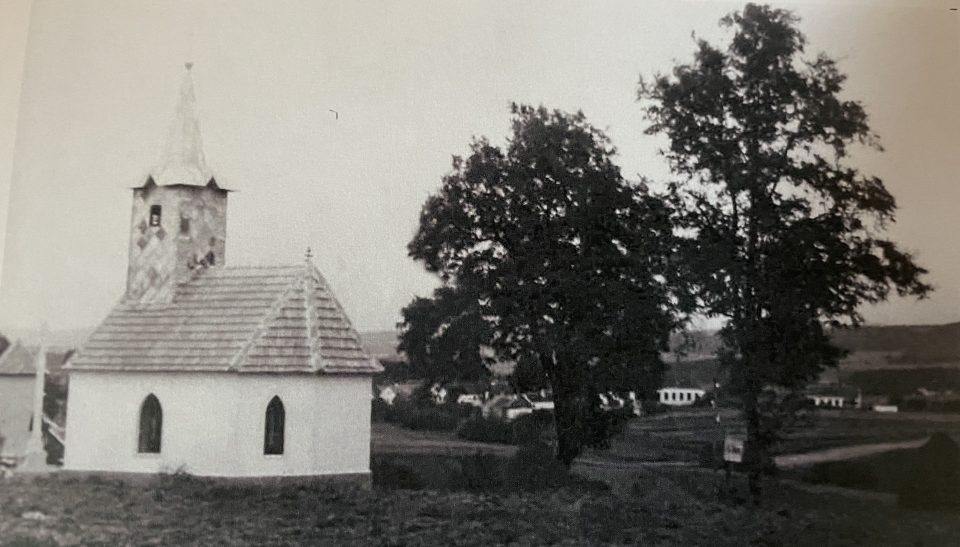
The village Gottschallings / Kostalkov in 1945 after the eviction of the German-speakers
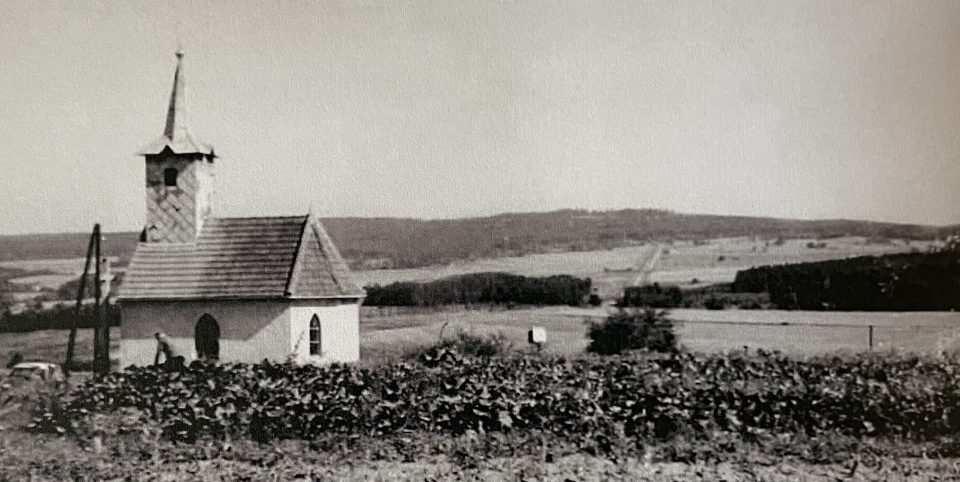
In 1953 the settlement was flattened except for the chapel, which was destroyed in 1955 and the chapel tower was blasted in 1958.
During the first years after the end of World War II Bohemia was the location of extensive and brutal ethnic cleansing, whereby five million inhabitants were affected by forced migration to Austria and Germany. The movement of smaller and larger groups of people was an element of Czech Communist Nationality policy after 1945. All emerging Communist dictatorships in Central and Eastern Europe applied the instrument of nationalistic ethnic cleansing to get rid of the political opposition, too. The militarisation of the borders and the clearings of settlements were supposed to create a homogenic national Czechoslovakian state. As a result, the government dispersed the remaining German-speaking population that had not been evicted from Czech territory between 1947 and 1949 into the Czechoslovakian interior. They were to be assimilated to the Czech majority and moreover, they were needed as workers at the time of reconstruction after the war and the setting up of a Communist economy. This project of resettlement affected several ten thousand people. Forced relocation hit other minorities as well, for example 50,000 Hungarian-speaking Slovaks were moved to Bohemia between 1945 and 1949. Fortunately, a large number of them were permitted to move back to the Slovakian part of Czechoslovakia later. The Croats living in Moravia who had been living in Southern Moravia for centuries were not so lucky. Around 2,000 persons were forcefully transferred between 1947 and 1950 to the Bohemian interior.
A most important governmental strategy in this context was the “clearing of the frontier areas”. The inhabitants of settlements near the border were forcefully evicted. Their villages and farmhouses remained deserted and the government started a so-called “reforestation programme” in these unpopulated zones as a measure of frontier protection. Originally these ethnic cleansing actions targeted most of all the German- and Hungarian-speaking minorities in Czechoslovakia, who had been stigmatised as “enemy aliens”. After 1948 the Communist “class society” aspect was moved into the forefront and the increased military guarding of the frontiers targeted to a greater degree the local frontier population, who was deemed suspicious due to assumed spying and smuggling activities and generally, disloyalty towards the Communist regime. Local population in mixed marriages for example, members of opposition parties, opponents of the collectivisation of enterprises and agriculture and business owners had to leave their homes and businesses or farms and were resettled because they were considered “reactionary elements”. This was part of the “political cleansing” by the Communist regime.
Already at the end of 1945, when the organised expulsion, the “odsun”, had not even started yet, 800,000 Czechs from the interior of the country flooded the border areas in search of deserted homes and for weeks and months these zones became lawless and chaotic territory, characterised by violence and disorder, where governmental decrees and legal orders were ignored. The governmental project of resettlement of the border areas, where all German-speakers had been expelled, turned out to be very difficult to carry out, long winded and controversial. Especially the Southern Bohemian region at the border to Austria, the districts Krumau / Cesky Krumov and Budweis / Ceske Budejovice offered no industrial jobs and the farmland was unattractive. Yet the Czech government was unable to control the flow of people into these frontier zones. Because of the remoteness of the border area in Southern Bohemia and the unfavourable backwardness of the economic development, the Czech government had no great hopes for a profitable resettlement of the villages there and therefore decided to level the settlements. Another Communist aim could have been to stop the first wave of uncontrolled inflow of landless and jobless impoverished people from the interior, who resisted any governmental authority. In 1947 Czech data show that 75 per cent of all buildings in the districts Horsovsky Tin / Bischofteinitz, Domlazice / Taus, Klatovy / Klattau, Susice / Schüttenhofen, Prachatice / Prachatitz, Cesky Krumlov / Krumau and Kaplice / Kaplitz stood empty. After a second attempt at resettling the border region the population consisted of some left-over German-speakers, local Czechs who were suspected of having been Nazi collaborators, the landless proletariat of the Czech interior, Slovak Roma and some Greeks who had fled the civil war there. This population mix was characterised by stark differences, but what they had in common was a very traditional way of life, strong religious beliefs and a patriarchal attitude towards women and the family. On the other hand, the positive aspects of this relocation were the will of the many young people who had arrived to make a new start and rebuild the devastated area.
In the early 1950s a second wave of ethnic cleansing and forced migration was triggered by the increased fortification of the borders. In a zone of up to 10 kilometres from the frontier various tightened restrictions were introduced in 1950, for example the permanent carrying of special passes, no travelling from the zone, no receiving of visitors, no movement outside settlements and official paths and no drawing or photographing of the landscape. As late as 1980 my parents, Werner and Herta Tautz, who were visiting relatives in Prague, were arrested and detained and interrogated separately, because my father was supposed to have unwittingly photographed something he should not have photographed:
As reasons for eviction the government cited the following criteria: having relatives or friends on the other side of the border, knowing German, which implied that those persons had contact to the enemy in the West or were listening to Austrian or Western radio stations. As a consequence, the Ministry of National Security listed 130 villages near the Austrian and German border in November 1951. The resettlement of these families started immediately and lasted until April 1952. 1,254 families, approximately 4,500 persons had to leave their homes. From the “Frontier Zone” 806 families were evicted and from the “Prohibited Zone” 448 families. Several of these families were assigned houses that had formerly belonged to German-speaking families. In 1953 another wave of evictions affected most of all the Southern Bohemian region of Vitorazsko, because the population was suspected of anti-Communist agitation and smuggling.
The Cold War and the erection of the Iron Curtain was linked to the circumstances that Czechoslovakia had been turned into a “puffer state” in a future East-West conflict and many regiments and consequently, a large amount of military equipment was moved to the Austrian and West German border. This militarisation of the frontier zones was incompatible with civilian settlements, which meant that between 1953 and 1954 further 3,000 inhabitants were relocated. The building of power stations and reservoirs and the exploitation of coal mines at the borders further led to the eviction of local families. As a consequence, the government ordered the destruction of all empty buildings in settlements near the border, except those which were used by the Czechoslovakian army or the border patrol. In the years 1959 and 1960 50,000 empty buildings were destroyed and were flattened, among them precious cultural, religious and architectural heritage. This brutal ethnic cleansing did not only affect the destiny of thousands of refugees, but destroyed a centuries-old cultural landscape.
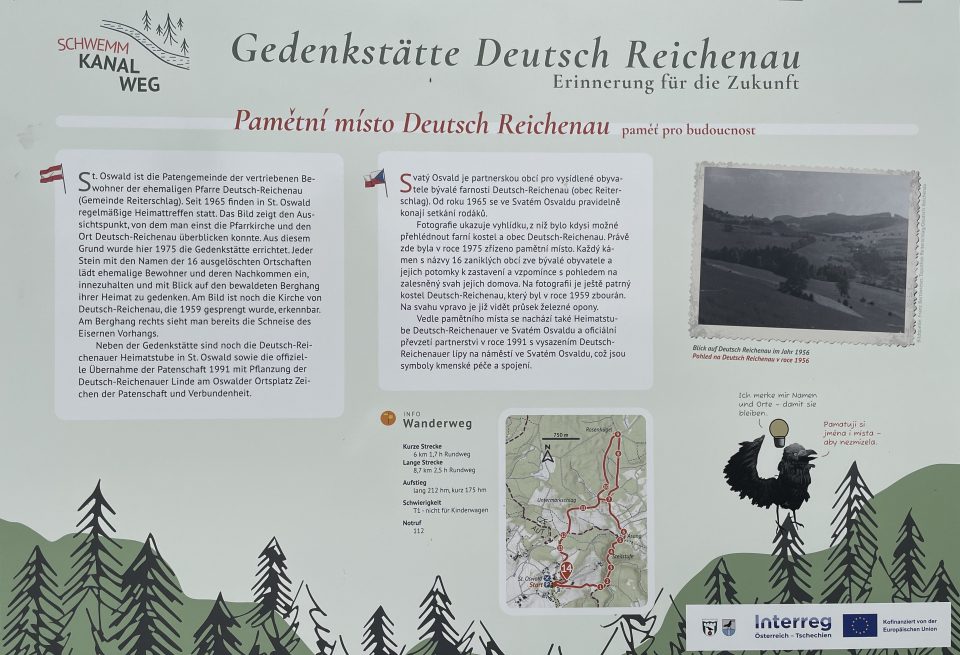
Memorial of one of the destroyed villages in the Bohemian Forest in the “Mill Quarter”, Deutsch Reichenau /Nemecky Rychnov
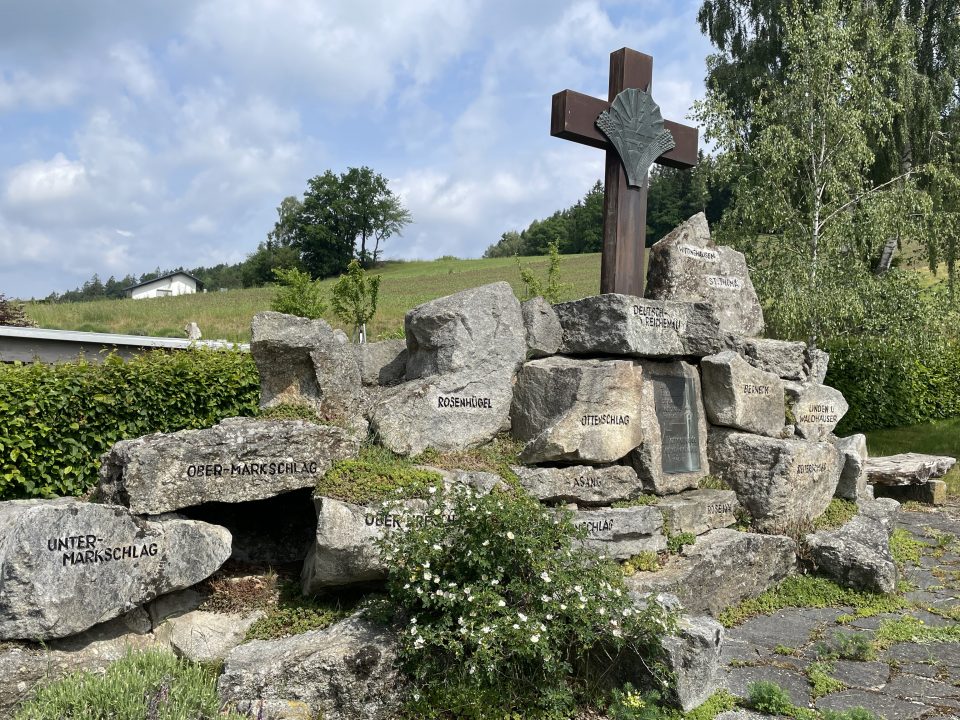
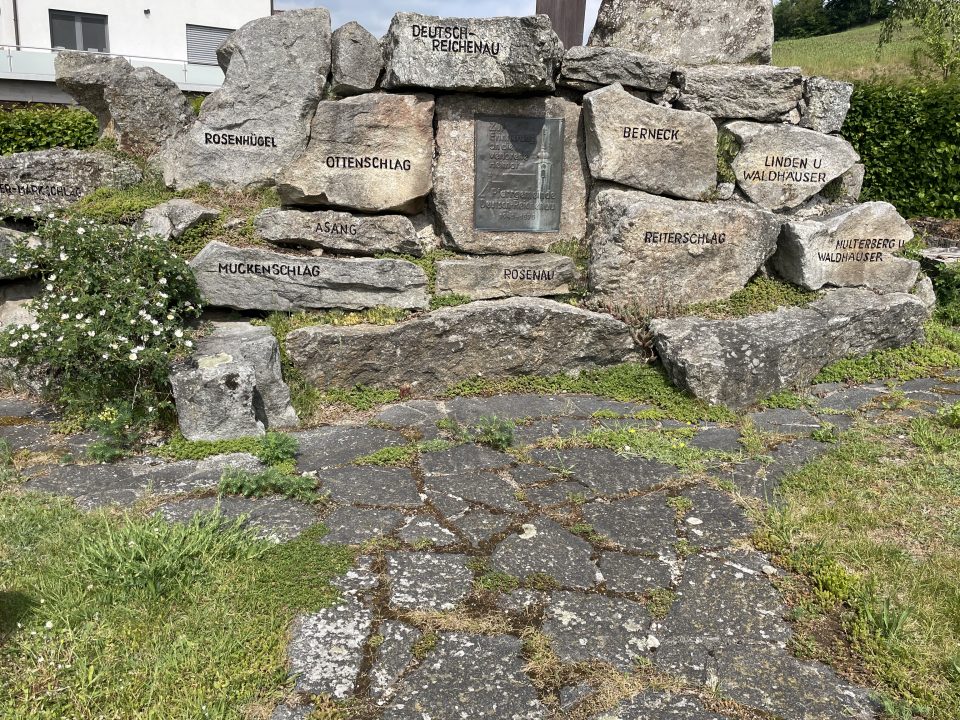
Here the names of the destroyed villages just north of the Upper Austrian village St. Oswald, a partner of the parish “Deutsch Reichenau”, are listed. All 16 settlements belonged to the parish “Deutsch Reichenau” and many of the displaced villagers first arrived in St. Oswald.
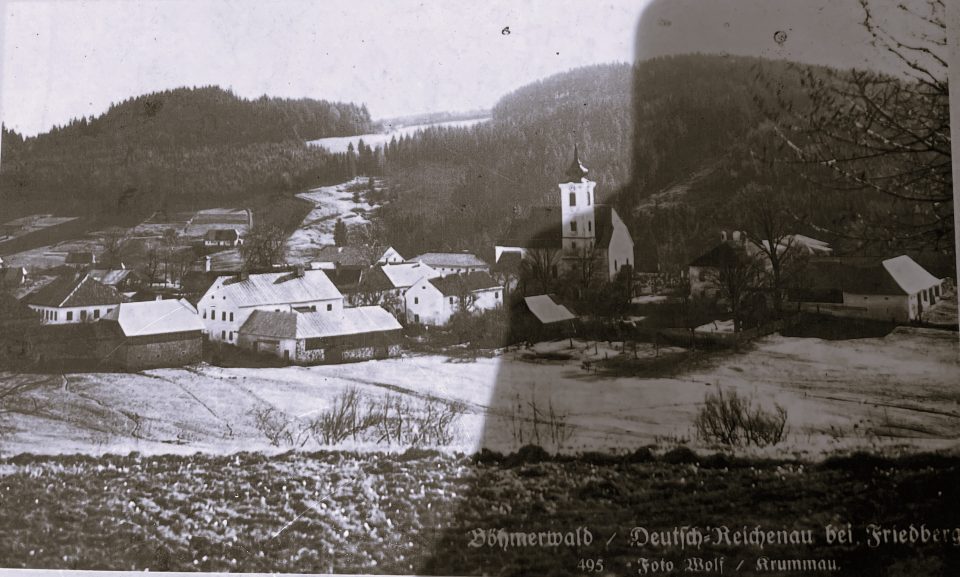
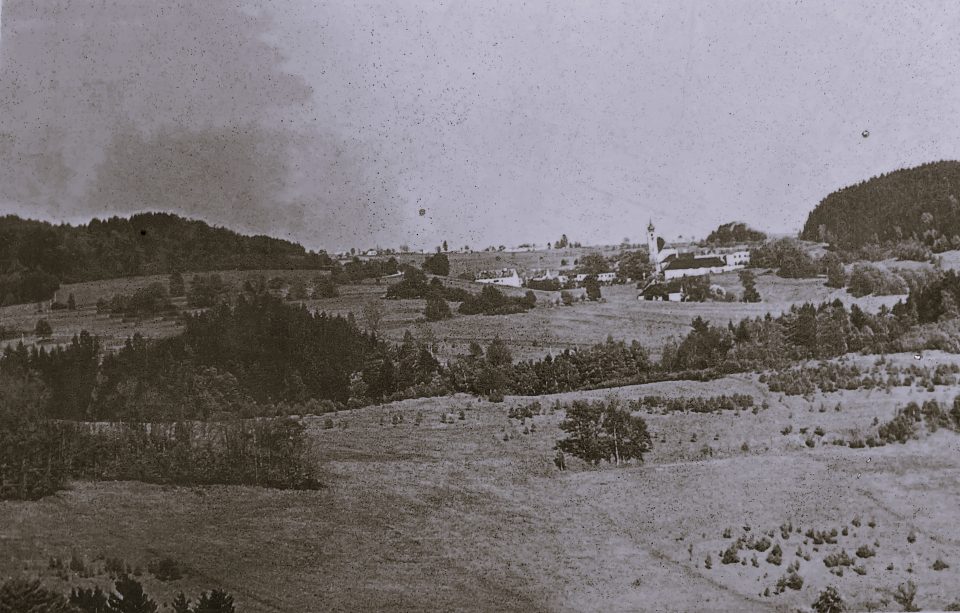
Left: “Deutsch Reichenau” before the ethnic cleansing; right: “Deutsch Reichenau“ just before the complete destruction; some houses are already erased, but the church is still standing.
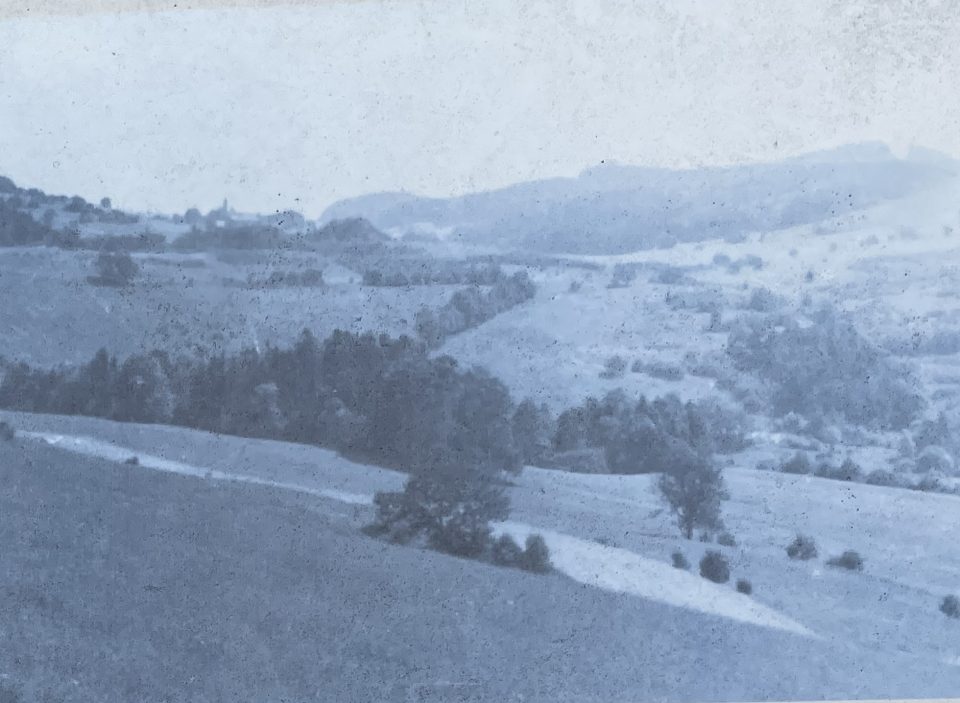
“Deutsch Reichenau” just before the blasting of the parish church in 1959 by the Czechoslovakian army. The detonation was heard in many places in the northern “Mill Quarter”. At the top right corner, the cleared strip of forest is visible, where the Iron Curtain was being erected.
Another example of an erased German – Czechoslovakian village at the border on the Czechoslovakian side was Schattau / Satov, which was situated on the railway line between Retz in Austria and Znaim / Znojmo in Czechoslovakia. It was an agricultural village with an important industrial sector. The census of 1880 recorded 1,681 German-speakers and 18 Czech-speakers. Due to the industrialisation and the need for workers the share of Czech-speakers increased in 1921 to 691 and the German-speakers were slightly reduced to 1,248. At the start of World War II in 1939 there were 1,633 German-speakers and 110 Czech speakers du to the NS policy in mixed areas to promote the Germans and disadvantage the Czechs. Yet after the end of World War II and the expulsion of the German-speaking population, 17 German-speakers had remained according to the Czech census of 1950 and 811 Czech-speakers; overall, a drastic reduction in population numbers.
Until the early 1930s the village was practically bilingual, in the factory no language was dominant and the population was characterised by many mixed marriages. Everyone spoke which ever of the two languages was needed in everyday life. As the farming population was German, the official appearance of Schattau was predominantly German, yet with the foundation of Czechoslovakia the image of the Czech language improved significantly and the government promoted Czech education and culture. Unfortunately, the radicalisation of the 1930s poisoned the atmosphere in Schattau, too; all multi-ethnic organisations were dissolved until finally even the German-Czech football club was split up. When Hitler took power in Germany in 1933 the “Sudeten German Party” grew ever stronger among the German-speakers and ever more radical and aggressive in its actions. Under this populist and nationalistic pressure any type of long-practised patterns of interethnic communication was smashed. When the Nazis incorporated the “Sudetenland” into the “Third Reich” in September 1938, violent assaults against the Czech population got out of control; the homes of Czech workers were ravaged and the Czechs persecuted. The few Czechs who remained in Schattau were beaten up and / or locked up. Lots of the incidents happened on the basis of personal grudges and revenge for supposed former insults. A German took over the pottery factory and nearly all Czechs had to leave the village. On 8 May 1945 the Red Army occupied Schattau and a few days later the Czechoslovakian authorities took control of the village. While the Nazis were arrested and deported to camps, the former Czech inhabitants returned and new settlers from Czech and Slovak territories arrived and moved into the houses from which all German-speaking inhabitants had been chased in the “wild expulsions” starting in May 1945. With the Communist takeover in 1948 the collectivisation of all agricultural enterprises was introduced and the “Frontier Zone” and the “Prohibited Zone” were established, which completely changed the social and cultural structure of Schattau. The traditionally close connections to the neighbouring Austrian villages were completely severed for decades.
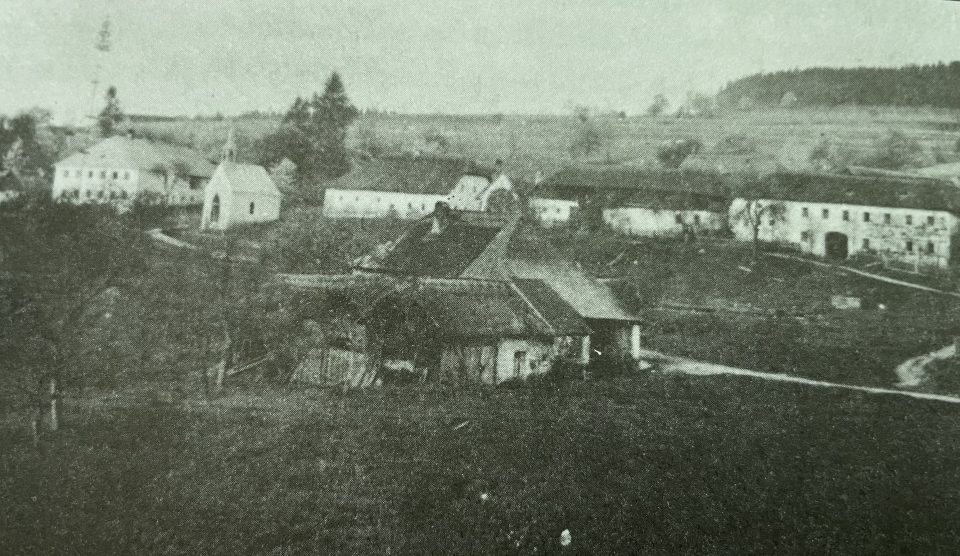
Raifmass was the southernmost village in Southern Bohemia at the border to the “Mill Quarter”.
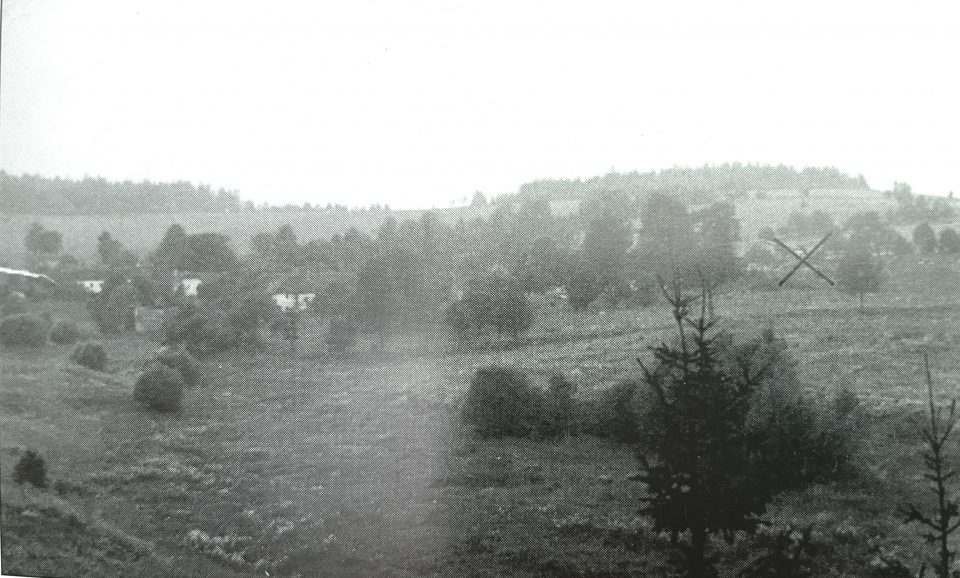
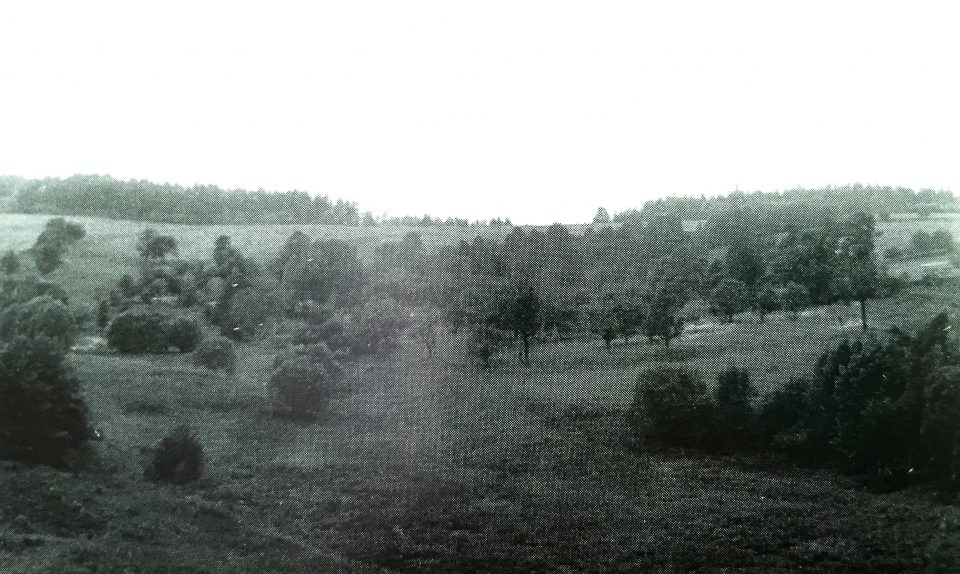
In the photo on the left there are still some houses standing, but the local inn was already demolished (where the cross is) and in the photo on the right the whole village has already been erased.
Another example is Raifmass. In the winter of 1945/46, all the villagers of Raifmass were dispossessed and on 31 March 1946 they were chased from Raifmass with only the few things they could carry. At night some of them sneaked back across the frontier to retrieve some possession,s because many of the expellees found refuge in the Austrian villages of the “Mill Quarter” across the border, just a few kilometres away from Raifmass. They had relatives or friends there and some of them were able to rent farmstands in Zulissen, Lichtenau or other villages in the “Mill Quarter” to make a living until they could return home. But all hope of a return to Raifmass was dashed, when the Communists took over the power in Czechoslovakia in 1948. After the fall of the Iron Curtain some former inhabitants of Raifmass could return to see what was left of their village, but what they found was just overgrown rubble and an abandoned pot here or an oven door there, forgotten between the bushes and stones. Some inhabitants of Raifmass had fled further away, to Eastern Germany for example and others were forced into camps, for example in Kaplitz or in the Czech interior, because they would later be assigned to kolkhozes to be used as agricultural labourers in the collectivised agricultural enterprises.
Life at the frontier
The Communist propaganda especially targeted the inhabitants living near the border and especially children and adolescents were deemed susceptible. The Czechoslovakian Communists predicted that within two or three generations the whole population living in the vicinity of the frontier would be completely loyal to the regime. During the first two decades of strict surveillance the inhabitants had got used to this situation and deemed every unknown person as suspicious. The young were the first generation that had not known any other living conditions. The border patrol soldiers were involved in the community life of the frontier zones and trained the young inhabitants of the villages in “Young Pioneer” camps, where they were ideologically indoctrinated and prepared for their future tasks as border patrol assistants. Border patrol assistants were recommended by the Communist party, by their work place supervisors or trade union representatives. They patrolled the border, spied on their comrades and denounced suspicious persons. In 1964 out of 191 persons who were caught trying to cross the border only 17 were arrested by the police, 40 by civilian border patrol assistants, 2 by civilians and the rest by border patrol soldiers. This illustrates the importance of the involvement of civilians in spotting possible fugitives and denouncing and catching them. The “Young Pioneers” were enthusiastic; in general, they loved the handling of weapons and the work with the combat dogs under the supervision of the border patrol soldiers. When they heard a special song on the radio, they knew that they had to assemble immediately at a predetermined spot for action. In 1965 40 such groups existed in Czechoslovakia, which trained 1,000 children as future border patrol assistants. The movement “Young Border Guards” romanticised the collective patriotic activities in the form of weapons training and sports competitions. The children were proud to be living at the frontier and making a contribution to the protection of the Communist state against the West. They were even given a special uniform: green shirt, dark trousers, green beret or garrison cap, “Young Pioneer” scarf and badges of rank.
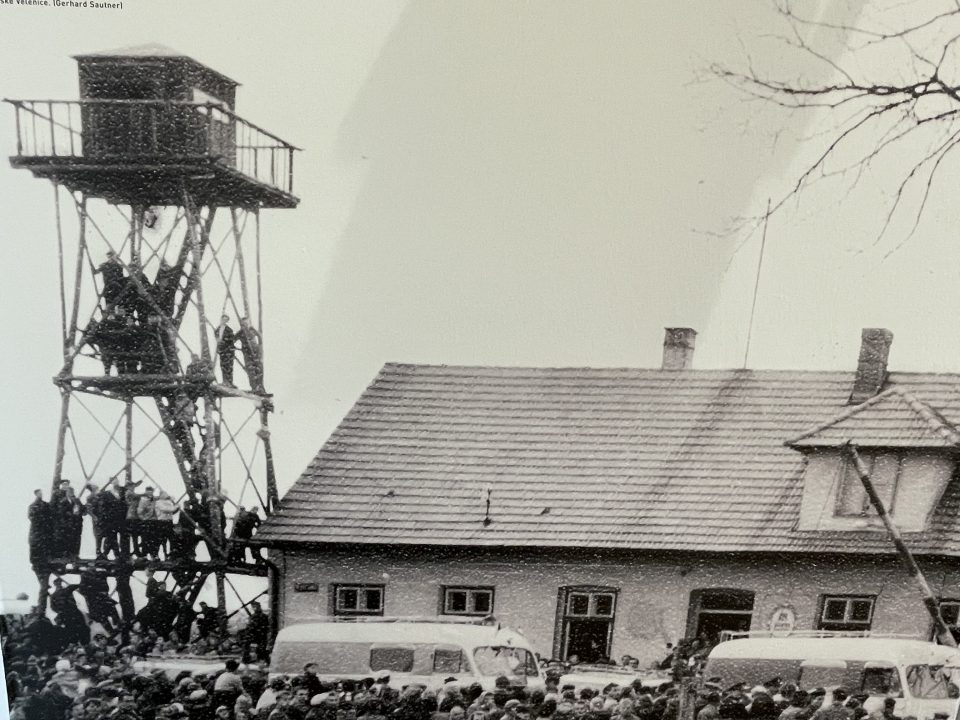
Czechoslovakian Communist party celebratory demonstrations at the Iron Curtain
In effect, the frontier area was a hotbed for spies, agents, double agents and all types of secret services. The Czech authorities tried to access information about the West via Austrian border patrol officers, especially after 1955 and the withdrawal of the Red Army from Austria, because from then on Czechoslovakia had no access to information about Austria via the Soviets. Czech fugitives who had fled to Austria could no longer be returned to Prague. So, the Czech authorities tried to bribe Austrian border officials and some Austrian customs officers were prepared to top up their meagre salaries by passing on secret information, which then made them vulnerable to blackmail. On the Austrian side information about the Communist neighbour was obtained via fugitives and informers among the Czech border patrol soldiers.
Immediately after the end of the war the Czechoslovakian authorities as well as the Austrian ones tried to identify and prosecute Nazi collaborators and war criminals, but when the pressure from the Allied liberators weakened, not much was achieved in Austria and the majority of them were not accused and started their new lives unscathed by their criminal past. Nazi collaborators, party members and sympathisers were mostly integrated in the Austrian conservative Christian-democratic Party ÖVP and to a lesser degree in the Austrian Social-democratic Party SPÖ. When the VdU Party was formed in 1949, it created a haven for German Nationalists and former Nazis. The VdU was renamed FPÖ in 1956 after the Allied Forces had left Austria and is now a very strong right-wing populist force in Austrian Politics. It is interesting to note that in Lower Austria most former Nazis were sucked up by the ÖVP and to a lesser degree by the SPÖ, whereas the VdU received a lot of support from the start in Upper Austria and as soon as the Allied Forces allowed the formation of this German nationalist party, the Upper Austrian Nazis flocked to it in larger numbers than the Lower Austrian ones did.
At the border between Austria and Czechoslovakia several spectacular escape attempts were observed, such as the one in 1961, when an eight-ton Tatra truck with five fugitives crashed into the border checkpoint Gmünd / Ceske Velenice and without stopping drove to Vienna; or in 1969 when a Czech soldier in a mobile crane ran into the Austrian toll station and got stuck there. Unfortunately, most of the failed escape attempts were not noticed at the Austrian side of the border, not just by Czech fugitives, but also by Polish or East German citizens, Overall, 129 fugitives were killed and only in the border region of Znaim / Znojmo 8,529 persons were caught at escape attempts., among them 7,000 from Czechoslovakia. Yet there were a few deadly incidents when trespassing the border from Austria to Czechoslovakia, too; for example, when a woman got lost and crossed the border inadvertently at Gottschallings / Kostalkov and walked on along the barbed wire fence despite warning shots by Czech border patrol soldiers. They then shot at the woman from the Czech side of the barbed wire fence and she died in a hospital in Neuhaus as a consequence.
In August 1956 two young Austrian men from Rabensburg near the river Thaya, went fishing in the evening. On a small island in the river Thaya, they cast their fishing nets, but the Czech border patrol soldiers assumed they were fugitives and shot at them. The two young fathers were never seen again. The Austrian police just found their abandoned motorcycle; the bodies had been secretly disposed of by the Czech soldiers and all the appeals of the two families for information were ignored by the Czech authorities. In 2009 an Austrian customs officer told the story to a Czech colleague who started research and found out that the bodies of the two Austrian men were buried in unmarked graves just 10 kilometres from their hometown in the cemetery of Lundenburg /Breclav. All in all, 15 Austrians were killed at the border between 1951 and 1965 by Czech soldiers and 1,150 were arrested, when attempting to cross the border from Austria to Czechoslovakia, 65 of them Western secret service agents.
Gradually the more liberal border policy of the Communist regime in the following years led to an increase in legal border crossings. In 1955 4,800 visa for travels from Austrians to Czechoslovakia were issued, but only 1,900 vice versa. What’s more, in 1962 already 36,000 Austrians could travel legally to Czechoslovakia and 29,316 Czechs to Austria. One reason for the liberalisation was the urgent need for Western currencies, which boosted the building of touristic infrastructure in Czechoslovakia. During the “Prague Spring” of 1968 under Alexander Dubcek the radical Communist regime gradually lost control, restrictions were relaxed and opposition groups were formed. In Austria this reform movement triggered an enthusiastic response and all Austrian political parties supported the “Prague Spring”. But on 21 August 1968 the Soviets together with troops of the Communist Warsaw Pact smashed this reform experiment with 650,000 soldiers – four times as many as in Hungary in 1956, when the Hungarian uprising was thwarted. It was the largest military operation in Europe since World War II.
Already in July 1968 preparations were made in the military barracks in Freistadt in the “Mill Quarter” and in other barracks at the Austrian border to receive and care for refugees from Czechoslovakia. But most of the refugees moved on to Vienna, where youth hostels and trade union buildings were welcoming them. Many, especially young people, camped along the Danube and around 20,000 people were accommodated in the homes of private persons. The hostels recorded 86,000 refugees between 2 August and 8 September 1968. Yet of 160,000 refugees 129,000 soon returned to Czechoslovakia and 12,000 moved on to other countries. Overall, 8,000 Czech refugees applied for asylum in Austria in 1968.
After this traumatic incident, “the border was dead”. Personal and commercial relationships that had developed in the time of liberalisation were brutally cut off and in Austria it seemed that the world ended in the north at the Czech border. In the “Mill Quarter” in Upper Austria and the “Wood Quarter” in Lower Austria the majority of the population was no longer interested in what was going on across the border. Being a poor and neglected frontier region became a characteristic of the regions and a form of identification. “Being disadvantaged” became a “badge of honour” for the inhabitants of these border regions in Upper and Lower Austria. Despite being one of the poorest regions in Austria, the absurdity of the militarised border control system of the Communist regime and rare encounters with Czech kolkhoz farmers confirmed their assumption of the superiority of Western capitalism. So, the inhabitants of the “Mill Quarter”, the “Wine Quarter” (Weinviertel) and the “Wood Quarter” (Waldviertel) could look down on the Communist neighbours in the north, even if they themselves were sneered at in the rest of Austria. The generations of Austrians born between 1950 and 1960 who were raised near the Iron Curtain accepted it and never questioned its absurdity. On the contrary, it was taken as granted and seen as a bulwark against the “threatening Communist East”. Only very few attempted to overcome the enormous bureaucratic barriers to obtain visas and to undergo the humiliating controls at the Czech border checkpoints. My parents, Werner and Herta Tautz, were two of the few who ventured north and east to discover these unknown territories:
On the other hand, some small-scale private and commercial contact continued to exist; for instance, organised bus tours, mostly of expelled “Sudeten” Germans, who wanted to see the places where their homes had stood; or lumber export from Southern Bohemia to Austria, professional contacts of railway workers and, of course, smugglers. In Austria news about Czechoslovakia were rare and seldom positive. For most it was a “terra incognita” about which you did not know much and you did not really want to know anything anyway. The towns and villages across the border were only few kilometres away from Austria, but seemed a world apart. The atomic power station which was built in Temelin confirmed the image of the brutal and dangerous regime in the north in the eyes of the Austrians. Across the frontier, the Czechs and Slovaks and especially the young loved listening to Austrian radio stations, especially the pop music radio station Ö3 and the Austrian Communist newspaper “Volksstimme” was quite popular because it included the Austrian radio programme. The image of Austria among Czechs and Slovaks was ambivalent; on the one hand they believed the Communist propaganda of “unrestricted capitalism” in the West and on the other hand they had an idealised image of freedom and wealth in the West. Furthermore, the decades-long separation resulted in a complete loss of bilingualism and the knowledge of the other language.
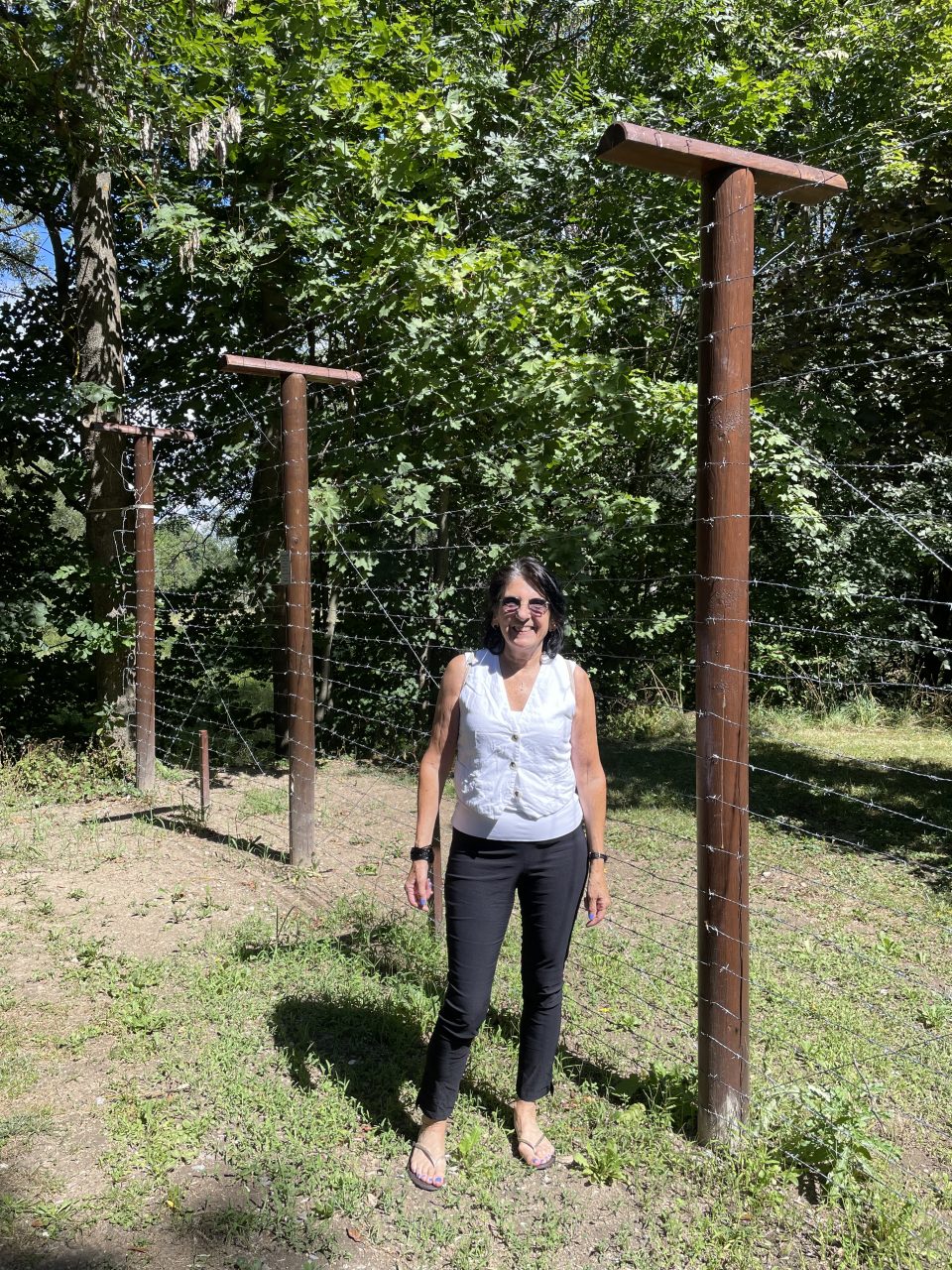
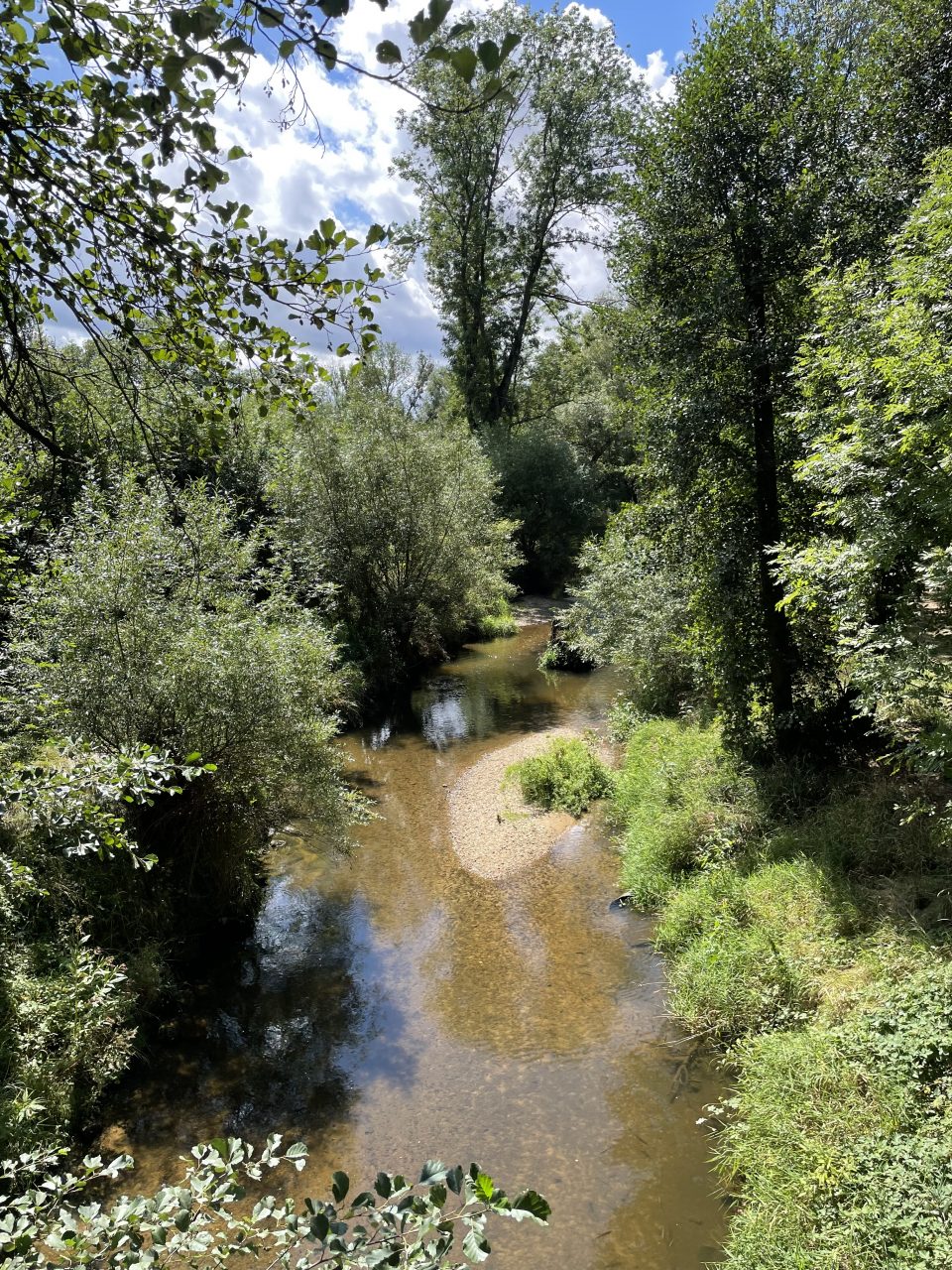
Memorial of the Iron Curtain in Ceske Velenice (left); wild and untouched nature at the border stream Lainsitz / Luznice (right)
Rural life in the “Mill Quarter” in the 1950s and 1960s
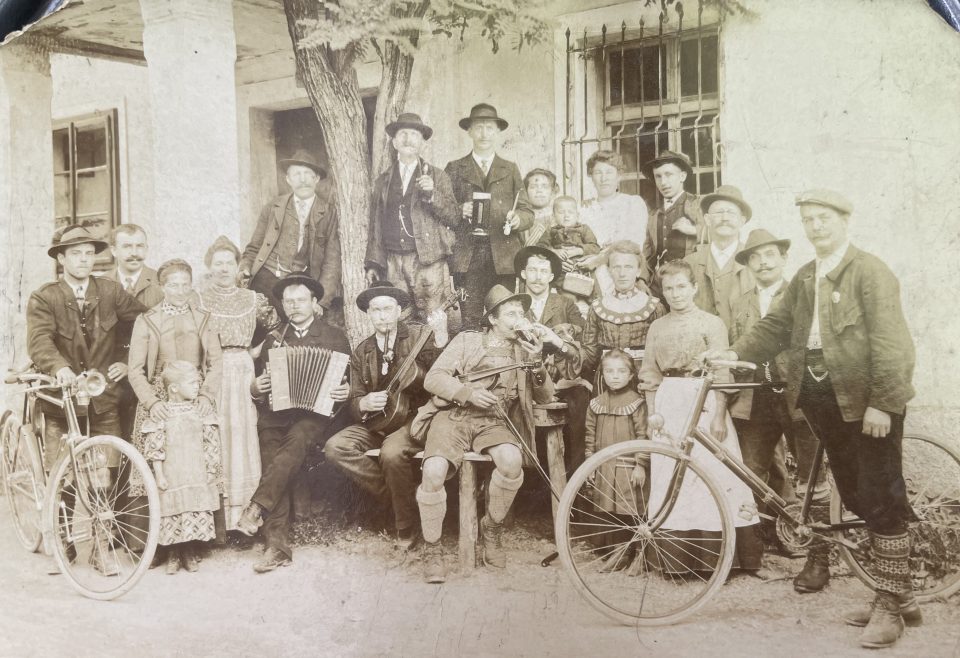

Traditional village entertainment: folk music and ice stock sport, a local form of curling, in winter
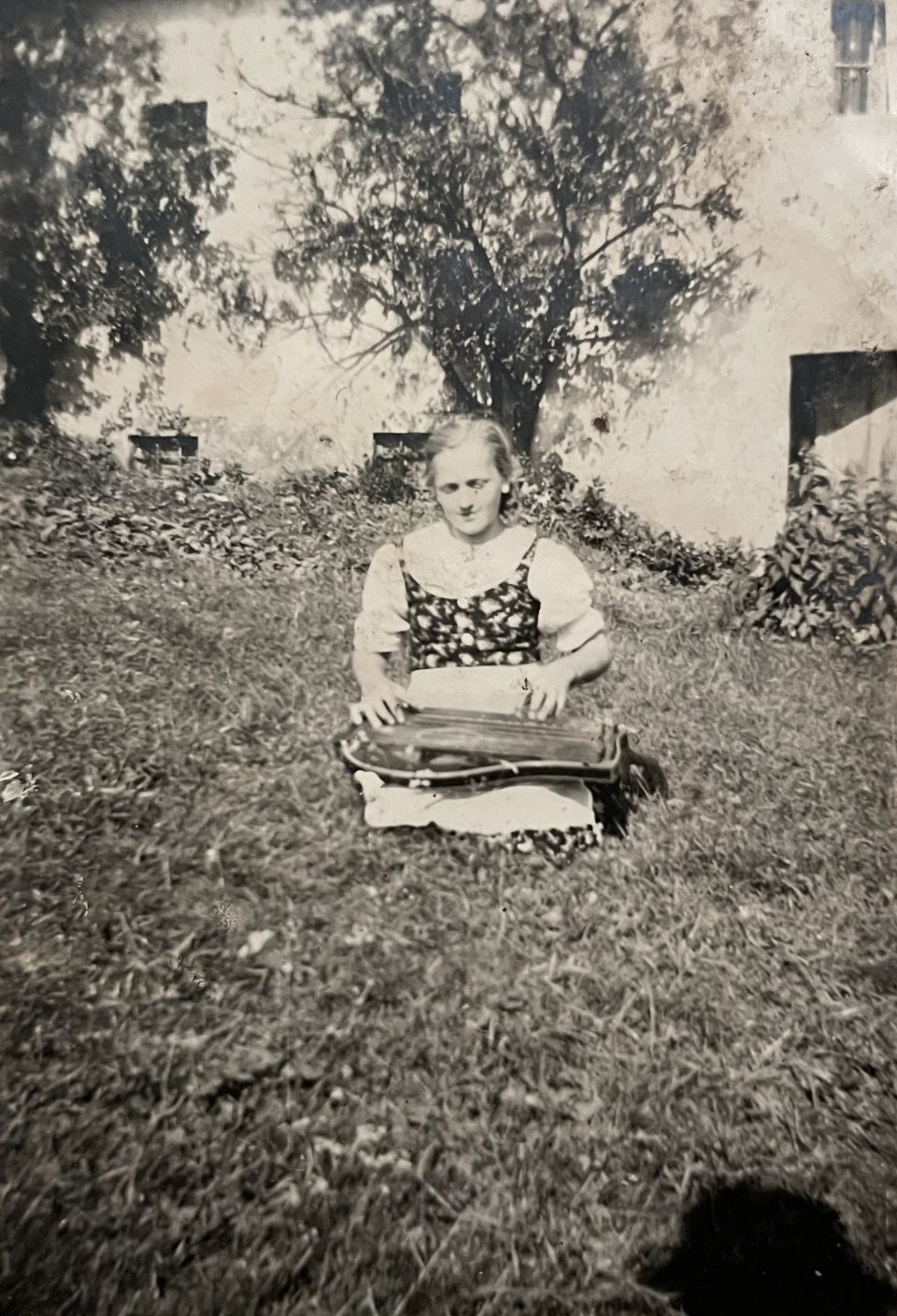
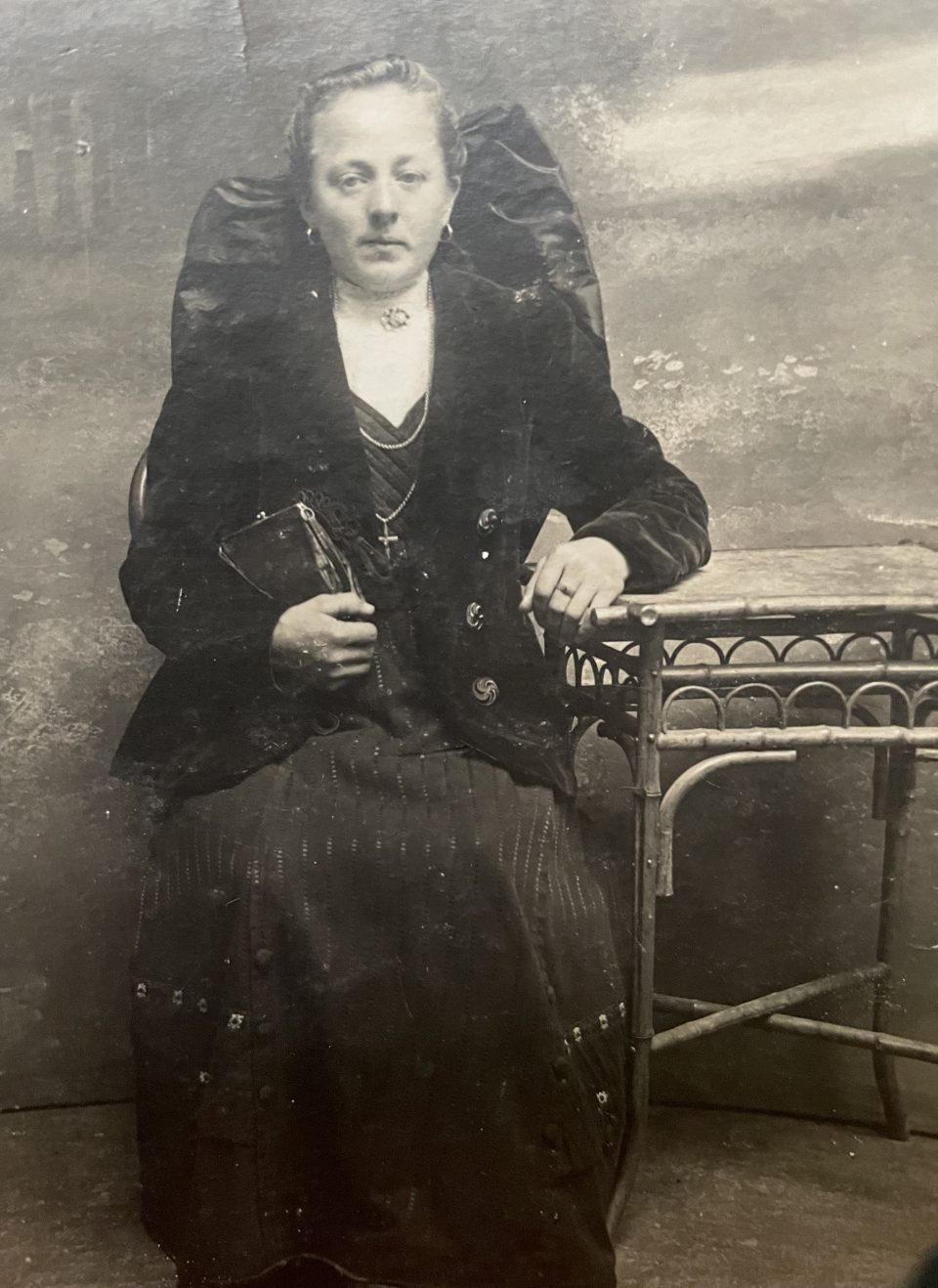
Left: Rosa playing the zither; right: Rosa’s sister Steffi in traditional dress
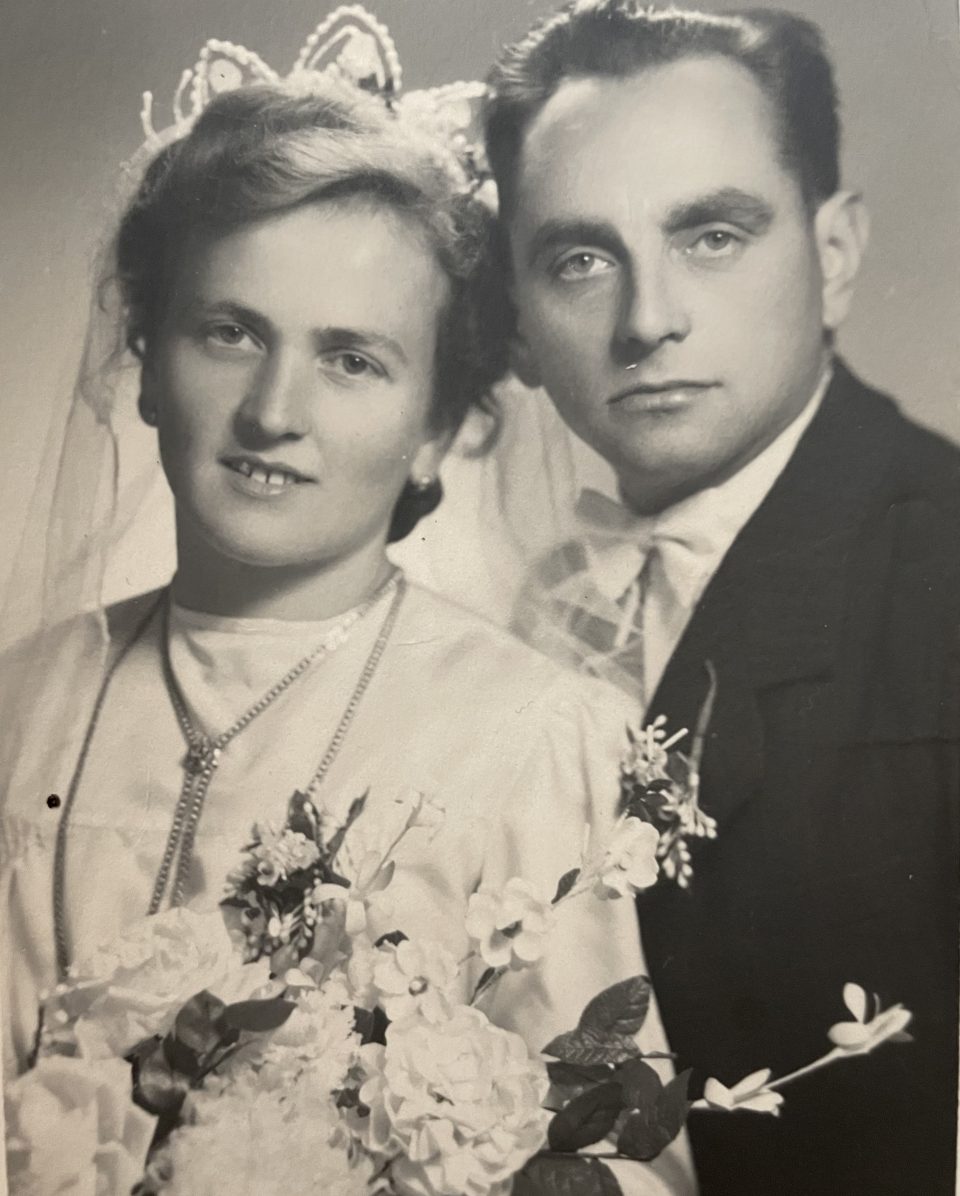
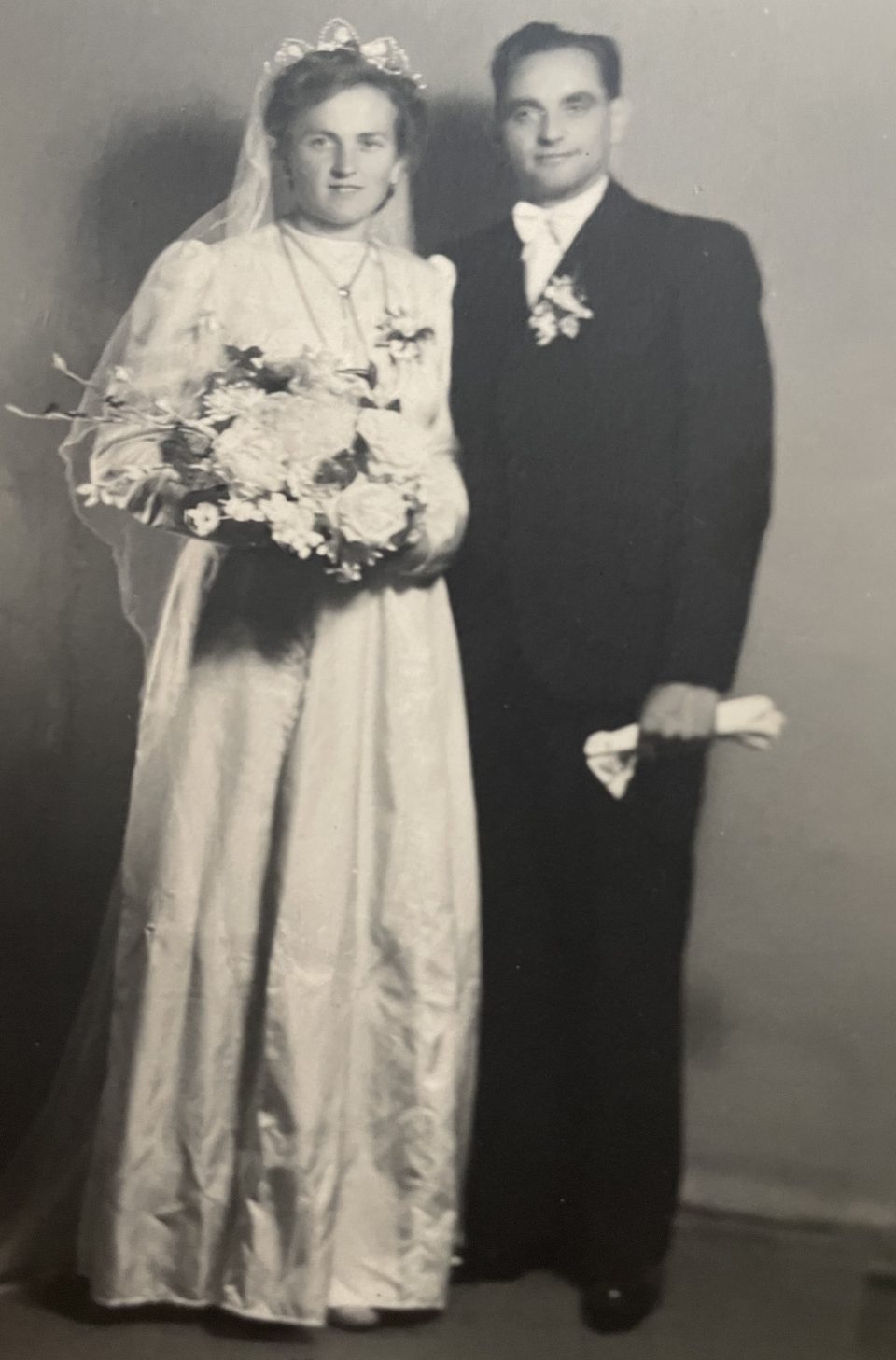
In 1948 Rosa married the stone mason Karl Wurm, just returned from the war on the Eastern Front and from Soviet prisoner-of-war camps
Still in the early 1950s more than half of the population of the northern “Mill Quarter” near the Czech border were working in agriculture. Village life was characterised by traditional farming culture. Housing and work places were still united and life was dictated by agricultural vegetation cycles and livestock farming. The superior social strata were the land-owning farmers and the traditional leading authorities were priests, teachers, village council members and heads of traditional local associations, such as the war comrades, the fire brigade and the brass band. Yet the majority of the inhabitants of the villages were small farmers and smallholders who owned no land and had to rent agricultural fields from the bigger farmers and also work there as agricultural labourers. At the bottom of the social ladder there were the maids and menials, landless and lacking their own accommodation.
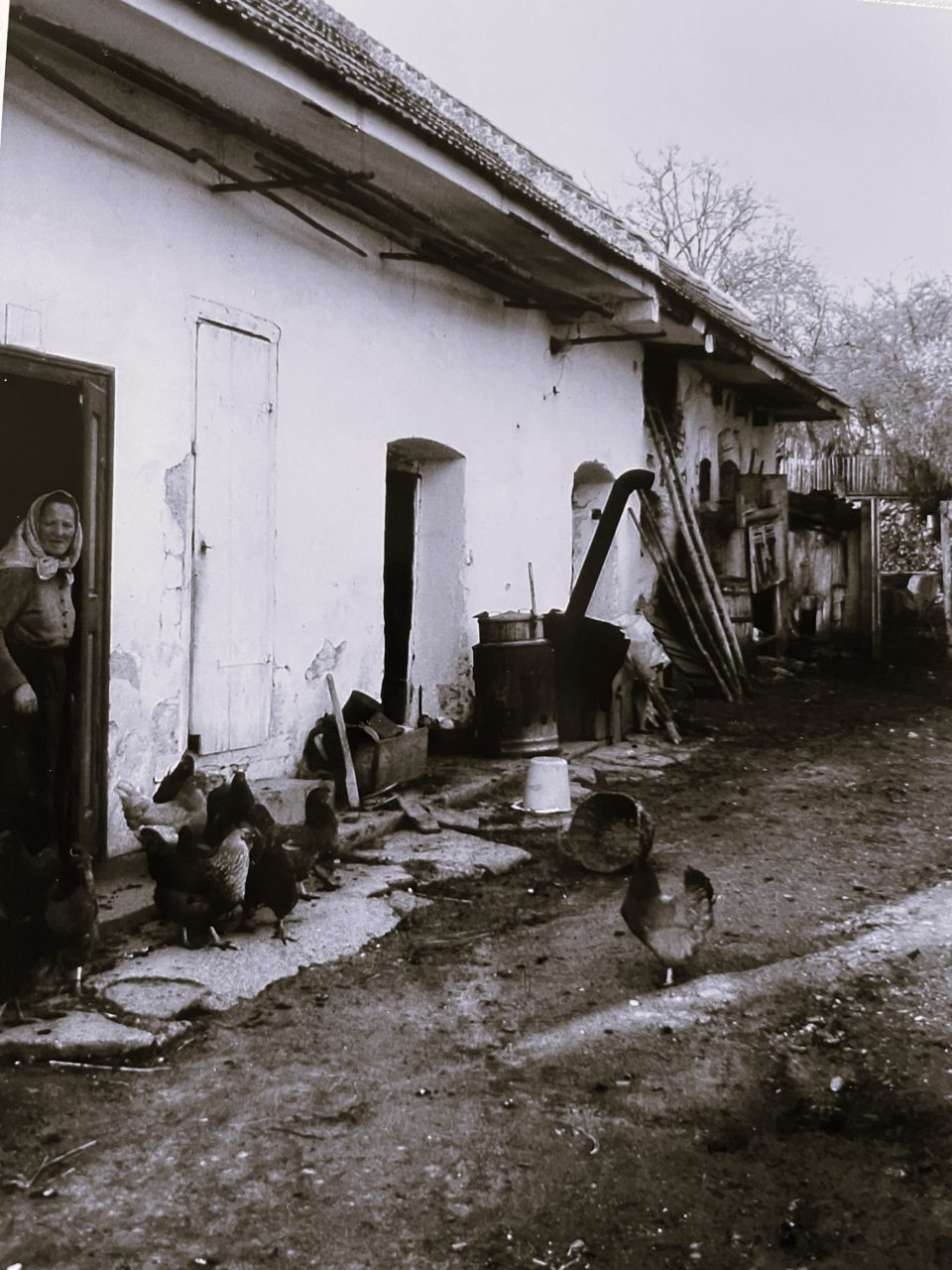
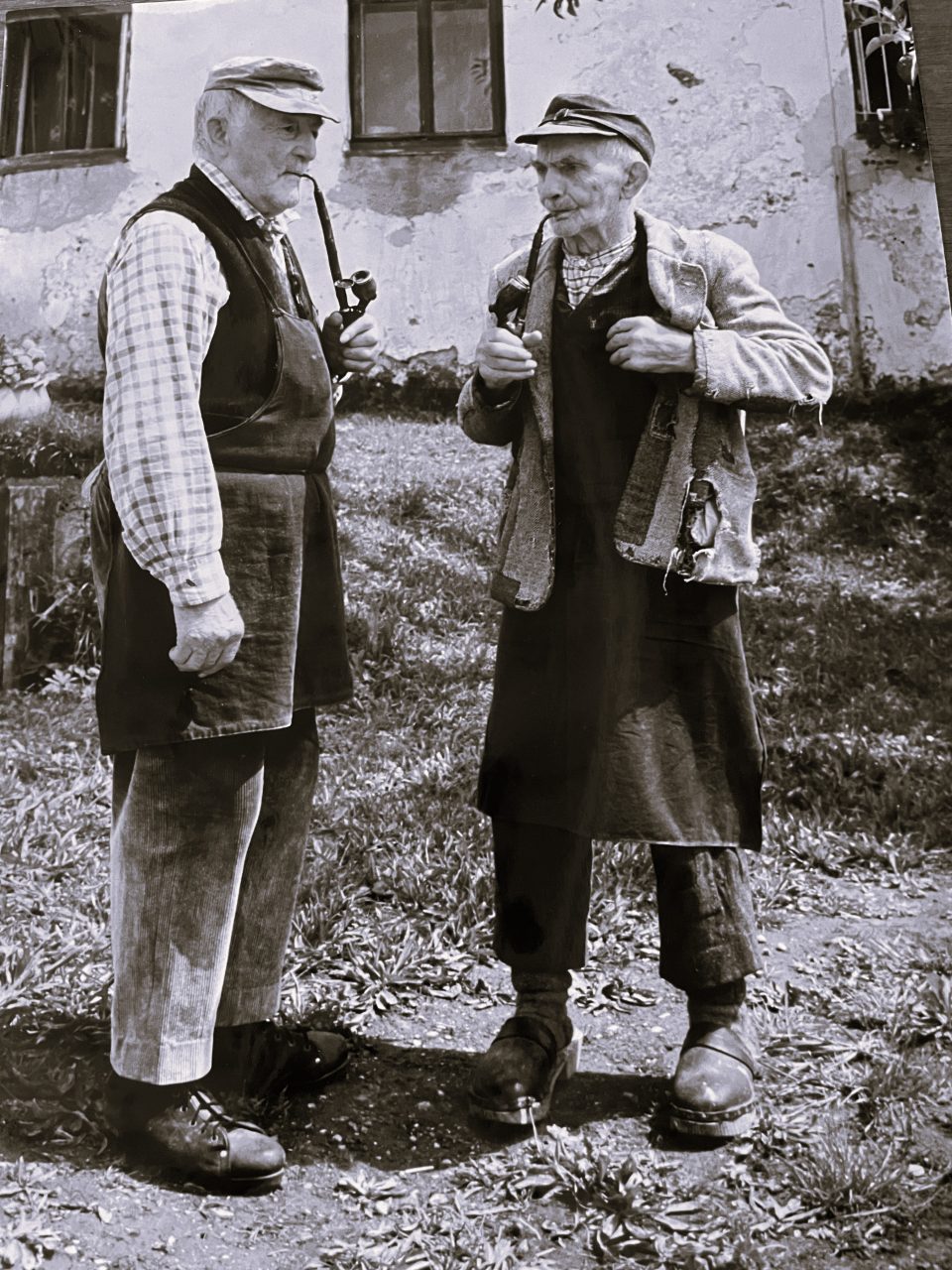
A smallholder (left) and old farmers enjoying their pipes (right)
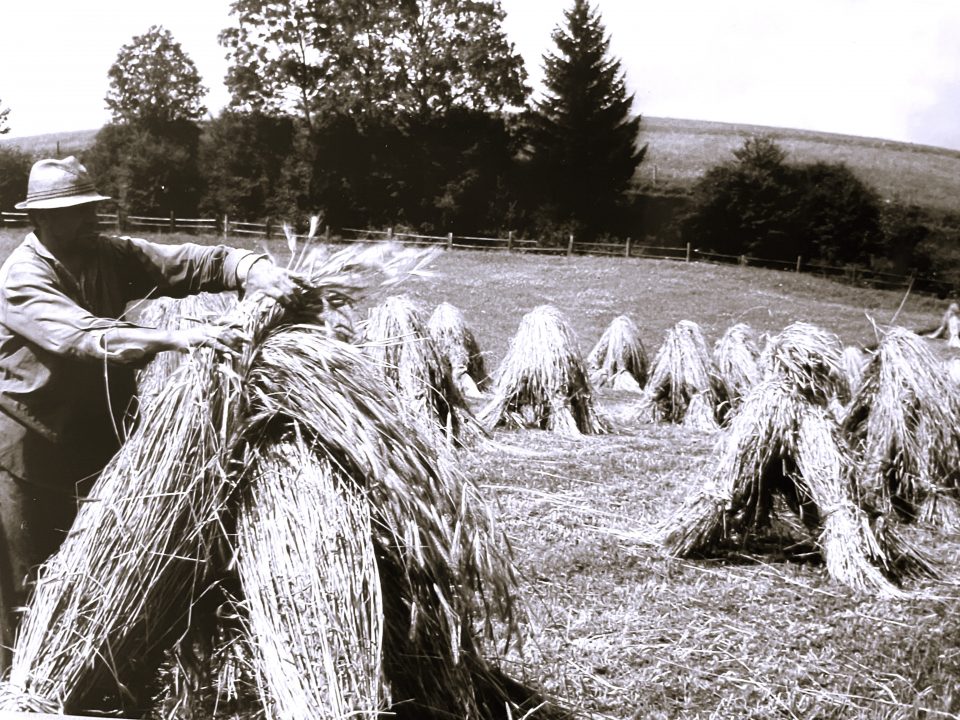

Drying straw and making hay
Farming was totally unmechanised at that time in this region as there was an abundance of cheap labour available, cash was rare and every family was striving to be self-sufficient, producing as much as possible themselves.
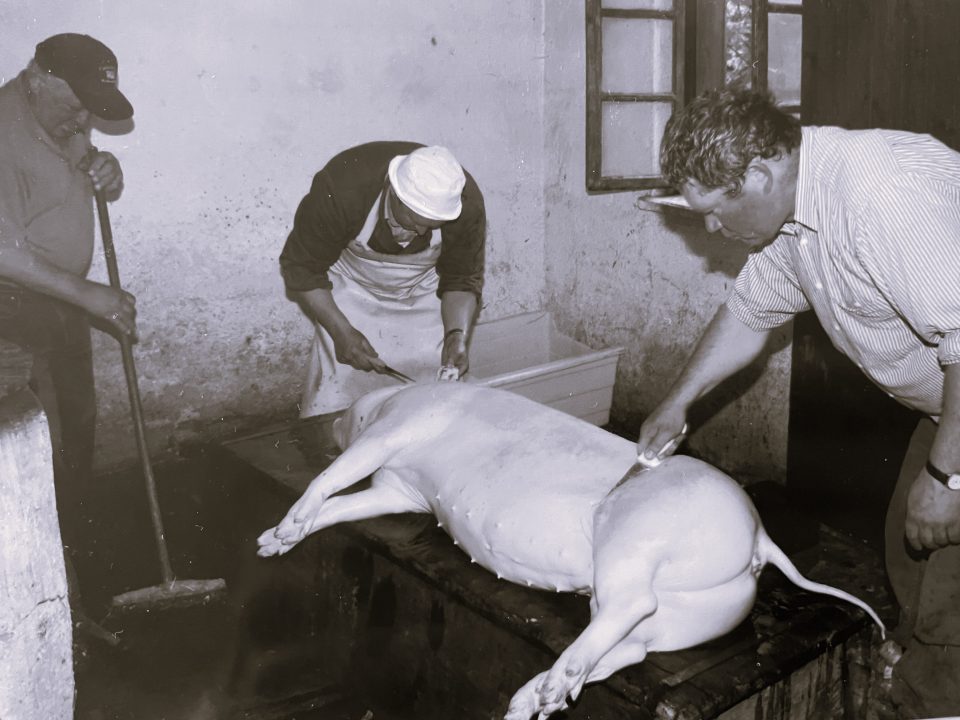
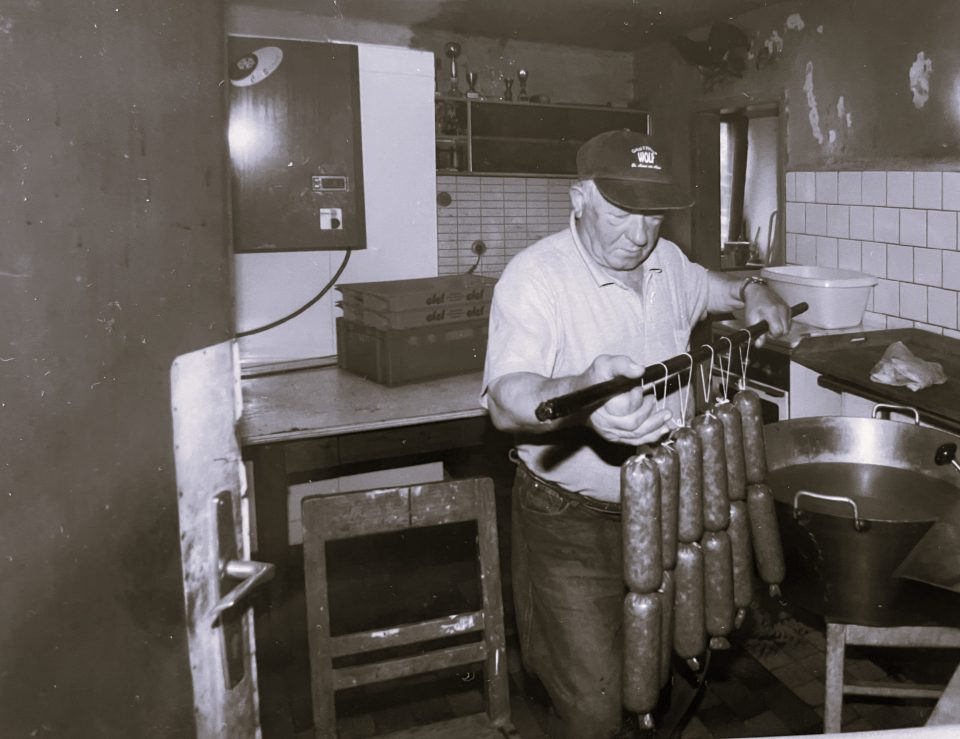
Agricultural self-catering: slaughter of a pig and making sausages on the farm
No modern entrepreneurial spirit existed among farmers and most of all, the arable land was divided into small plots and not very fertile due to the harsh climate. There was a tight social structure in the village, which meant that on the one hand, the villagers had to rely on each other for survival, but on the other hand, social control was strict and close-meshed.
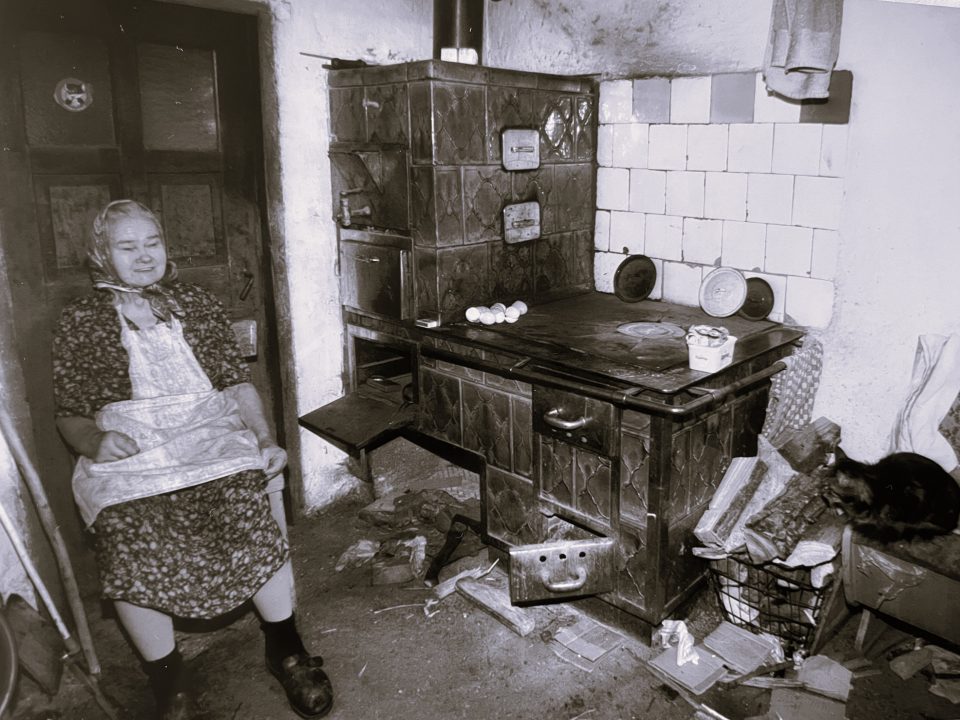

Traditional kitchen (left) and women stripping feathers in winter (right)
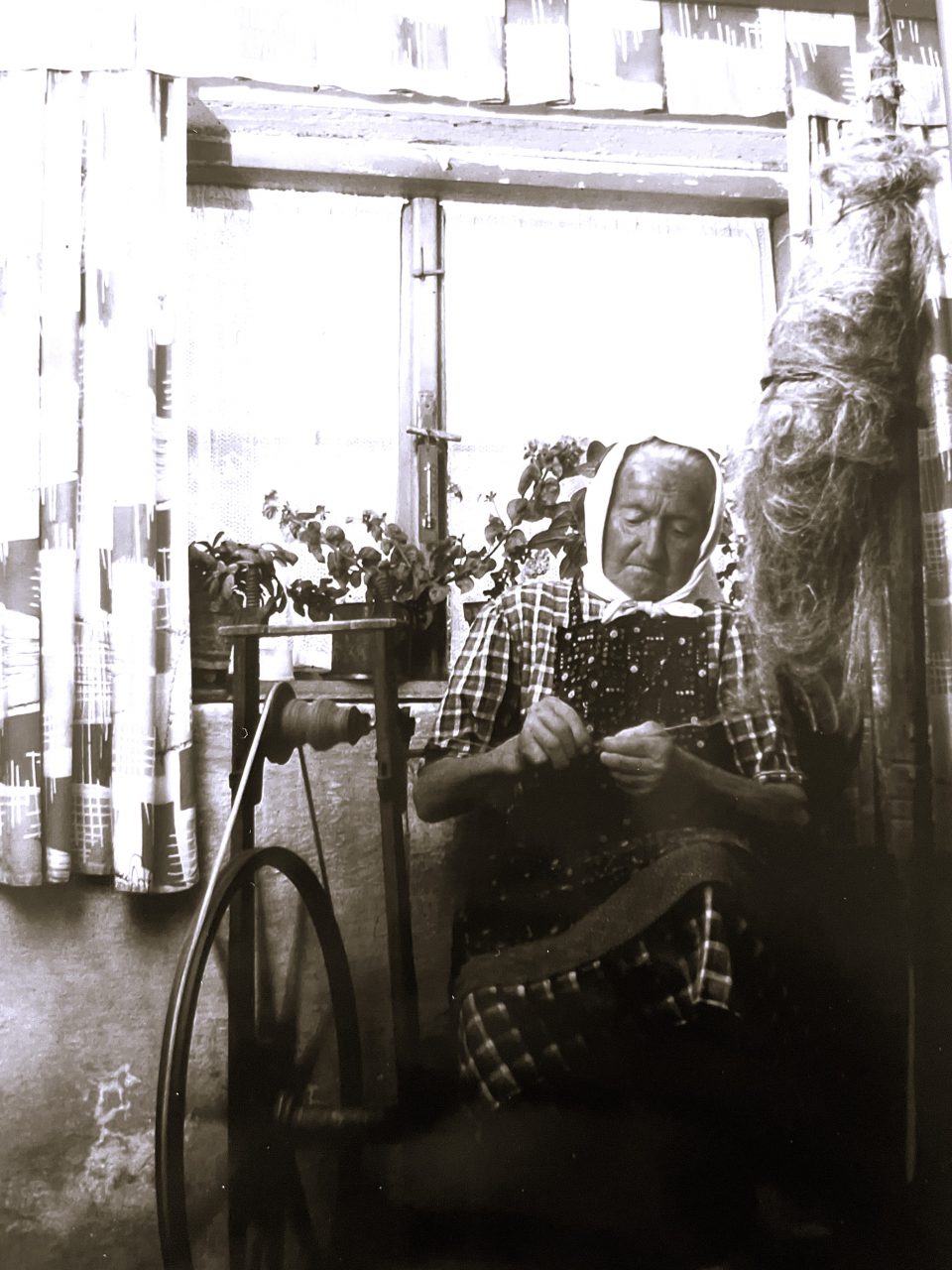
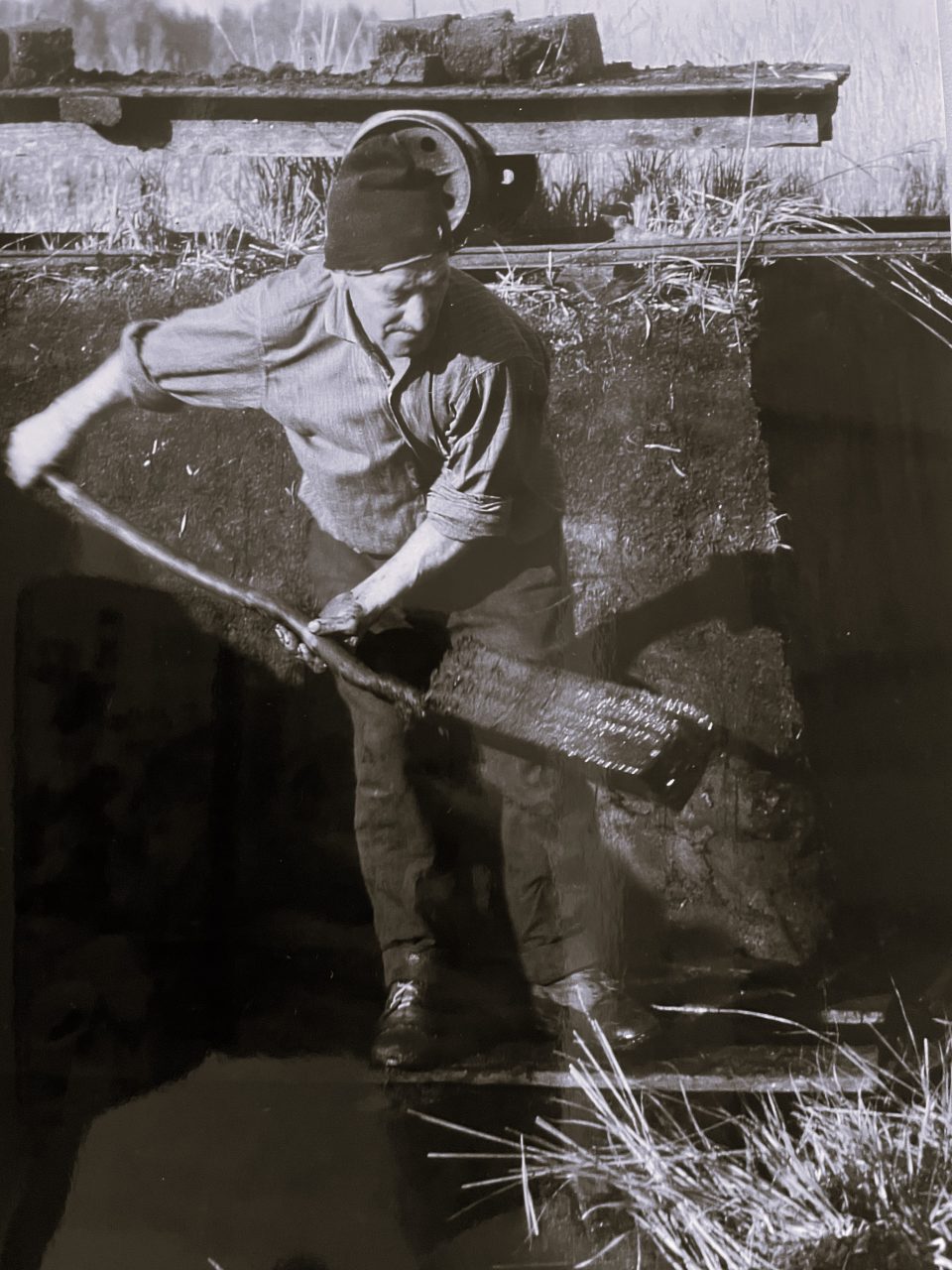
Spinning wool and cutting turf
The conditions changed, when the economy picked up and the “Golden Thirty Years” of economic growth in Austria started to affect the remote region of the “Mill Quarter”, too. The large industrial enterprises to the south, for example the steel and chemical works in Linz and the arms and motor productions in Steyr, sucked labour from the rural areas, which offered a chance to all those landless villagers who had languished at the bottom of the village social pyramid. Some of them left the “Mill Quarter” permanently to take on better-paid jobs in the industry and others commuted weekly or monthly to the industrial centres and brought back modern ideas and new patterns of life to the “Mill Quarter”. This influenced some local artisans, such as tailors, shoemakers, bricklayers, carpenters or smiths, to set up a proper business and expand. They were interested in infrastructure investments in their villages because they were trying to keep their customers and sell locally. Motorisation started late here, mostly in the second half of the 1960s. In the 1950s it was still common to walk long distances, covering up to 25 kilometres on foot was normal. First mopeds and small motorcycles, often produced in Steyr, substituted bicycles, which were initially the property of the head of the family only. The first cars appeared in the late 1960s, when also the mechanisation of agriculture started, because the farmers began to feel the lack of cheap labour. They had to run their farms with the help of the family only, namely women, children and the old farmers who had already handed over the farm to the sons. At that time there was still no question, whether the eldest son would take over the farm, it was a matter-of-fact. With the economic boom smaller industrial enterprises were established in remote regions, too, which provided jobs for the local villagers and made them independent from the dominance and oppression of the larger farmers. The mechanisation of agriculture in the “Mill Quarter” drastically reduced the size of farming households and provided them with sizable amounts of cash, which offered new chances and financial opportunities for the formerly “landless” population. The importance of agriculture as such and the superiority of the land-owning farmers in the villages waned and with-it traditional patterns of life lost importance; a form of “urbanisation of the rural communities” started in the late 1960s.
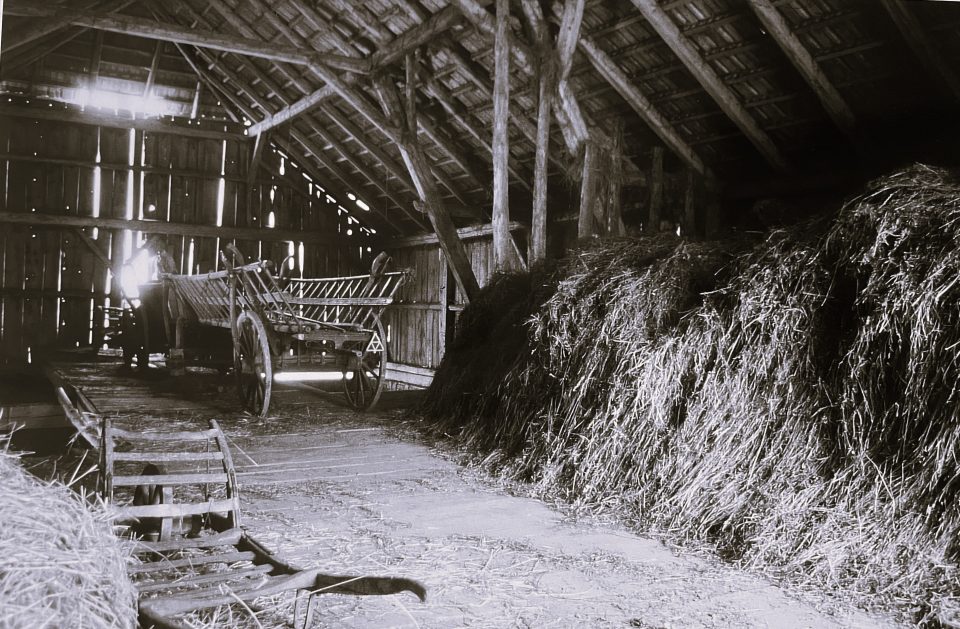
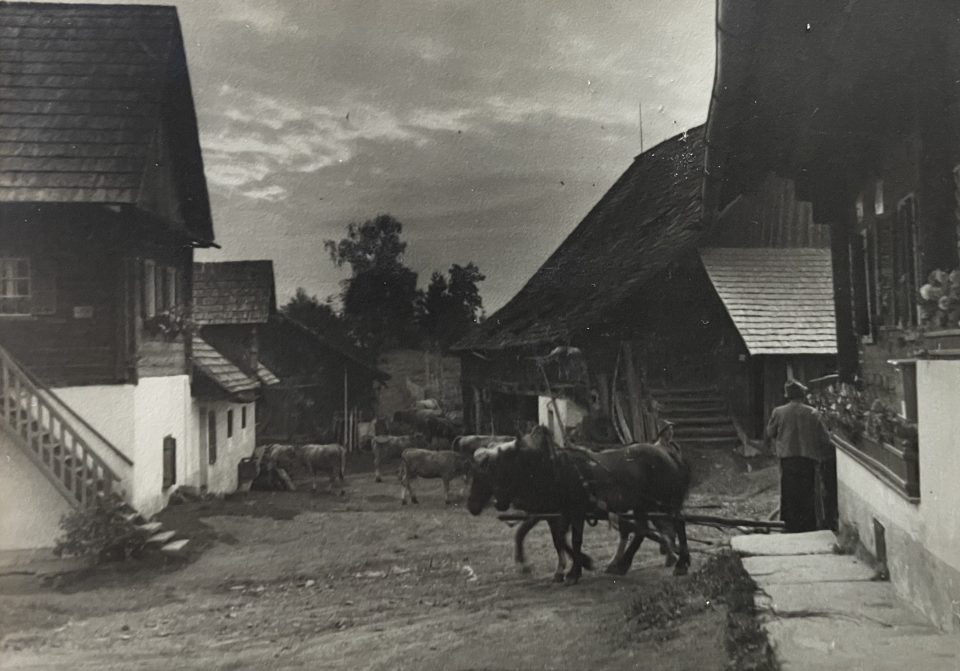
Local barn and village main street
Memories of expulsion
After having given up any hope of returning to their lost homes, those German-speakers who had been expelled from Czechoslovakia formed associations that kept up the memory of their homelands and represented their interests in Germany and Austria, the so-called “Sudetendeutschen Landmannschaften”. Initially the representatives of these societies were mostly former NS party members or politicians of the “Sudeten German Party”, for example Felix Bornemann. Their aim was to recover the lost territories for the German-speakers. This meant that the “Sudetendeutschen Landsmannschaften” were politically isolated in the West due to their radical political propaganda and their revisionist agenda. Their aim was to guarantee the unity of “Sudeten” Germans and they demonstrated that in huge assemblies which were accompanied by political demands directed towards the Western German and Austrian governments and cultural demonstrations of “Sudeten” Germans’ popular culture. The large annual reunions near the Czech frontiers were an exceptional challenge for the Austrian as well as the Czechoslovakian authorities, because they were and are infiltrated by radical right-wing groups as a platform for their Nazi messages.
Due to initiatives of regional societies and committed individuals several small memorials were erected along the border, many of which are situated at vantage points, where the former homeland could be seen at the distance. Another project was the construction of small places of worship that should replace the destroyed chapels and churches, which had been blasted by the Czech army. In 1978 the church “Neu Maria Schnee” was built near Leopoldschlag in the “Mill Quarter” with a view to the Southern Bohemian homeland of the expellees. It was modelled after the pilgrimage church “Maria Schnee” near the “Holy Stone” in Southern Bohemia. After the coming down of the Iron Curtain several cultural initiatives promoted and financed the reconstruction and restauration of destroyed cultural and religious monuments in the former homelands of the expellees.
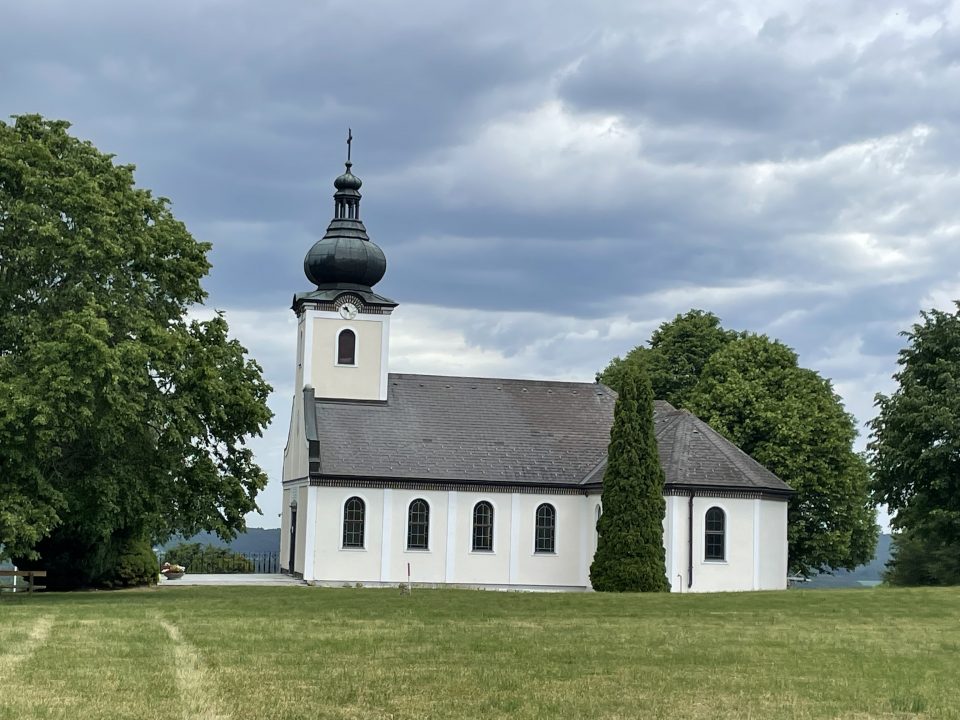
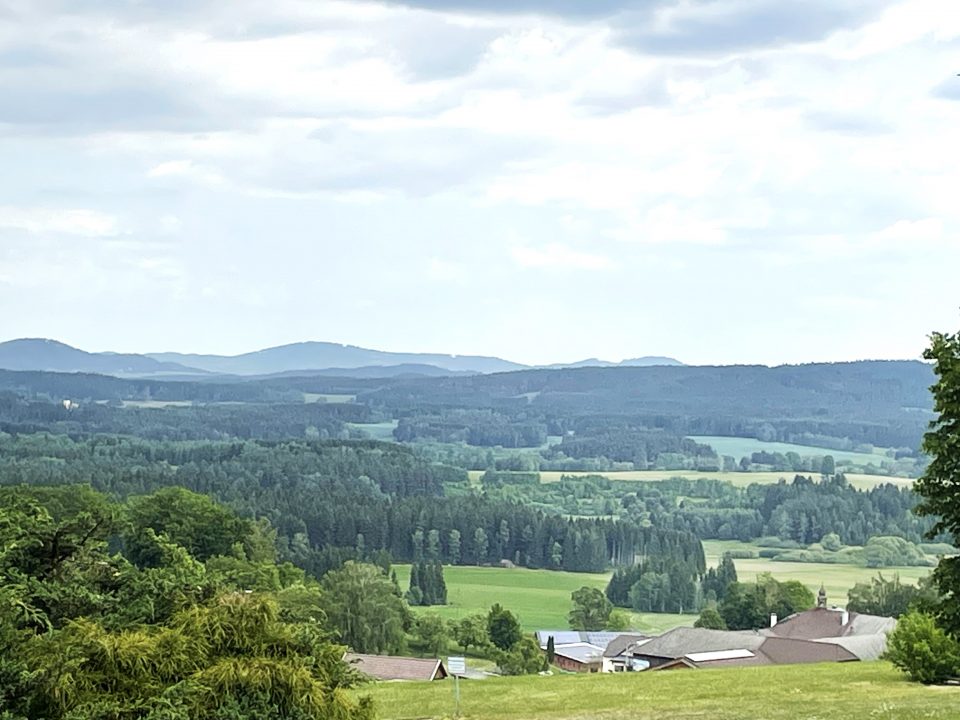
Left: “Neu Maria Schnee” near Leoploldschlag; right: View from the church towards the Czech part of the Bohemian Forest.

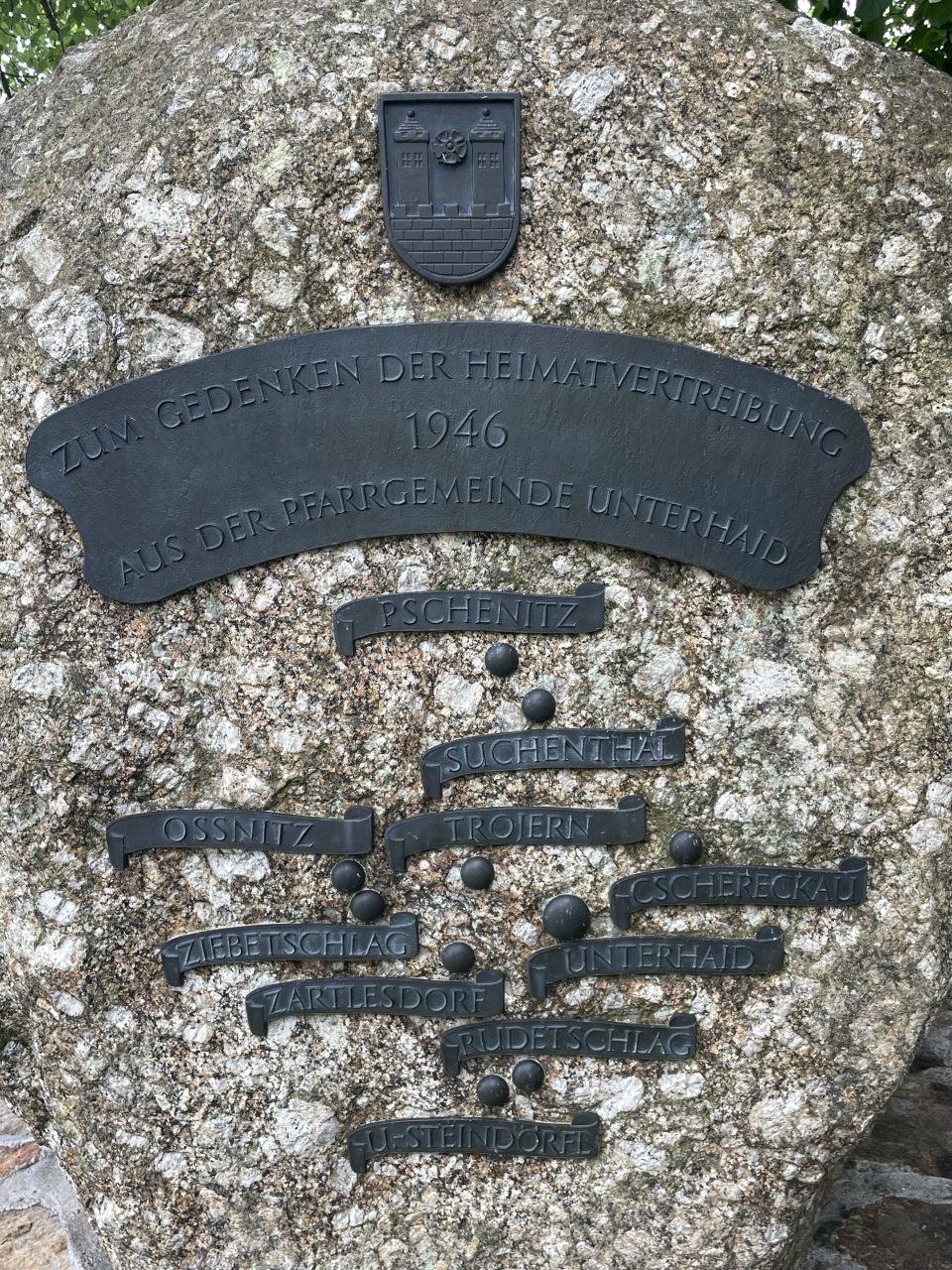
Commemorative granite stones with the names of the destroyed villages of the parishes Reichenau an der Maltsch (left) and Unterhaid (right)
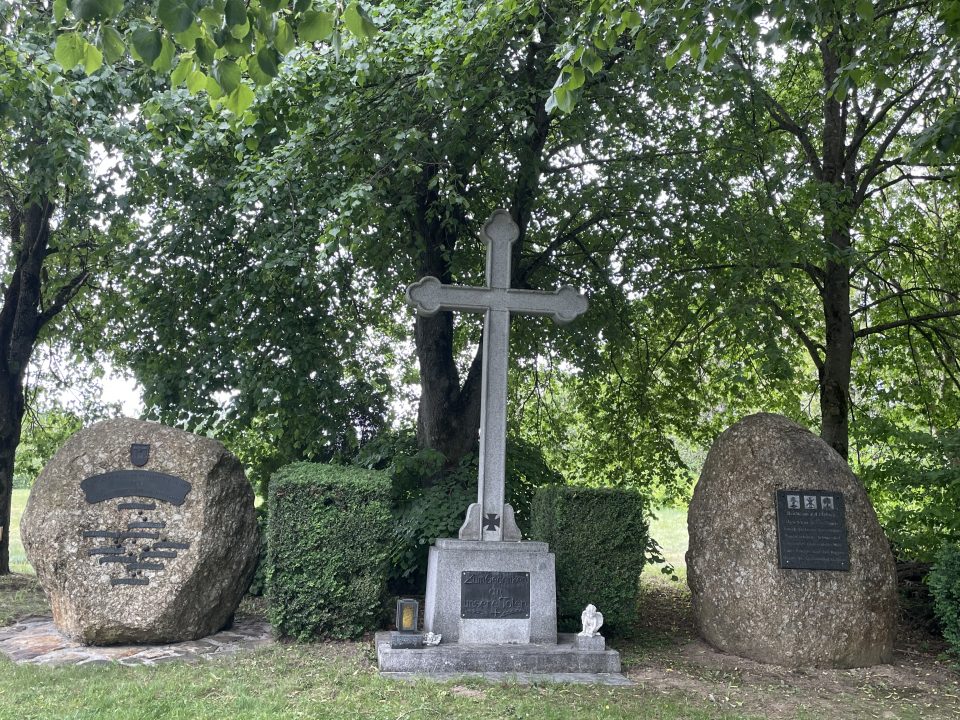
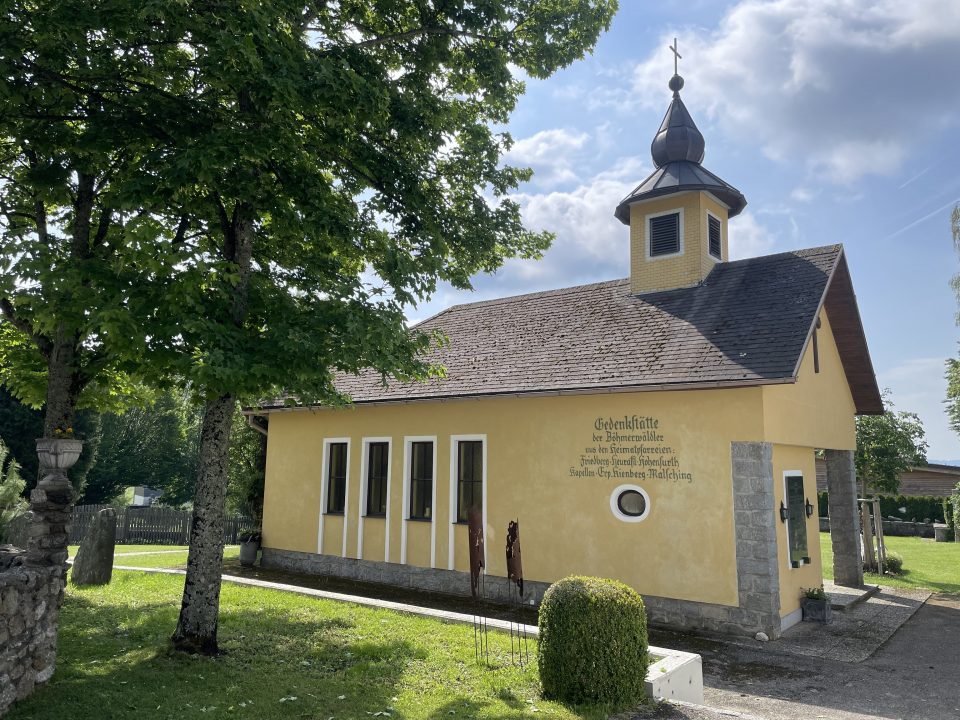
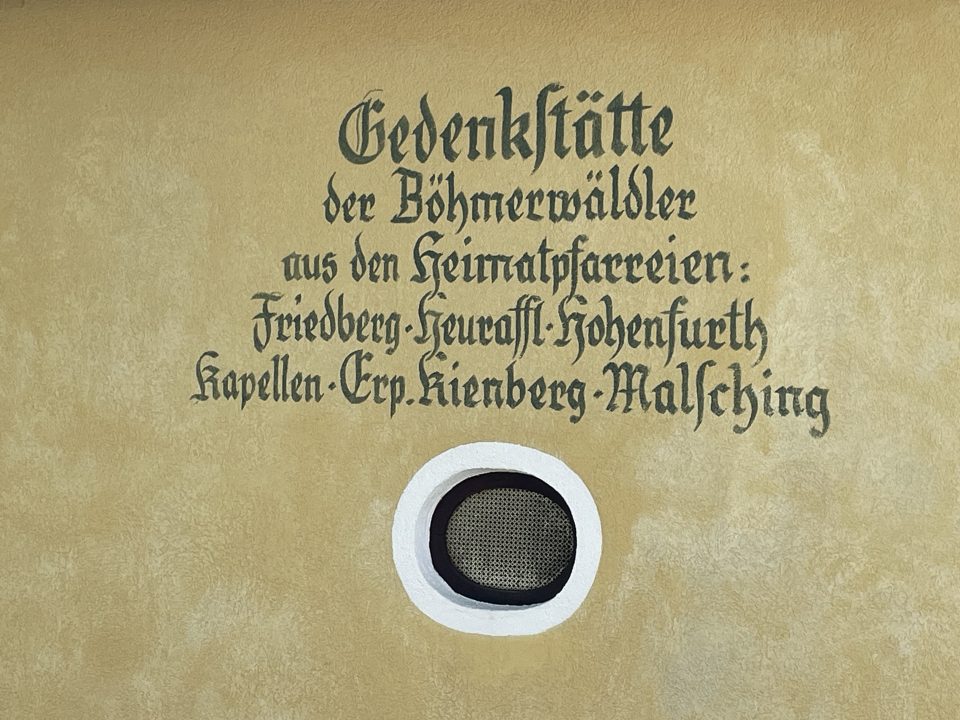
Left: Memorial church for the expelled German-speakers in Guglwald; right: Commemorative plaque of destroyed settlements in the Bohemian Forest.
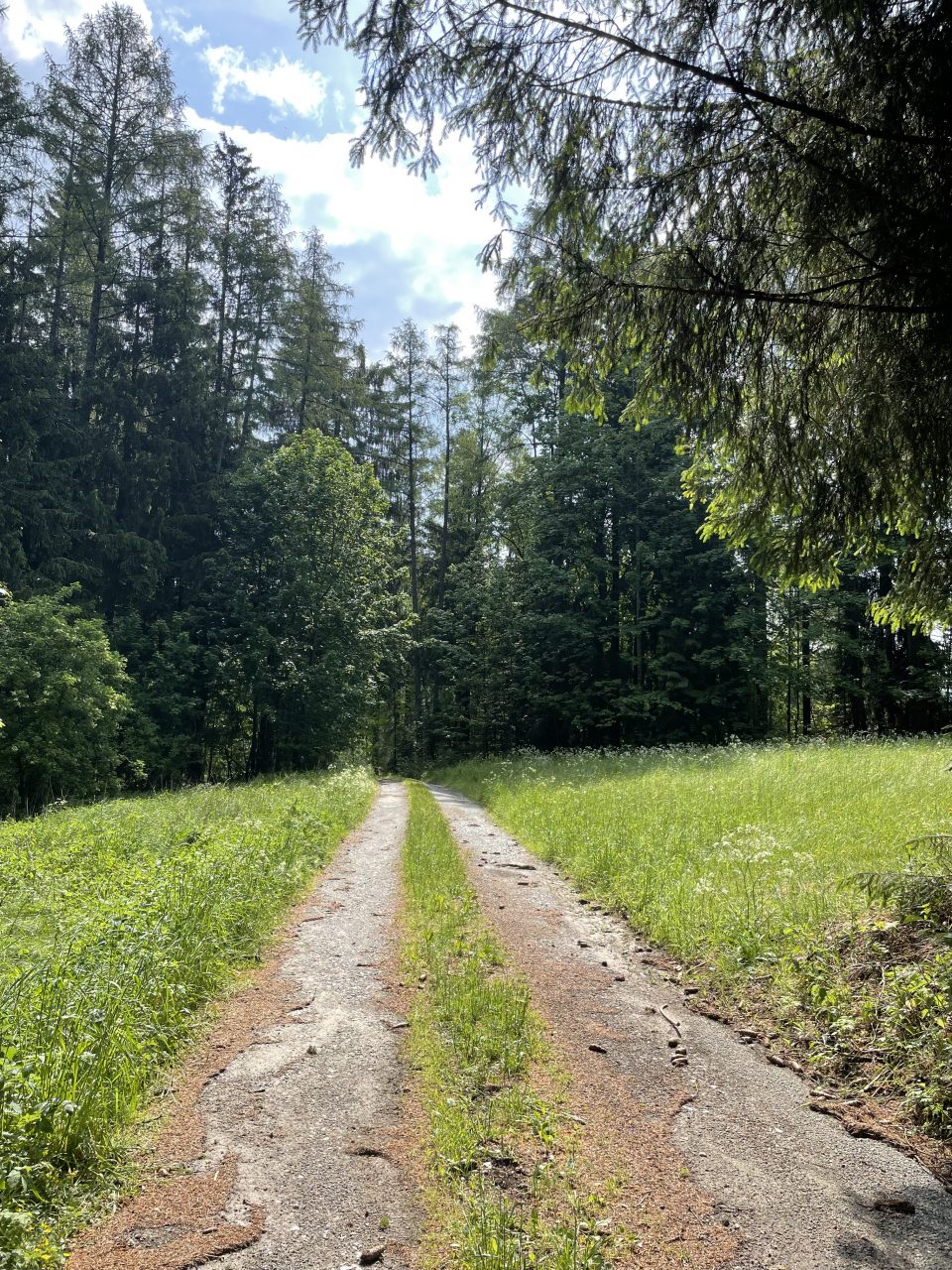
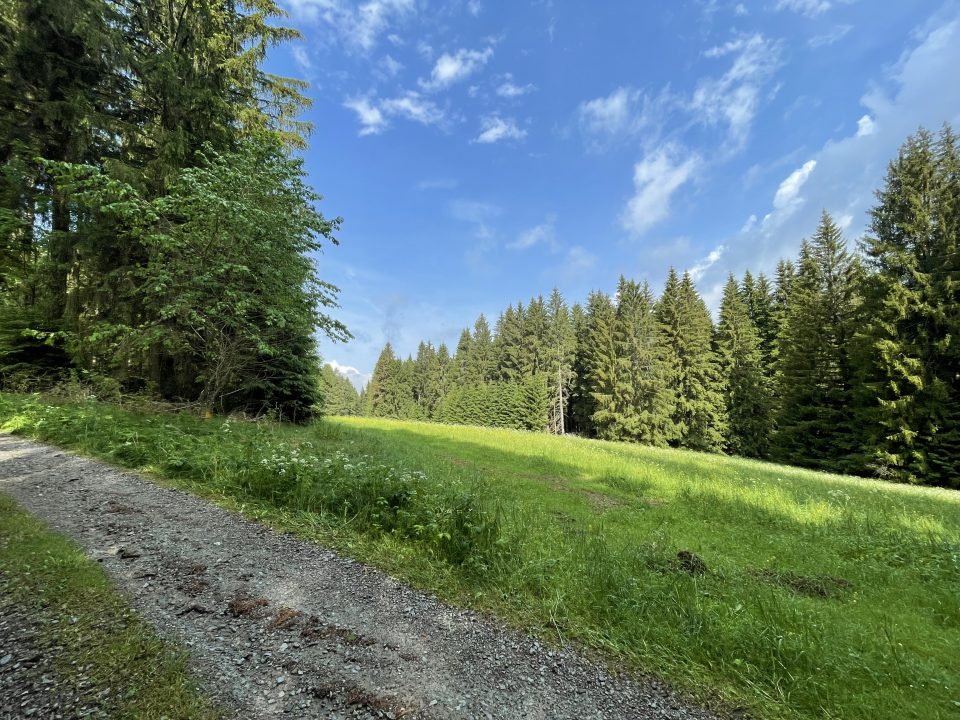
Tracks in the untouched natural wooded surrounding of the Bohemian Forest, where until 1989 the Iron Curtain ran, next to the small settlement Guglwald in the “Mill Quarter”
On the Czech side of the former Iron Curtain the first monument to pay tribute to the expelled German-speaking population was erected in 1992 at the southern banks of the Moldau reservoir. The church and cemetery of the village Glöckelberg, which was levelled in the1960s after all German-speakers had been expelled, were restored in the middle of the forest as a memorial.
Experiences of contemporary witnesses
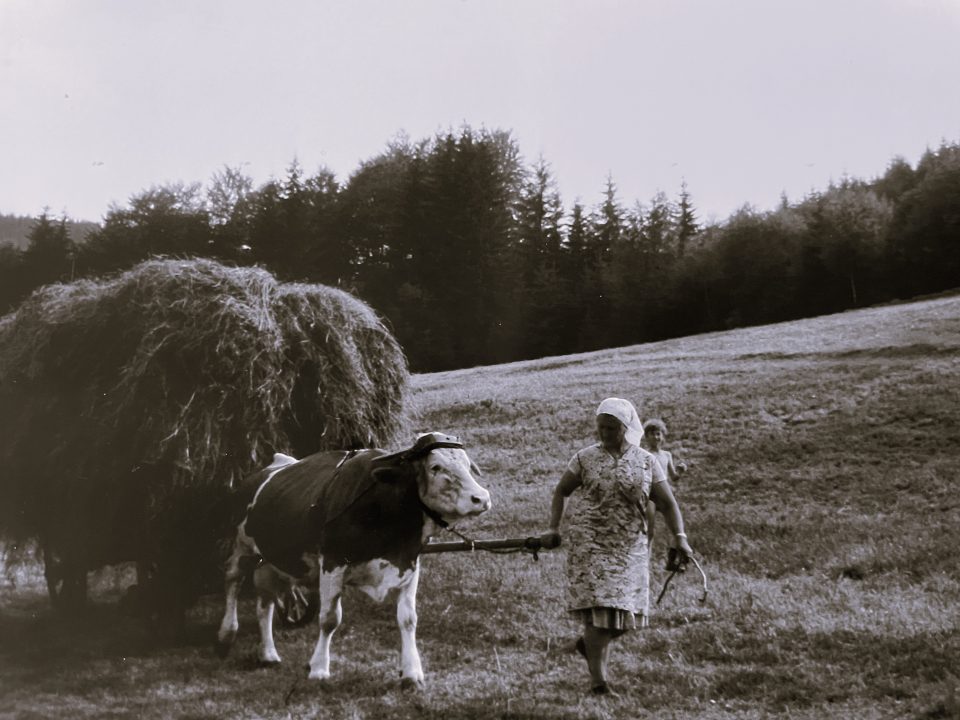
Farming in the Bohemian Forest
A woman from Raifmass in Southern Bohemia recounted her experiences after the “wild expulsions” from her home in Raifmass. Her brother had already fled to Austria, but the rest of the family remained in Hohenfurth / Vyssi Brod, from where they were transferred into a collection camp in Lesani, where the conditions were chaotic. They were housed in huge wooden barracks with approximately 50 families in a room and a small iron stove in the middle, where the women had to prepare meals for the small children. For the adults a canteen provided small rations of food. In 1947 the family was transported to a camp in Kladno, near Prague. The huge iron works there were in need of labour. So, their father was released from the quarry camp in Kaplitz / Kaplice and was immediately hired in Kladno at the blast furnace. At this time there was no longer any chance of emigrating to Austria legally, so her parents decided to take the children one by one across the border. In March 1948 she was 10 years of age and her father travelled with her by train to Hohenfurth and from there on foot to Raifmass. It was eery to walk through the almost empty village; only two families who were Austrian citizens still lived there. Her father returned to Kladno and she crossed the border with the help of friends and arrived in Austria at the “Grasl” Mill. There her brother awaited her and brought her to an aunt in Zwettl. Finally, the family received entry permits for Austria under the condition that an Austrian family was prepared to take them in and support them, so that no costs arose for the Austrian state. In Grossendorf near Ried she eventually found a new home.
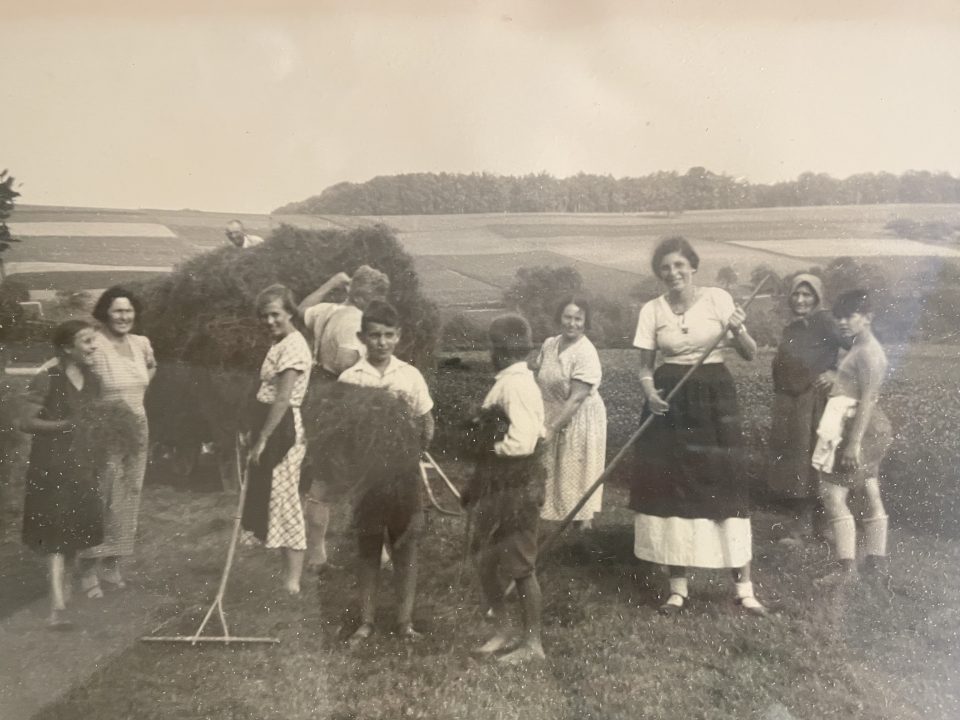
Making hay near Passberg in the “Mill Quarter”; Karl’s mother Rosa (third on the left) working along other women and children of the village
A woman whose farm is situated directly at the frontier in Guglwald was raised directly at the Iron Curtain, because the small stream that runs next to the farmhouse marks the national border. As children they often played at the brook, but they would never have dared to cross it, even if they wanted to pluck the beautiful apples that grew just across it. They heard the combat dogs’ barking and the shooting, because nearby, hidden in the forest, the Czechs had a shooting range and a dog kennel. The barbed-wire fences and watchtowers scared the children and they would never have ventured over there. As children they never questioned these circumstances, although they knew from what their father told them that in the times before the Iron Curtain and the “dead border”, when the frontier was still open, the inhabitants of Guglwald were usually oriented towards the north, towards Kapellen / Kaplicky, which was now cut off in Czechoslovakia and not towards the south to Vorderweissenbach as after 1948. They had gone to school in Kapellen, they had gone shopping, picked mushrooms and met friends in the local inns there. Even immediately after the end of World War II the better shops were in Kapellen and the houses were more modern and better equipped than in the “Mill Quarter”. But elderly relatives were still traumatised by the events of the “wild expulsions” and the tragedies connected with these events. The house of their nearest neighbour was across the stream and had been reduced to rubble as well as the mill which was located at the other side of the brook.
For many years, expelled persons came to their farmhouse to have a look across the river towards their former homes. The landscape in the vicinity changed, when the abandoned houses were levelled and nature covered the rubble and formerly cultivated farmland. Some stretches behind the Iron Curtain were well tended and ploughed to offer an uninhibited view of the border fortifications to prevent fugitives from crossing the stream. The children even spotted Czech soldiers shooting at fugitives and catching them, leading them away with raised hands. Once 15 Czech border patrol soldiers with machine guns in a military vehicle chased two men who were fleeing. Fortunately, the two made it to Austria. But the danger was ever present. The family was ordered not to mow a very good meadow near the border by the Austrian and Czech authorities alike, but the meadow’s hay was too good to be wasted. Just before he died, the grandfather managed to get a permit to visit the area around Heuraffel /Hejrov, the region of his youth.
Once her sister had to tend a cow which ran away in the direction of a Czech watchtower and she tried to catch up with her cow. Fortunately, two Czech soldiers helped her to chase the cow back into Austrian territory. When as young girls they saw that a new group of young border patrol soldiers had arrived at this stretch of the Iron Curtain, they waved, but the first in the row never even blinked, while the last ones often waved back. Consequently, it was clear for the girls that it was dangerous for the soldiers to be seen waving back to Austrian girls. When the Iron Curtain fell, the family was interested in what was going on the other side of the border, but it was no longer part of their world. Shortly after the opening of the border, a leading official of the Czech border patrol, Jan, visited their farm and told them that they did not need to present themselves, because he already knew them well, as he had been observing them for 15 years. The administrator of the nearby kolkhoz met up with her father to discuss agricultural matters and he invited the family to visit the Czech border zone and Budweis / Budejovice, where he bought a coat for her father. They were so surprised and asked Trojan why he had not made contact with them before and he told them that “bad politics” had prevented that. They also got to know Hans, who helped them to clear the border zone in front of their farm house from wild-growing bushes and trees.
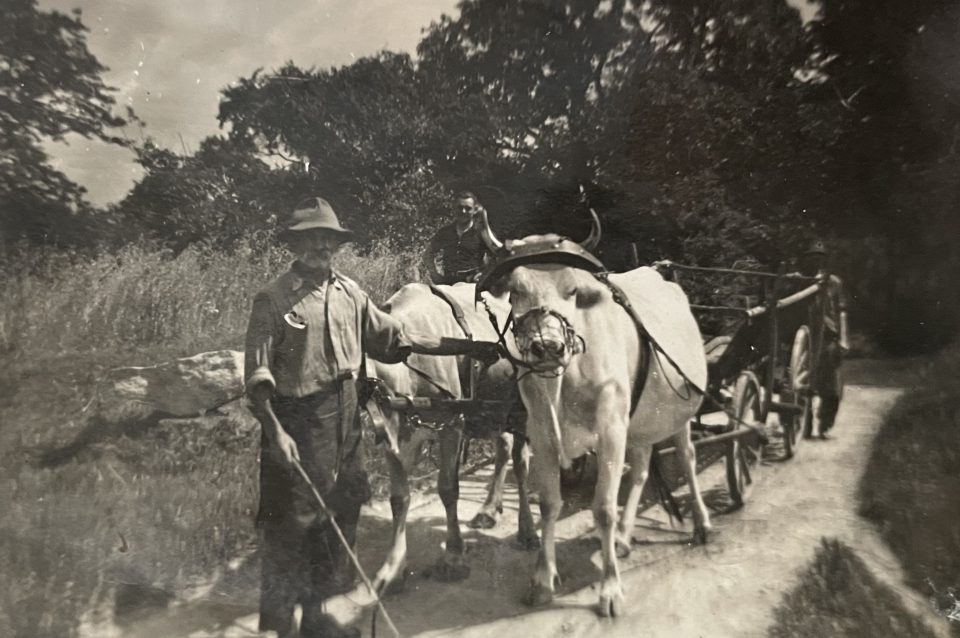
In the economically backward regions of the “Mill Quarter” near the Iron Curtain agricultural practices were still very traditional – here an oxen cart
A man from Piberschlag told interviewers that his grandfather and several other men worked in enterprises in Southern Bohemia before World War II. People from Schönegg, Piberschlag and Guglwald at the border had jobs in the paper factory in Kienberg / Loucovice. His parental home was so near the Iron Curtain that they could see the rows of high voltage barbed wire and the watchtowers as well as the tower of the church of Kapellen / Kaplicky. As children they saw the patrols of military vehicles, the shooting of flare ammunition and they heard the barking of the attack dogs in the hidden “Rosenauer camp”. The children were scared of the frontier because so many dangerous things were hidden behind the fence and because their parents constantly warned them against wandering too near the frontier. Once two refugees knocked at their front door and their father escorted them to the police station in Helfenberg. Yet such unexpected events even furthered the family’s suspicions. When the Czech army erased the abandoned villages and blasted the church of Kapellen, they did not only hear the loud blasts, but saw the smoke and the dust clouds that rose from the destroyed village. At that time no one ever thought that the border would once again be opened. Nevertheless, it was surprising that some young people did have contact at the frontier. They drove with their mopeds to the border check point and chatted up the Czech soldiers there. They exchanged Austrian 80 per cent “Stroh Rum” for Czech cigarettes. It was an adventure for them, always tinged with a little danger and fear. Sometimes Czech soldiers came to the local inn at the checkpoint Guglwald, “Gasthaus Baumann” (today Hotel Guglwald), to chat with the locals, because some of the soldiers spoke German. Even before 1989 they had official contact to the Czech mayor in Heuraffl / Hejrov and organised bus tours to this region. Despite the bureaucratic hassle many locals wanted to see what it was like across the border because no one had an idea about life in Southern Bohemia under Communist rule. They were even able to bribe young border patrol soldiers with Austrian beer cans to allow them a visit to the “Prohibited Zone”, yet they all felt queasy and a bit scared. It was difficult to get lunch for a larger group of tourists, even in Krumau /Cesky Krumlov, because there were no inns that could serve so many visitors.
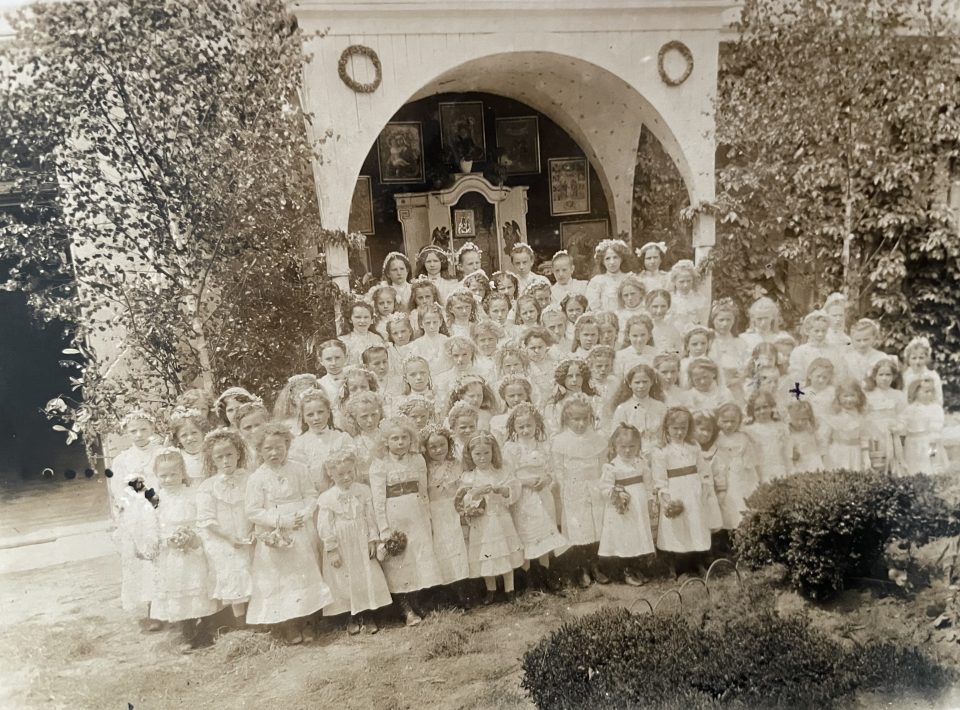
Girls at a “Corpus Christi Procession” in the “Mill Quarter”
A woman who worked as a primary school teacher in Kriegwald, Niederkappel, Schlägel and finally in St. Oswald after World War II reported her experiences of life at the Iron Curtain. It could be seen that the “dead border was now really dead” in the village of Asang / Jasanky, directly at the frontier near Morau and the “Schwarzenberg Canal”. The village Asang, affiliated to the parish Deutsch Reichenau / Nemecky Rychnov, was now uninhabited and crumbled away. First the windows rotted, then roofs of the houses gave in, until the whole buildings had to be demolished. Finally, the remaining ruins were blasted, but the village did not completely vanish, because for a long time after the demolition a few stones remained. She felt an uneasiness to watch the slow crumbling of the village, when hiking along the border and looking across the fortifications. Despite the watch towers, the high-voltage barbed wire fences, despite the barking of the dogs and the patrolling of the soldiers, she loved walking in the untouched nature of the Bohemian Forest. In the first years after 1945 it was still possible to visit relatives in Southern Bohemia with visa, to attend weddings and funerals there, bring presents such as nylon stockings, coffee or fruit and stay in contact with friends and relatives, even if the controls at checkpoints were bothersome. She noted that it is a mistake to assume that all German-speakers were expelled. Those who were in mixed marriages or whose jobs were essential for the Communist economy were dispossessed, but had to remain in Czechoslovakia, In the early years of the Iron Curtain some of the border patrol soldiers still spoke German and in the 1950s several soldiers came for a beer to the inns in St. Oswald and chatted with the locals. But with the militarisation of the border any contact across the border was terminated and the “Mill Quarter” was completely cut off from Southern Bohemia. Consequently, the economic situation of the “Mill Quarter” was further deteriorating. In 1968 when the Soviet invasion crushed the “Prague Spring”, they had a Czech couple visiting in St. Oswald. These friends were German teachers and therefore allowed to come to Austria once in a while, of course without their child, who had to remain with the grandparents as a pledge to prevent their flight to the West. Her husband drove the couple back in his car across the border to Budweis / Ceske Budejovice after difficult discussions at the border checkpoint, where they already saw Soviet soldiers and tanks. After 1968 news about what was happening in Czechoslovakia were rare and more rumours than facts, because the people at the Austrian side of the border were completely cut off from Southern Bohemia.
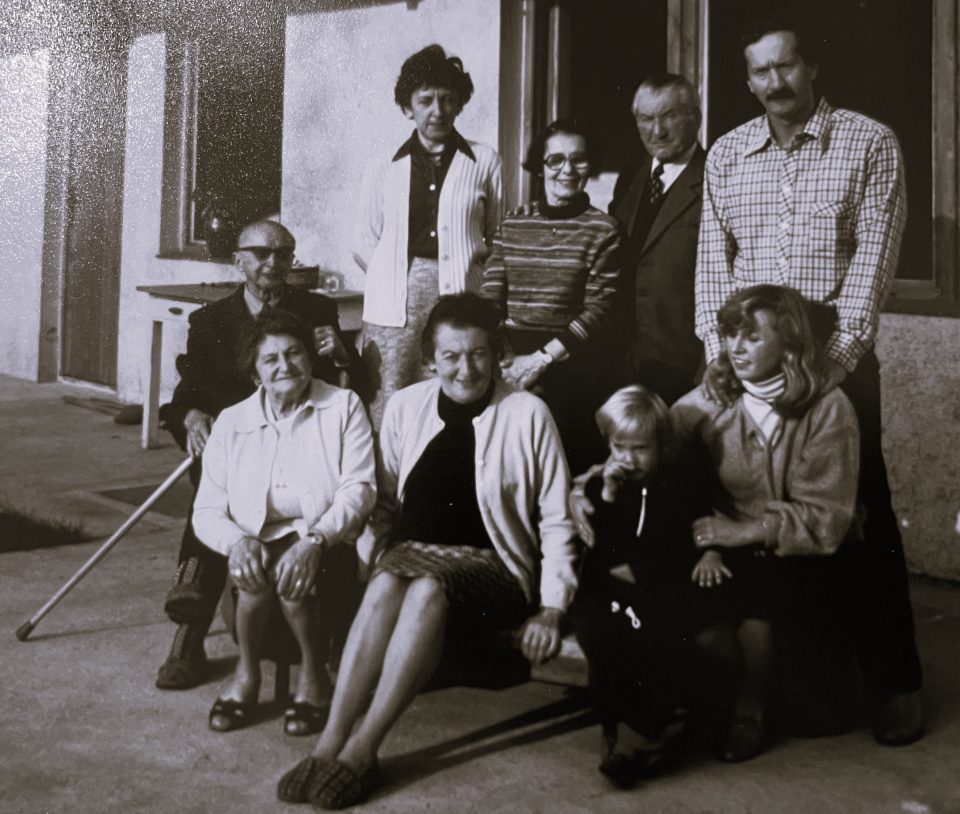
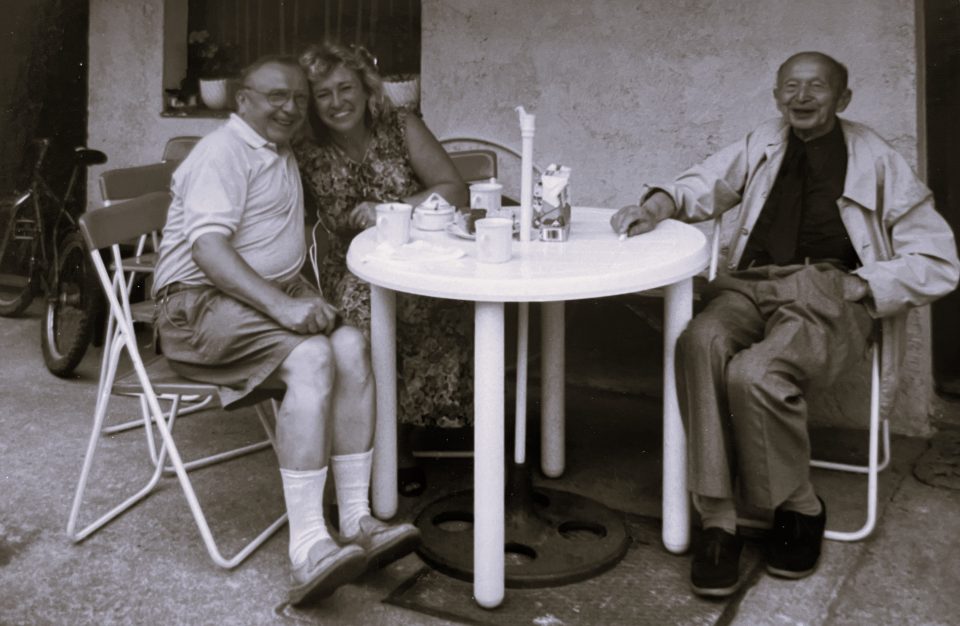
In 1980 my parents Herta and Werner Tautz visited relatives, the families Winterstein and Marek in Prague, who had not been evicted, although they were bilingual and spoke German well. They were deemed essential to the Communist economy, yet they were not allowed to travel to the West. Left photo: Herta standing on the left, right photo: Werner sitting on the left.
A man, born in Oberplan / Horni Plana, Southern Bohemia,in 1962, told the interviewers about the living conditions of a mixed family there. His grandfather was German and his grandmother Czech and consequently, the family suffered under the NS occupation because of the grandmother and under Czech rule because of the grandfather. The family was not expelled from Czechoslovakia after the end of World War II, because the German grandfather had died before he could be drafted by the German “Wehrmacht” and therefore had not fought in the war. On the contrary, the family had to stay, because they were “indispensable” for upholding the Communist economy. As thousands were chased from the area, where the family lived, the government needed people to feed and milk the cows of the expellees and work the deserted farm land. Yet they were treated as second-class citizens and disadvantaged whenever possible. The Czech authorities checked everything, be it private letters or visits the family made or received. They were the last to receive allocated building material or food, if at all. They were permitted to install electricity in their house in 1989 only, although the power line ran 50 metres from their house. For them even travels within the area of the Soviet satellite states in Europe were restricted, for instance to Eastern Germany or Hungary. When in 1985 he wanted to apply for passports and visa for a trip to Yugoslavia, the Communist authorities laughed in his face and told him that they had no right to passports. Of course, they could not get their hands on foreign currencies, too, which was essential for travels abroad. The Czech state sold foreign currencies to its citizens at a much-inflated price to generate revenue. His family was harassed just because they were German-Czech, although they had never been involved in any anti-Communist activities. When he was a young boy his grandmother, who had lived through very difficult times, told him that the 1970s were the worst time in her life. The Communist suppression already commenced during childhood. When his mother started school, she was beaten by the teacher because she could not speak Czech yet. His sister was not allowed to study, but she did not give up and after five years of perseverance and bureaucratic hassle, she was accepted at the university and became a dentist. His brother was not so lucky and he gave up his attempts after three years of ever new failed university entrance exams. He himself resorted to distance learning and received his university degree as an engineer by correspondence course at an advanced age. As his grandfather was the only one of his family, who was not expelled, keeping up with all the relatives abroad became more and more difficult. When no more visits were possible, they could only keep up a correspondence with them.
As a young man he was yearning for freedom and for him rock music was a philosophy of life he was hoping to pursue. On the radio he listened to “Voice of America”, “Free Europe” and the Austrian broadcasting stations “ORF”. The band “Plastic People of the Universe” had organised and played at several festivals in Czechoslovakia in 1968 and was a centre of the independent music scene. When in February 1976 members of the band were arrested and many in the audience were interrogated by the secret services, the opposition against the regime among the young intensified. He was an enthusiastic musician and sound technician and together with friends he packed his equipment and went to demonstrations in Prague on 7 November 1989. They had no real plan and were afraid of being arrested, but they felt they had to do something; they yearned for freedom and a pluralistic society, Fortunately, in 1990 he was elected as a member of the local council of Oberplan at the age of 28 and in 1994 he became mayor of Oberplan. The German-speaking village of Oberplan, the birthplace of one of the most important German writers Adalbert Stifter, had 2,000 inhabitants and after the “wild expulsions” only five families remained who spoke German, but had to hide this knowledge.
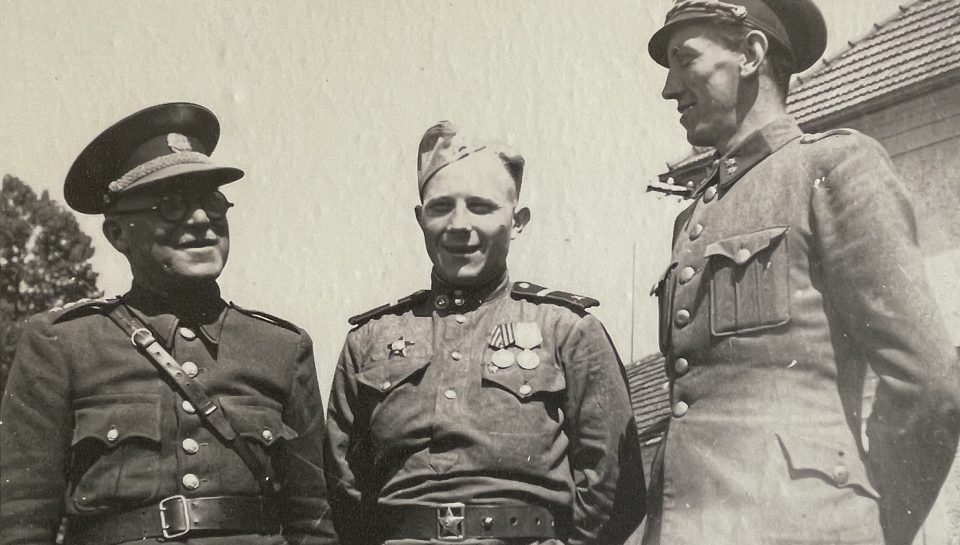
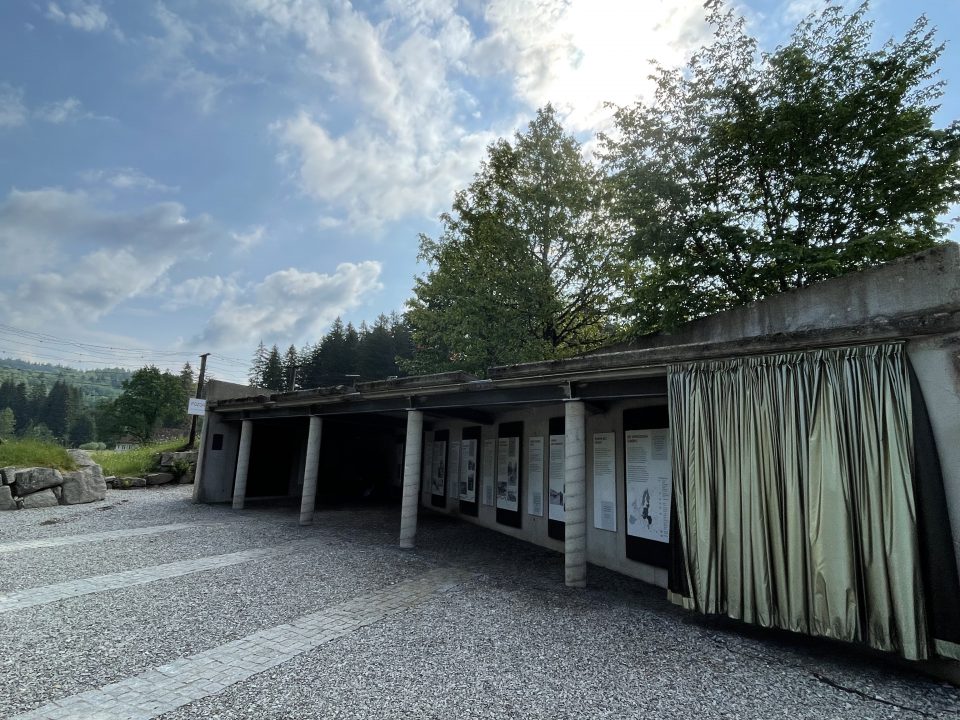
Left: Meeting of representatives of the Austrian and Czechoslovakian border patrols and the Red Army; right: Memorial at the frontier in the “Mill Quarter”
The Austrian customs officer who had been on duty at the Iron Curtain near Ulrichsberg in the “Mill Quarter” for more than thirty years talked about his experiences at the militarised frontier. The Austrian customs officers’ duty routine at the Iron Curtain changed daily; they had to patrol different stretches of the fortified frontier at different times and to monitor the “dead border”. Usually, a patrol consisted of two customs officers for reasons of personal security and not for spying on each other as was the case on the Czech side of the border. They saw many failed escape attempts and the Czech soldiers often persecuted the fugitives up to 300 metres into Austrian territory. Once a refugee managed to cross the Moldau reservoir swimming and successfully reached Austrian territory; another time a Czech fugitive hid under the cover of a tractor in the “Prohibited Zone” and managed to arrive in Austria. In Upper Austria the only official checkpoints where persons and goods could cross the Iron Curtain were Wullowitz and Weigetschlag, except lumber transports, which were processed in Diendorf. There the Austrian customs officers often met up with the friendly Czech forester who offered them the typical Czech-Turkish coffee. They met Czech border patrol soldiers on their patrols, but they rarely made personal contact. After the coming down of the Iron Curtain they found out why: The Czech soldiers had to draw up reports about any personal contacts with Austrians and had to pass them on to the commanding officers, but above all, they were supervised and spied on by their own comrades and by soldiers doing duty on the watchtowers. Consequently, they only greeted each other and saluted, but they greatly respected each other. Especially in bad weather there was the danger of trespassing the frontier, which the Austrian customs officers tried to avoid. On the other hand, they had to patrol close to the border to monitor what was going on on the other side of the Iron Curtain. The border stones showed the direction of the next border stone by being marked with small lines:
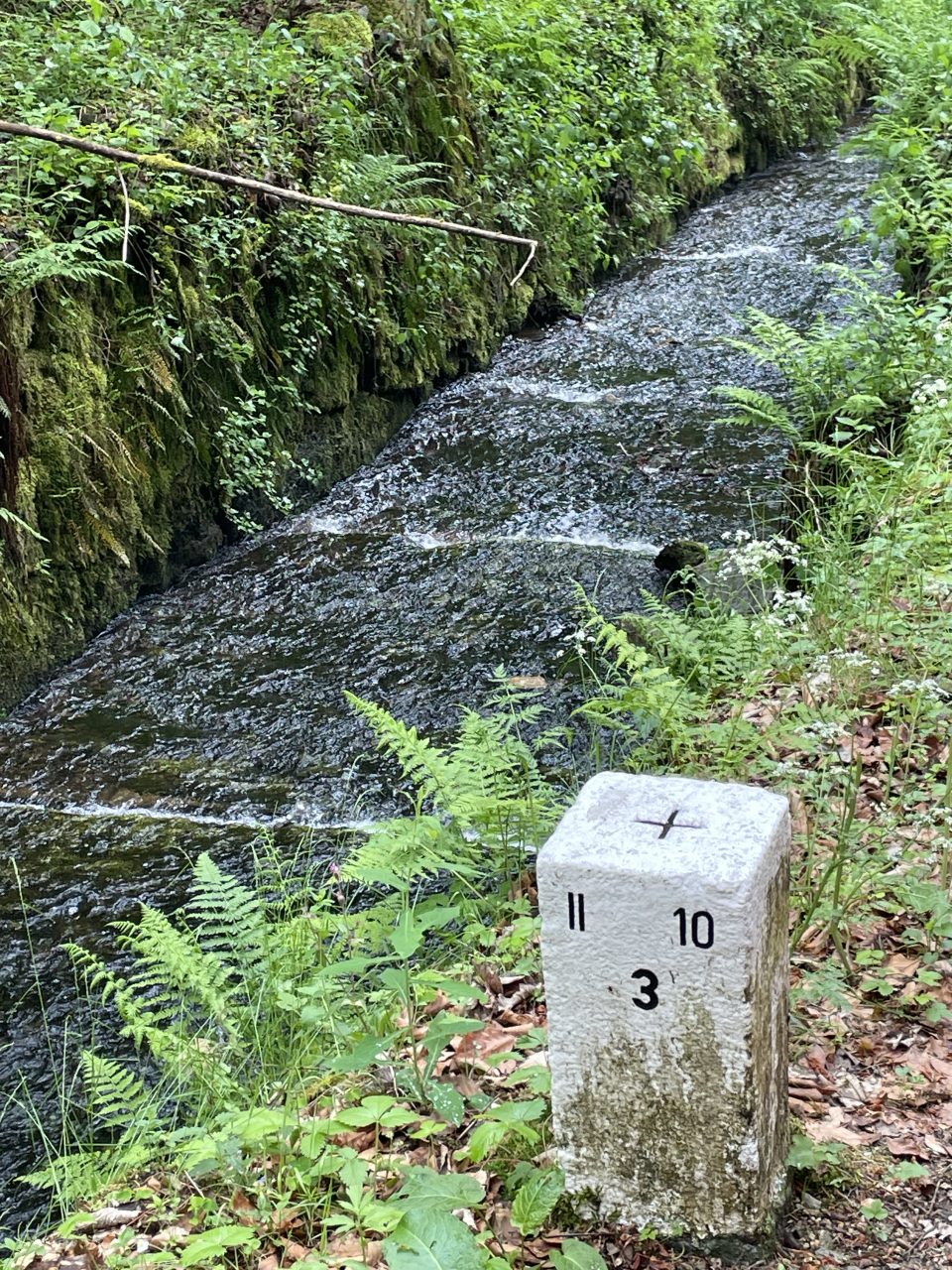
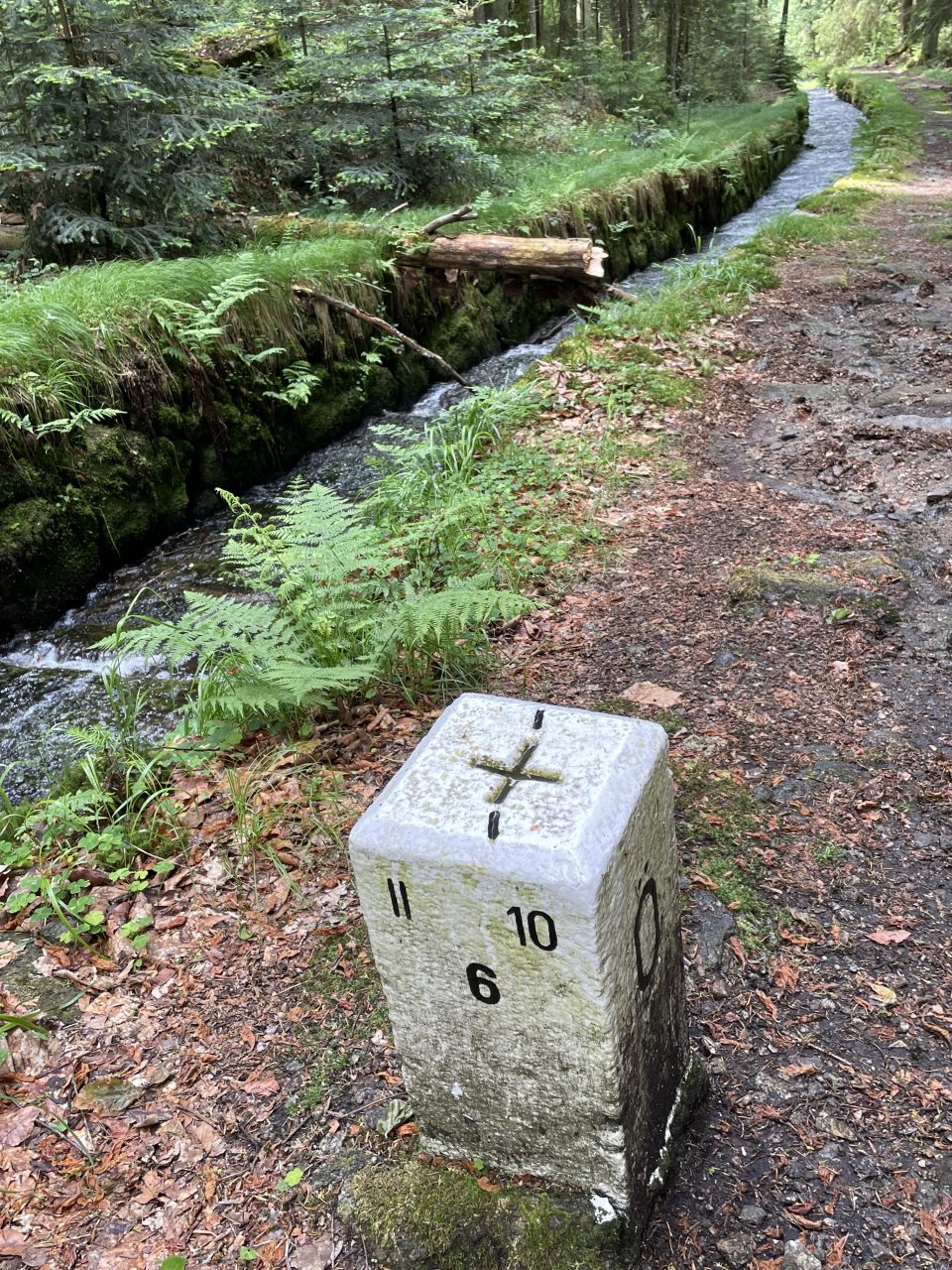
If Austrian customs officers lost their way during fog or snowdrift, they could be arrested and interrogated by the Czech authorities, so they had to be really careful not to trespass.

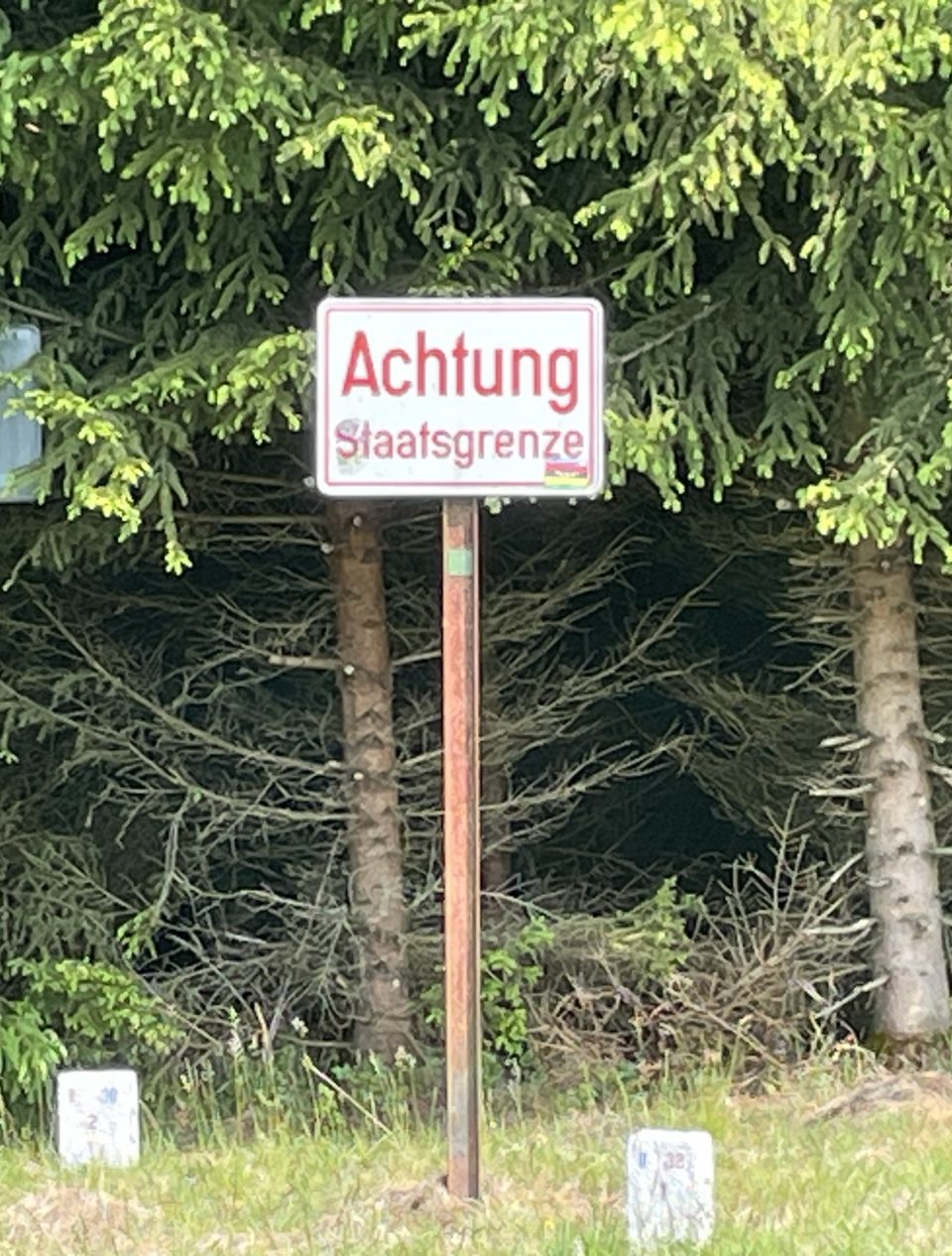
Old customs house on the left and warning sign of the border with border stones on the right
The old customs houses, which were built in 1922 after the end of World War I, were used until 1968 as service accommodation and duty stations. They were situated in very remote areas which could only be reached by car and in the 1950s and 1960s private cars were still rare in the region. The daily provisions had to be fetched in Ulrichsberg and carried on foot, even in winter. Young families of customs officers were accommodated in these customs houses until their children had to go to school, then the officers could ask for a transfer to another customs station. They were issued the first official vehicle, a VW bus, for the customs office in Oberschwarzenberg in 1964. In 1968 the old customs houses were closed and new duty stations were opened in Ulrichsberg, Aigen and Haslach.
After the opening of the border the Czech colleagues soon made contact with the Austrian customs officers and they invited them to trips into the former “Prohibited Zones” and to the beginning of the “Schwarzenberg Canal”. The Austrians were welcomed at the Czech barracks “Nova Pec” and “fed and watered” voluptuously. A pig was slaughtered for the festivity and excellent roast and black pudding was served. The Czech soldiers at the frontier were self-catering. On the other hand, the Austrians invited their Czech colleagues to skiing competitions and football matches and also involved them in staff meetings.
The end of the Iron Curtain
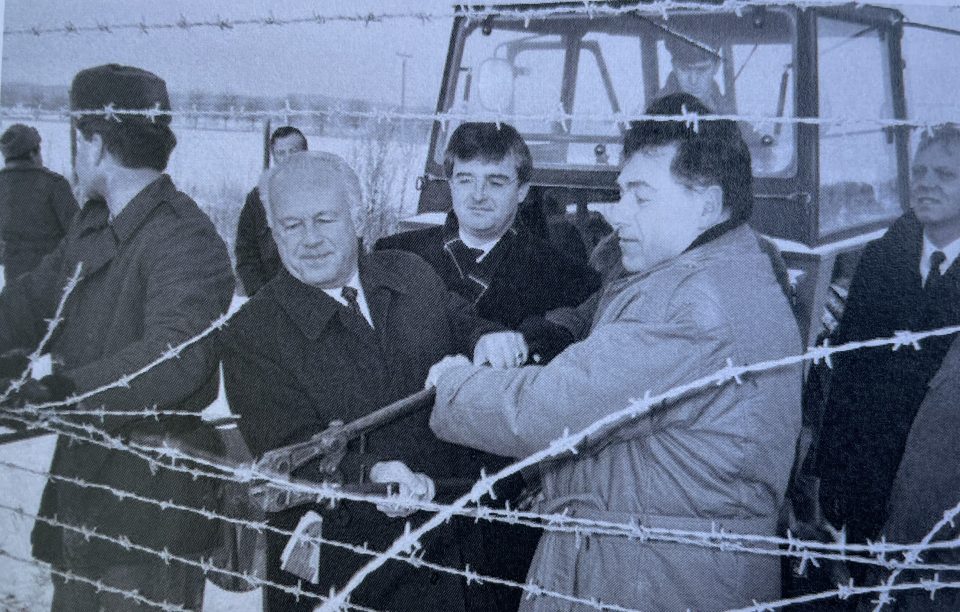
The cutting of the barbed wires in the “Mill Quarter”
Before the Iron Curtain came down in 1989 the living conditions in the “Mill Quarter” had changed dramatically. Still in the border villages people’s esteem was linked to their property and the size of their agricultural machines and cars, but the strict moral order of the Catholic Church and farming establishment had collapsed and lost much of its glamour and respect in the same way as the social pressure to conform to traditional village norms had crumbled. The rising middle class was consumer-oriented and more influenced by urban patterns of life via the many commuters to urban industrial centres.
In Southern Bohemia the middle class which had expanded during the Communist regime, saw its prospects for the future dashed in the 1980s. They were dissatisfied with the economic performance by the Communist command economy and they were meanwhile convinced that the planned economy did not offer them the same opportunities for advancement and modern technological progress as Western capitalism. Daily they experienced stagnation, nepotism, inefficiency, political harassment and above all, they knew they were far lagging behind their Austrian neighbours with respect to wealth and modern consumerism. They were no longer prepared to accept the ideological explanations of the Communist government, why they were still living in an economy of scarcity. They yearned for freedom of expression and travelling and improved chances of professional promotion.
LITERATURE
- Bischof, Günter & Ruggenthaler, Peter, Österreich und der Kalte Krieg. Ein Balanceakt zwischen Ost und West, Leykam 2022
- Ettmayer, Mitterlehner & Winkler (ed.), Vom „Eisernen Vorhang“ zur Europäischen Einheit. Zeitzeugen und ihre Geschichten, Denkstein Verlag Steinmassl 2024
- Fachkatalog: Der Eiserne Vorhang 1948-1989, Technisches Museum in Brno 2019
- Jagschitz, Gerhard & Mulley, Klaus Dieter, Die „wilden“ fünfziger Jahre, NÖ Pressehaus 1985
- Landesausstellung Oberösterreich und Südböhmen: Alte Spuren – neue Wege, Trauner Verlag Linz 2013
- Mayr, Walter, Grenzfälle. Der Eiserne Vorhang – die Wunde m Herzen des Kontinents, Zsolnay Verlag Wien 2026
- Steinmassl, Franz (ed.), Von Nazis, Amerikanern, Russen und den Leuten. Das Mühlviertler Jahr 1945, Edition Geschichte der Heimat 2016
- Szorger, Dieter & Bayer, Pia, Das Burgenland und der Fall des Eisernen Vorhangs, Wissenschaftliche Arbeiten aus dem Burgenland (WAB, Band 132), Eisenstadt 2009
- Woisetschläger, Karl & Wurzinger, Ludwig, Raifmass im Böhmerwald. Eine Flucht und ihre Hintergründe, Edition Geschichte der Heimat 2004